

Netflix’s ‘Mousetrap’ K-Drama Review (2026) – Modern Folktale Dread at Its Finest
The Verdict Box
Score: 8.8/10
The Vibe: A dark, highly paranoid psychological noir that updates ancient folklore into a terrifying warning about digital identity theft, systemic erasure, karmic debt, and the tragic consequences of forced identity.
Watch if you liked: The Manipulated, Beyond Evil, or fellow high-stakes psychological crime thrillers like Stranger and Signal.
Skip if: You expect a lighthearted mystery procedural, clean moral lines, or a glossy heroic story where memory is reliable and the truth is simple.
The Core Question: When childhood envy leads a person to meticulously erase your digital existence, can you prove you ever existed when your own memories are an unreliable lie?
Memories of Drama: Netflix’s ‘Mousetrap’ K-Drama Review (2026): The modern spin on classic Korean folklore in Netflix’s 10-episode thriller Mousetrap (Deuljwi 들쥐) shifts the focus away from a typical whodunit and places it squarely on the devastating vulnerability of the digital age. Inspired by the traditional folktale of a rat eating human fingernail clippings to assume a person’s physical form, the series transposes this myth into a horrifying modern context: total digital identity theft, plastic surgery manipulation, and absolute societal erasure.
Having binged all 10 episodes across two intense days, the narrative pulls back the curtain on a system where identity is no longer defined by who you are, but by the data traces you leave behind—and how deep-seated jealousy can make a person risk everything, including their own humanity, to execute a long-term plan of revenge. Here is our full Mousetrap K-drama review on why this dark psychological thriller hits with such chilling precision.

Mousetrap K-Drama Review: The Illusion of Digital Proof & Unsettling Paranoia
What makes Mousetrap so uniquely frustrating and wildly compelling is that the mystery doesn’t just play out on screen; it weaponizes the concept of an unreliable narrator. The narrative begins with Je Moon-jae as a reclusive author who has been cooped up in his apartment for three years due to debilitating panic attacks. His entire life is managed by his high school friend, an accountant named Son Su-hyeon, who holds all of Moon-jae’s financial assets in his own name.
The nightmare begins when Moon-jae’s phone is hacked, and his home is sold right from under him. Stepping out into the world, he discovers he has been completely wiped: his bank accounts reject him, his fingerprint no longer registers on his device, and Su-hyeon has vanished into thin air.

When Moon-jae desperately attends a high school reunion, the ultimate horror lands: his former classmates fail to recognize him, openly accusing him of being an impostor pretending to be the “real” Moon-jae.
The terror of digital erasure hits with brutal efficiency. Simultaneously, a police officer named Sun-yong receives a mysterious tip regarding an unidentified body that directly points toward Moon-jae. In an era where our entire lives exist in cloud databases, the series highlights a terrifying vulnerability: if someone deletes your credentials, wipes your records, and alters your paper trail, how do you actually prove who you are?

Blake’s Bias: The Ultimate Irony: A Monster Born of Stolen Identity
The true brilliance of Mousetrap lies in its thematic exploration of envy and psychological ruin. The “rat” impostor’s revenge plan is a chilling masterclass in manipulation. Motivated by deep-seated jealousy and a lifelong theft of his own identity, the impostor undergoes plastic surgery, uses an unidentified woman to help stage murders, and even attempts to frame Moon-jae for the death of someone who had actually died years prior. He acts with zero fear of death, driven entirely by a desire to execute his scheme down to the final detail.
Yet, the narrative takes a heartbreakingly complex approach to this antagonist. His actions stem from severe childhood trauma—his mother placed immense pressure on him, stripping him of his individuality by giving him the name of his deceased older brother. Treated as a mere replacement, he felt his identity was stolen from birth, creating psychological scars that mirror the rat from the folktale, desperately devouring pieces of someone else to feel human.

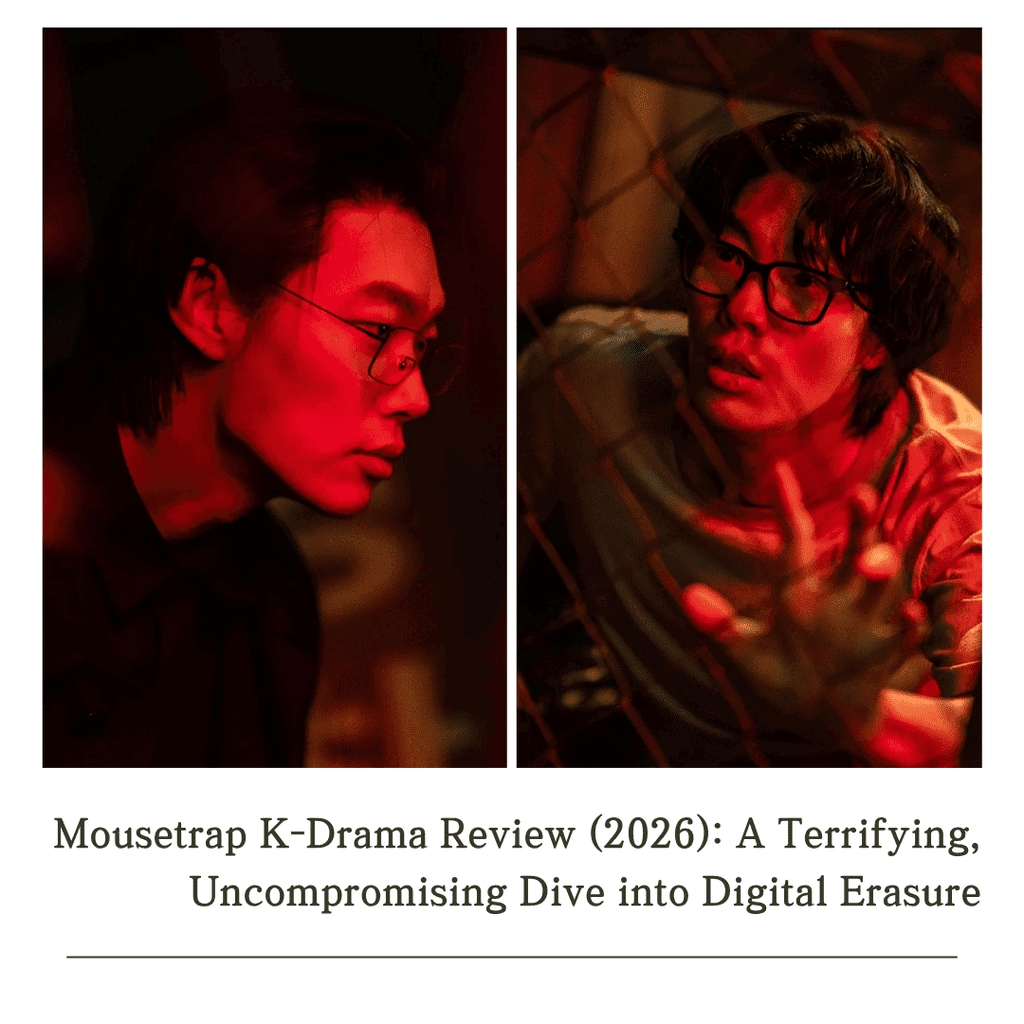
Furthermore, the dual-acting performance by Ryu Jun-yeol is sensational because of its profound psychological nuance. The “fake” Moon-jae isn’t simply acting out a malicious lie; heavily medicated, he genuinely believes he is the real Moon-jae. He loses himself so entirely inside his own delusion that he doesn’t come across as inherently evil, but rather as a tragic figure consumed by a lie he constructed to survive.
When it is ultimately revealed that the Moon-jae we have been following is himself the “rat,” the twist lands with devastating weight rather than cheap shock value. Early visual cues: shattered memories, unreliable flashbacks, and shifting dreamscapes; pave the way seamlessly. The tragic irony culminates when the publisher receives the second volume of the book in advance: upon being asked to edit it, the fake Moon-jae realizes the text reads like a full confession of all his past wrongs. Once he becomes conscious that he is, in fact, the rat, his mind completely unravels.

Performance Mastery & The Karmic Weight of No-ja
The contrast between mental collapse and raw physical survival is held together by the dynamic between the lead characters, their philosophical friction, and the show’s distinct visual presentation:
- Ryu Jun-yeol as Je Moon-jae / The Impostor: Delivering a masterclass in duality, Ryu Jun-yeol captures the tragic spectrum of a man losing his grip on reality. His performance makes the transformation from a vulnerable, panic-stricken author into an unraveling impostor feel hauntingly human, particularly as heavy medication blurs the line between his stolen identity and genuine self-delusion.
- Sul Kyung-gu as No-ja (The Voice of Reason & Karmic Philosophy): Sul Kyung-gu brings immense grit, intellect, and spiritual depth to the role of loan shark No-ja. Drawn into the chaos after accountant Su-hyeon steals his money alongside Moon-jae’s assets, No-ja tracks Moon-jae down when a dormant credit card gets flagged. Connected to a Buddhist background, No-ja frequently listens to chants and accepts physical toll—like losing function in his arm—as karma for past deeds. His refusal to die, even after being buried alive, acts as the story’s grounded anchor, functioning like Mercutio to keep Moon-jae tethered to reality by constantly asking: Who are you? How do you prove it?
- Atmospheric Mastery & Visual Direction: Visually, Mousetrap excels in building a sense of lingering, decadent dread. The production relies heavily on color theory, contrasting rich, opulent interiors with sharp, unsettling pops of deep red and green to mirror Moon-jae’s psychological decay. The steady pacing across all 10 episodes seamlessly balances the police investigation led by Sun-young with the claustrophobic, paranoid unraveling of a stolen life.

Frequently Asked Questions about Mousetrap (2026)
What is the core premise of Netflix’s Mousetrap?
Mousetrap is a 10-episode psychological thriller inspired by the Korean folktale of a rat eating human fingernails to take their form. In this modern adaptation, the folklore becomes a nightmare of digital identity theft, plastic surgery, and systemic erasure targeting vulnerable people.
Why does the fake Je Moon-jae believe he is the real person?

Due to a combination of heavy medication, deep-seated childhood trauma regarding his own erased identity, and intense psychological projection, the fake Moon-jae completely loses himself in his own lie, genuinely believing he is the real author.
How does No-ja’s background influence his role in the story?

Played by Sul Kyung-gu, No-ja is a loan shark with deep ties to Buddhist philosophy. He views the physical injuries he sustains as karma for his past deeds, allowing him to face brutal situations—including being buried alive—with an unyielding determination to see the truth revealed.
Continuing the Investigation
If you want to explore more deep dives into broken systems, stolen identities, and psychological noir, check out these reviews on the blog:
- [The Art of Sarah Review: Ending & Themes Explained (2026)]: Unpack the glittering illusion, dark secrets, and deadly obsession with a constructed persona.
- [Wall to Wall Movie Review (2025): When Apartment Noise Turns Deadly]: Dive into another claustrophobic psychological thriller where home turns into a nightmare.
- [The Manipulated Review Episodes 1 to 4: How a Prison Creates Its Own Monsters]: Trace an ordinary man’s brutal transformation after being framed by a shadowy mastermind.
Over to You!
Now it’s your turn to join the investigation: What did you think of Mousetrap? Did the tragic psychological backstory of the “rat” hit you as hard as it did me, or was Sul Kyung-gu’s karmic loan shark your favorite part of the binge? Drop your thoughts and your personal rating in the comments below—let’s talk about it!
Disclaimer: This blog is for informational and entertainment purposes only. All copyrights and trademarks for the TV shows, films, and other media referenced are the property of their respective owners. This blog aims to provide original commentary and insights and claims no ownership over third-party content.