
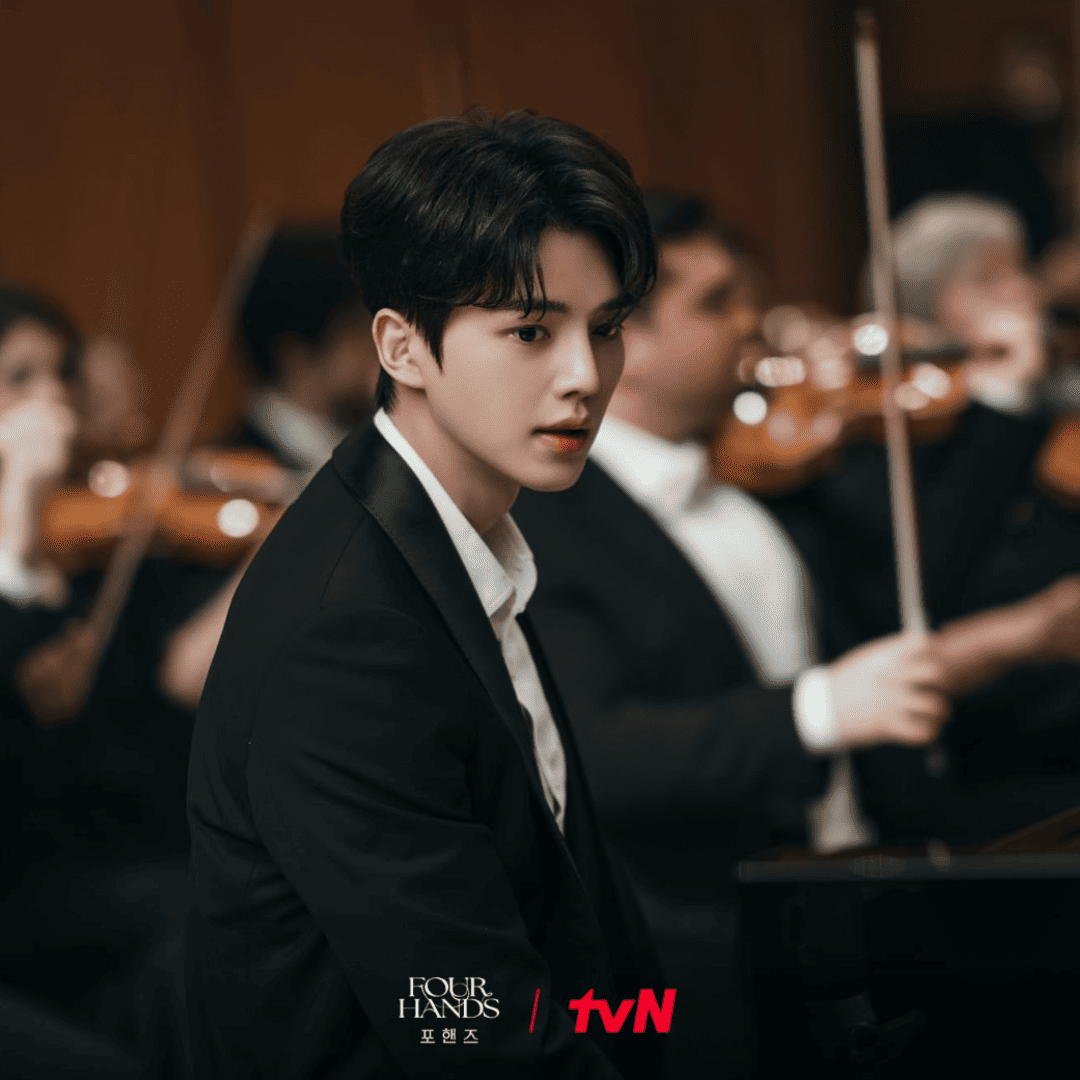
Four Hands Two Sonatas K-Drama Review (Episodes 1–4): Perfectionism, Passion & Makjang Family Trauma
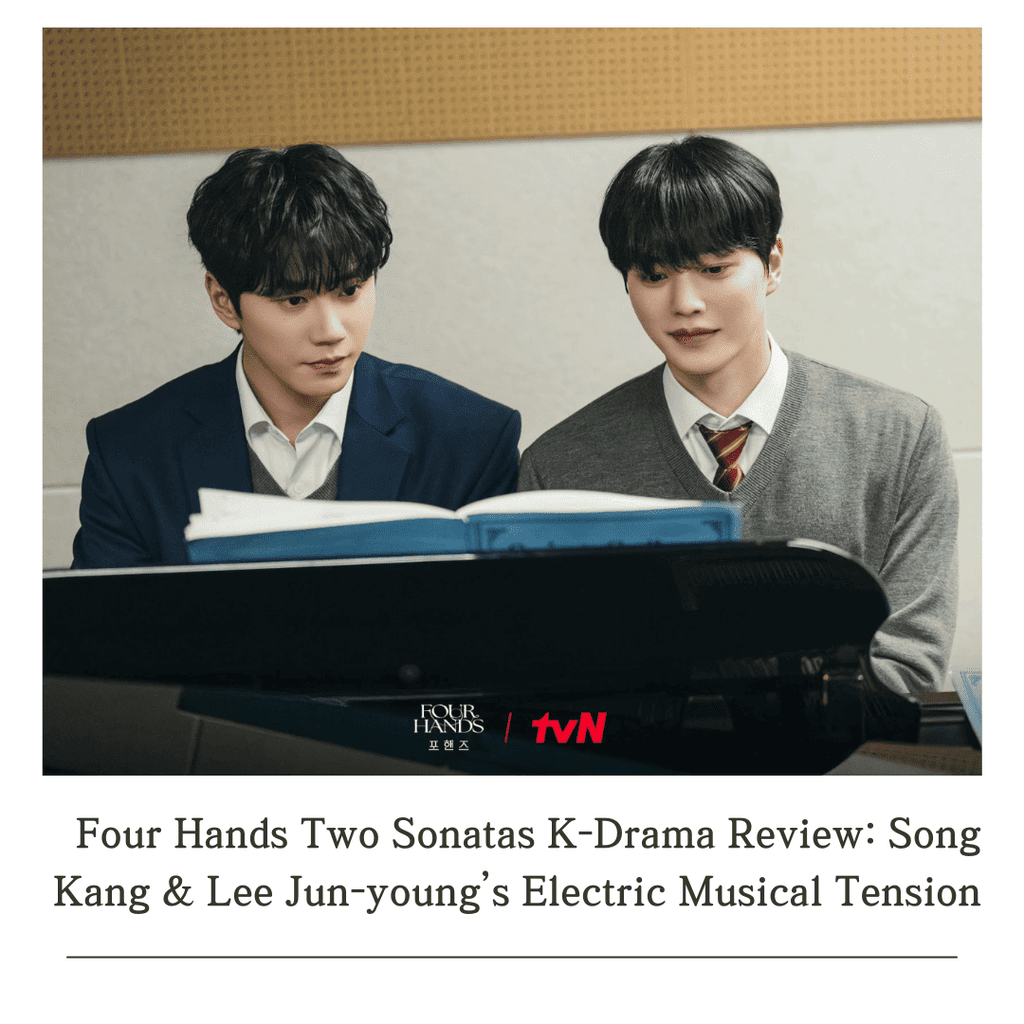
What happens when one pianist has technical perfection but no joy, while the other has all the passion and none of the conventional pedigree?
The Verdict Box
Score: 7.2 / 10
The Vibe: A classical music thriller laced with spicy makjang family secrets, high-stakes parental pressure, and a tense rivalry between two gifted pianists.
Watch if you liked: Your Lie in April, Do Do Sol Sol La La Sol, Five Fingers, or Penthouse.
Skip if: Toxic, overbearing parents driving their children to the absolute brink make you too uncomfortable to watch.
The Core Question: Will these two pianists collide to create a breathtaking sonata, or will jealousy and generational trauma destroy them both?
First Impressions: Perfection vs. Passion: Four Hands Two Sonatas K-drama Review
If you’re a fan of music-focused series like Do Do Sol Sol La La Sol or the classic anime Your Lie in April, the opening episodes of Four Hands, Two Sonatas will probably catch your attention pretty quickly.
The central conflict is wonderfully simple: what makes someone a great musician?
Is it technical perfection? Discipline? Thousands of hours of practice?
Or is it emotion?
The drama places those two philosophies inside two very different pianists.
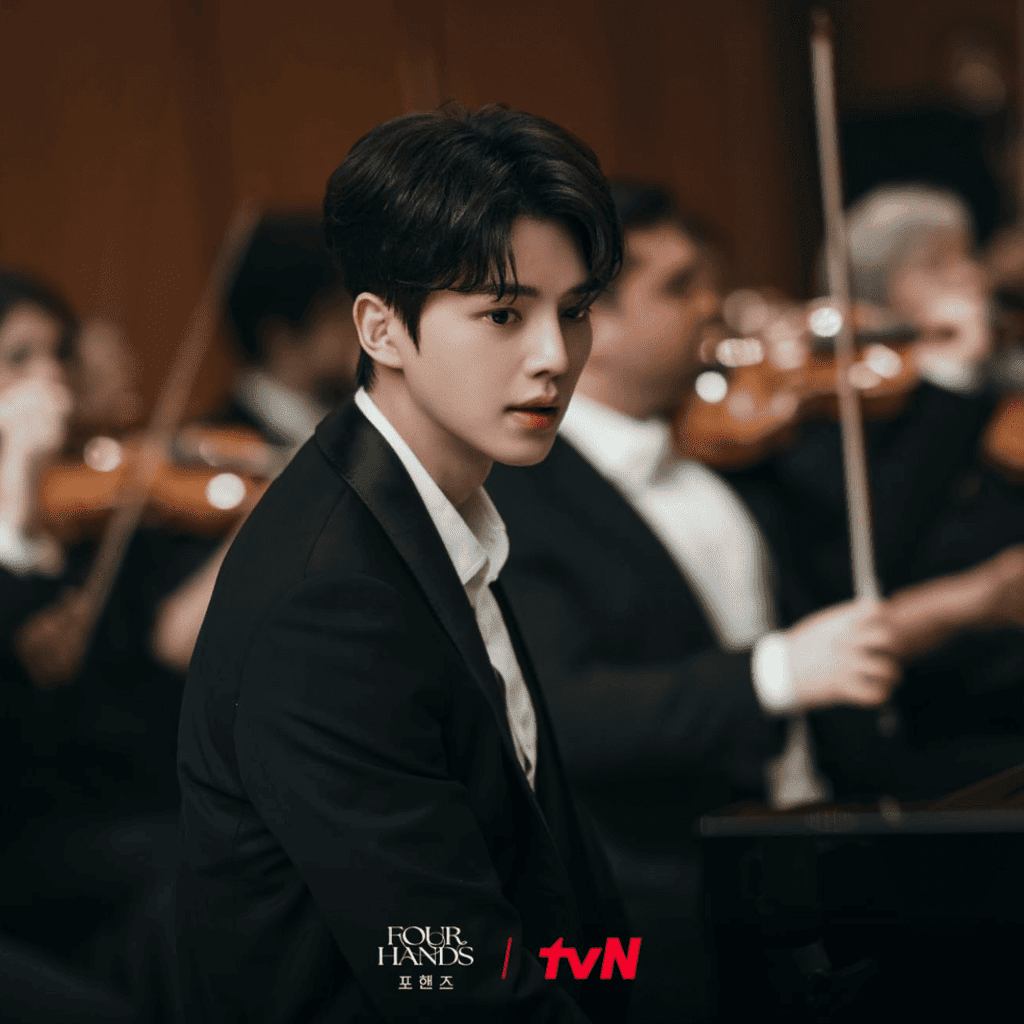
Kang Pi-o (Song Kang) is the technically brilliant perfectionist. He has spent years being trained to perform flawlessly, collecting trophies and chasing approval while seemingly forgetting why he wanted to play music in the first place.
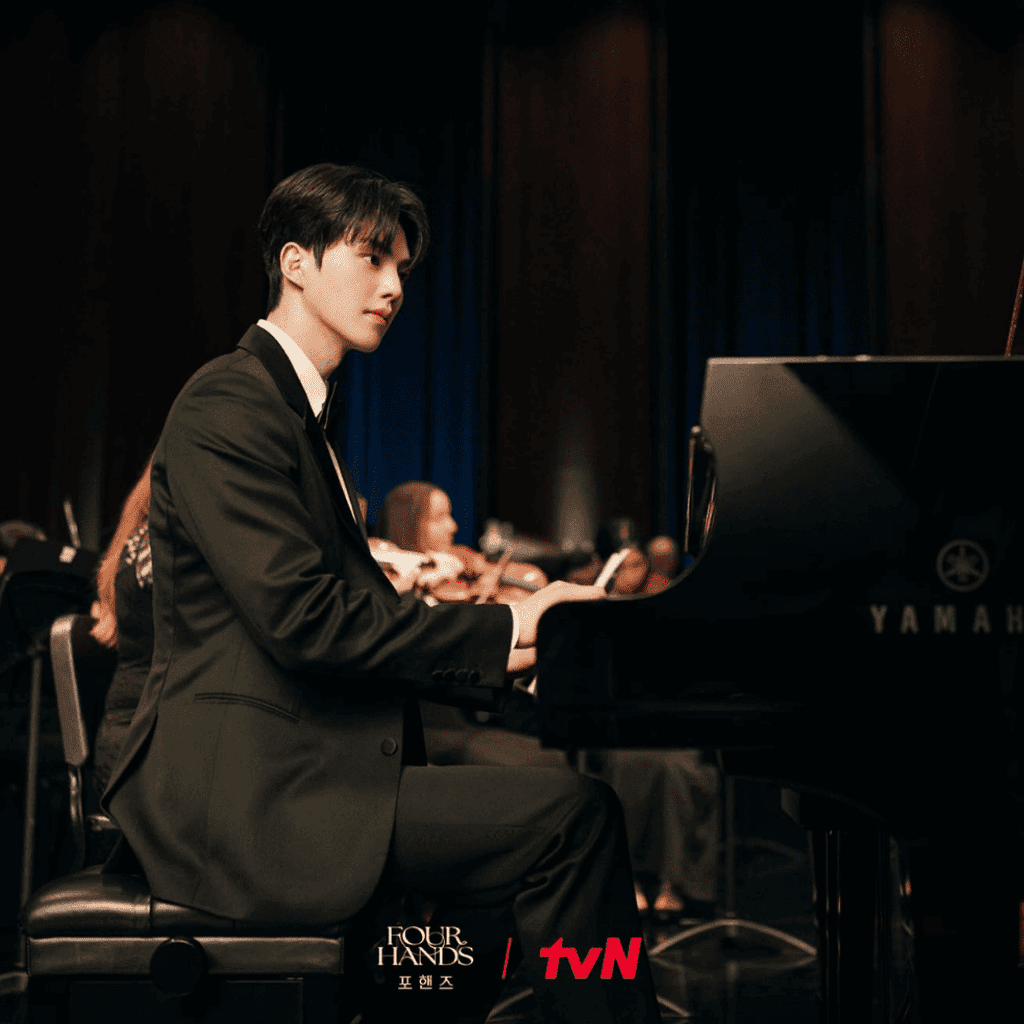
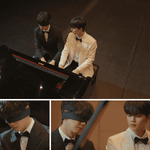
Intensity on the keys: Kang Pi-o performs on a Yamaha piano in this Four Hands Two Sonatas K-drama review.
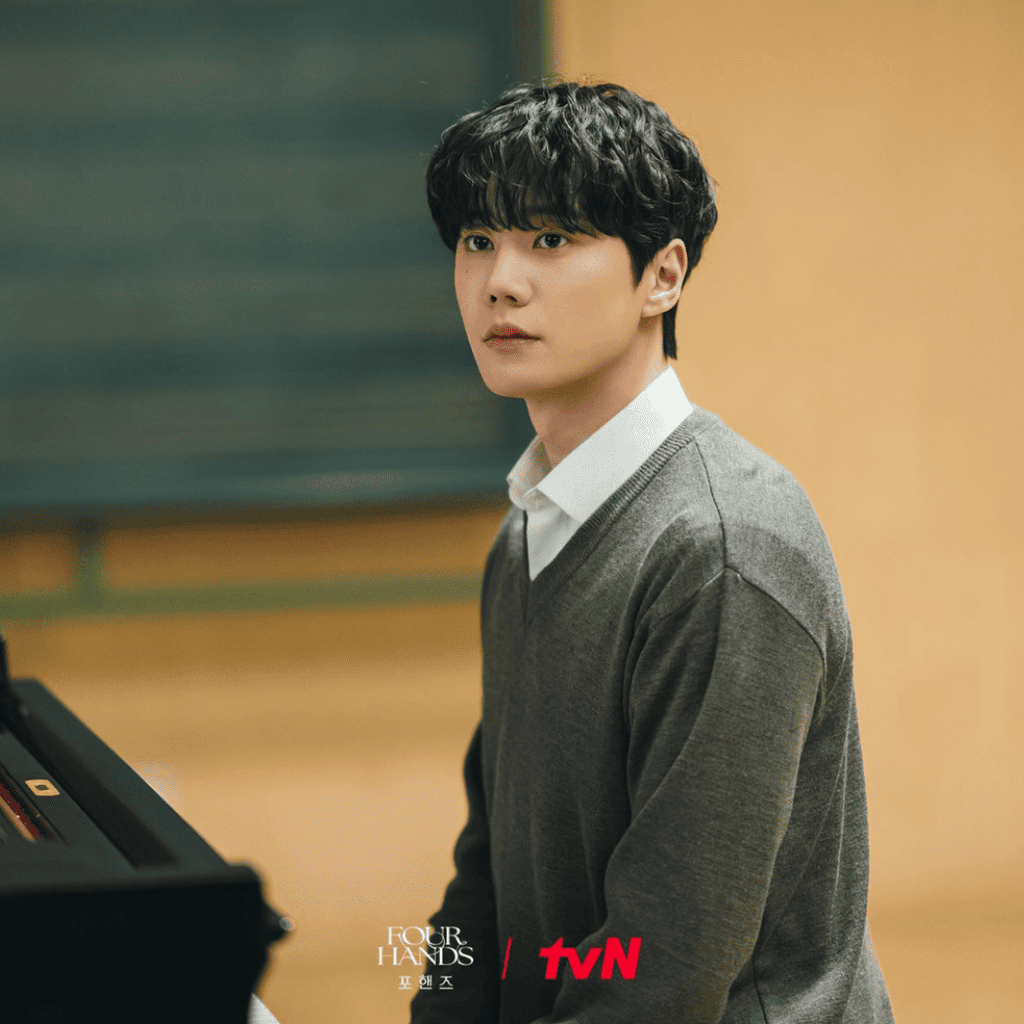
Then comes Choi Jeong-yo (Lee Jun-young), an instinctive and emotionally expressive talent whose relationship with music feels completely different. Where Pi-o has been drilled into perfection, Jeong-yo seems to simply feel the music.
And honestly, this is the part of the drama I find most interesting.
I don’t have the musical expertise of Pi-o’s terrifying grandfather to sit there and declare that one pianist has more “soul.” To my untrained ears, both of these guys sound phenomenal! But the drama clearly wants us to see the contrast. Pi-o plays with precision. Jeong-yo plays with instinct. One has been taught how to become a great pianist. The other seems to understand music almost naturally.
And that creates a pretty fascinating rivalry.
When Talent Becomes a Prison
The family drama is where Four Hands, Two Sonatas starts turning the pressure up to eleven.
Having worked in the Korean public and private education sectors for over a decade, the relentless pressure placed on young people in this drama hits remarkably close to home.
South Korea has a fiercely competitive education culture, particularly around the long road toward the CSAT, or Suneung. The idea of children being pushed to perform, improve, compete, and constantly justify their potential is certainly not foreign here.
What makes Four Hands, Two Sonatas interesting is that it takes that familiar pressure-cooker mentality and transfers it into the world of classical music.
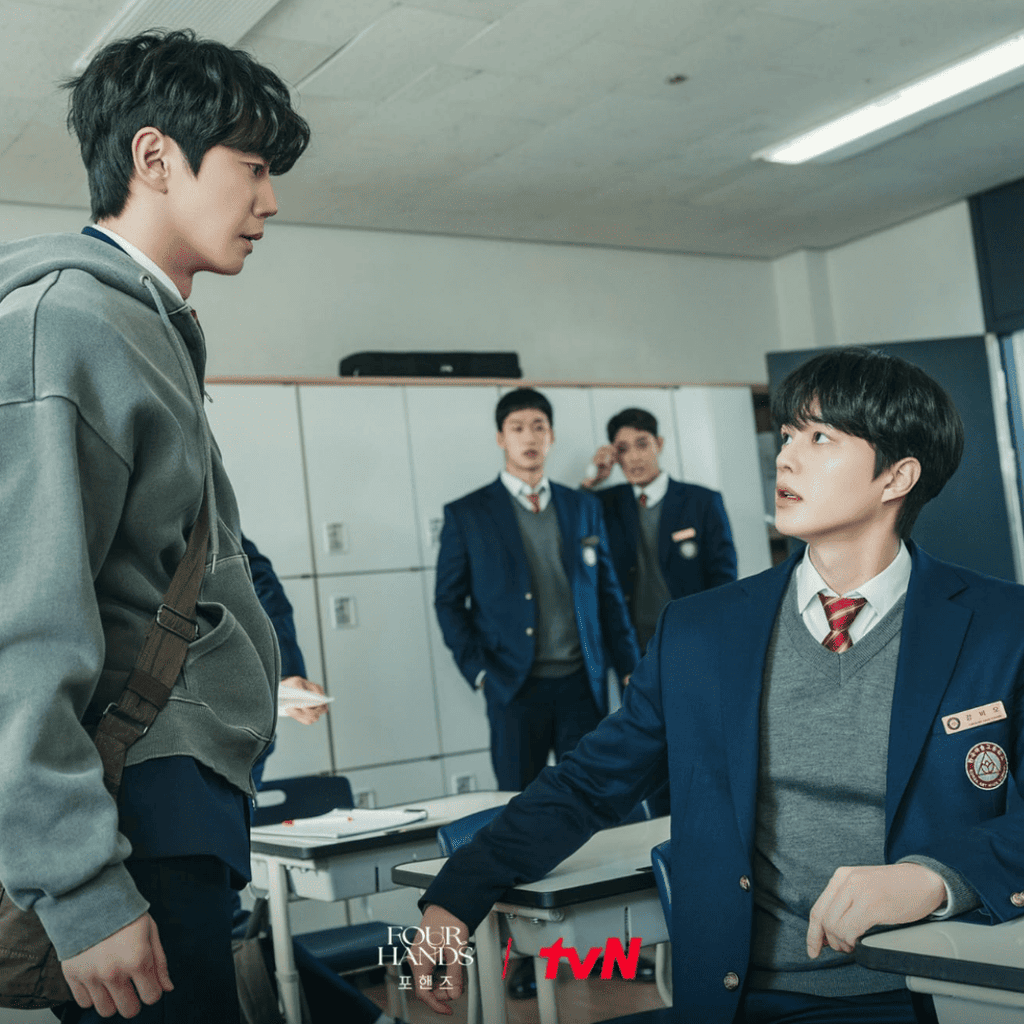
Pi-o isn’t trying to become the best pianist in the world because he simply loves playing.
At least, that’s increasingly how it feels.
He’s trying to become the person everyone expects him to be.
And his mother is absolutely relentless.
When Pi-o finally gathers the courage to say that he no longer wants to compete, she doesn’t exactly respond with a gentle heart-to-heart. She kicks him out of the house and cuts off his credit cards.
Ma’am.
Maybe take a breath.
At this point, she’s not encouraging her son to pursue his dreams. She’s treating him like a long-term investment portfolio that has suddenly announced it’s going to quit.
And that’s what makes Pi-o’s situation so sad.
He has all the external markers of success, but very little sense of freedom.
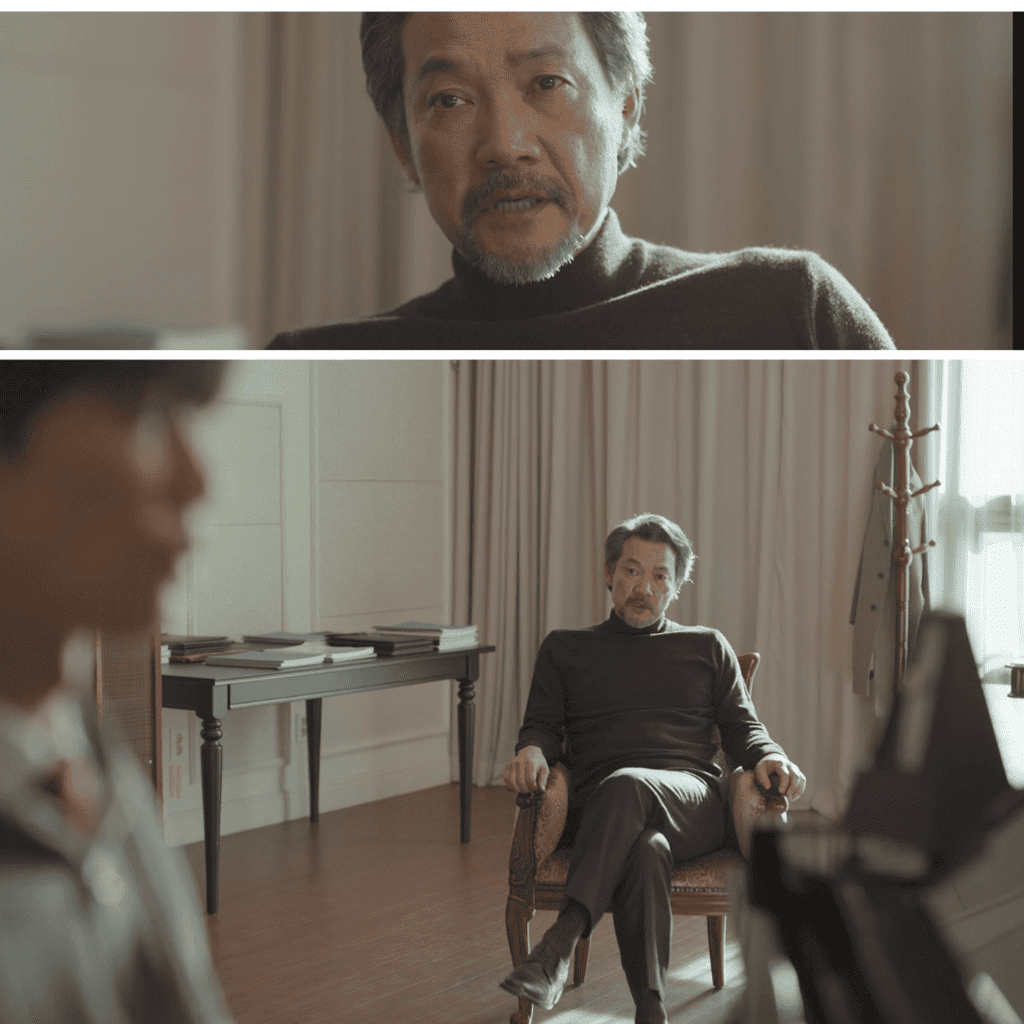
Four Hands Two Sonatas K-drama Review: The Grandfather’s Grudge
Then we have Pi-o’s grandfather, and this man is a whole other problem.
A legendary conductor and perfectionist, Kang Seung-woon has spent his life at the top of the classical music world. Unfortunately, he seems to have decided that being emotionally supportive is beneath his pay grade. The drama establishes that his standards for music are impossibly high, and his harsh judgment has helped fuel Pi-o’s desperate need for his grandfather’s approval.
Pi-o doesn’t seem particularly interested in his shelf full of medals.
What he really wants is validation.
And that makes his grandfather’s rejection so much more painful.
Rather than seeing a talented grandson who has worked incredibly hard, Seung-woon seems obsessed with whether Pi-o possesses that elusive thing called genius.
It creates a particularly cruel cycle.
Pi-o works harder.
His family demands more.
He wins more.
He feels less.
And the more he tries to earn approval, the further he seems to get from understanding whether he actually loves the piano.
That, to me, is much more interesting than a simple “gifted musician versus gifted musician” storyline.
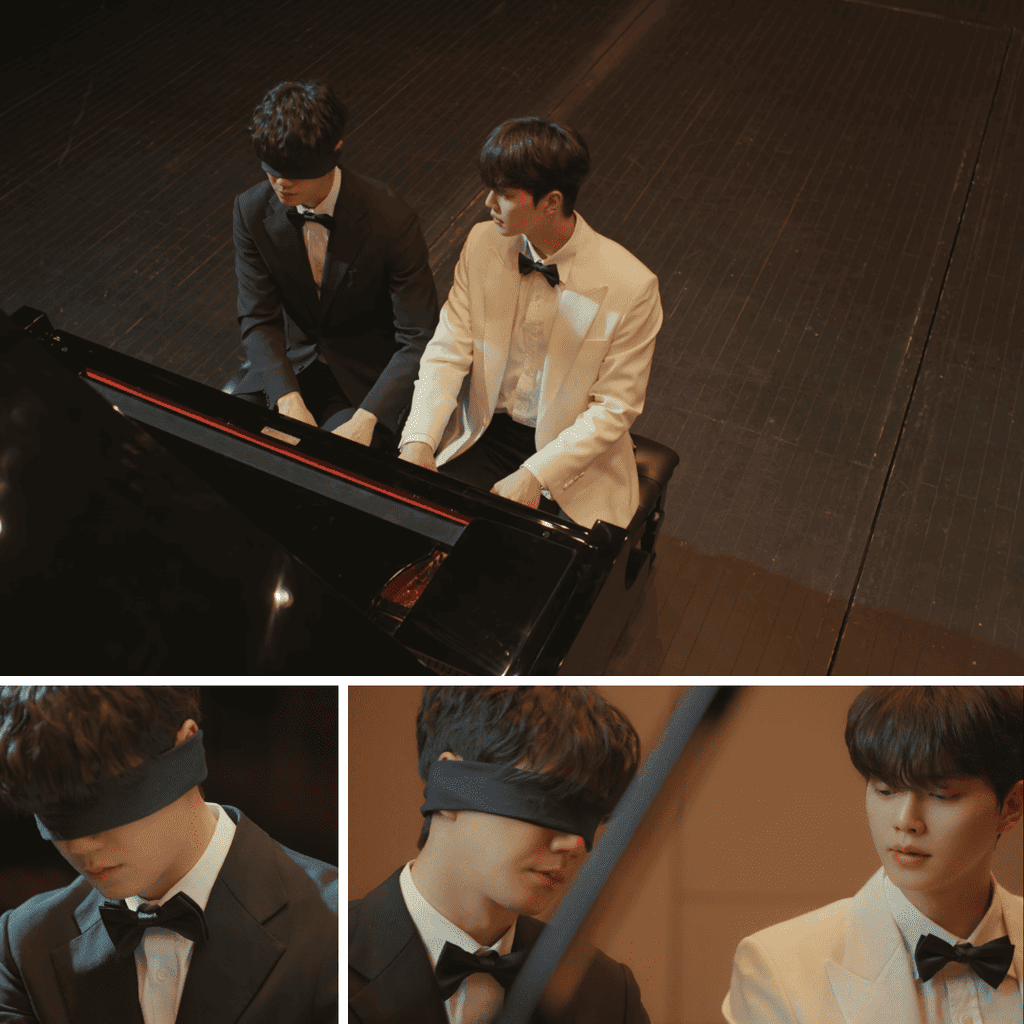
High-stakes evaluation in this Four Hands Two Sonatas K-drama review: Choi Jeong-yo plays blindfolded during the school assessment.
A Very Makjang Family Mystery
And then, because apparently emotional repression wasn’t enough, the drama throws a giant serving of makjang into the mix.
Pi-o’s mother has her own complicated history with her father, and his resentment toward her has clearly spilled over onto Pi-o. The adults seem determined to make sure the sins, disappointments, ambitions, and grudges of one generation become everyone else’s problem.
Honestly?
I am a huge fan of makjang.
So I’m not complaining.
Is this subtle? Absolutely not.
Does everyone communicate like emotionally repressed people with several years of unresolved trauma and a pianist’s worth of grudges? Pretty much.
But that’s part of the fun.
The family mystery also gives the story another layer of tension because Pi-o isn’t simply struggling against expectations. He’s trying to make sense of a family history that existed long before he had any say in it.
And that’s one of the more painful ideas underneath all the melodrama:
Pi-o is being forced to carry baggage that he didn’t create.
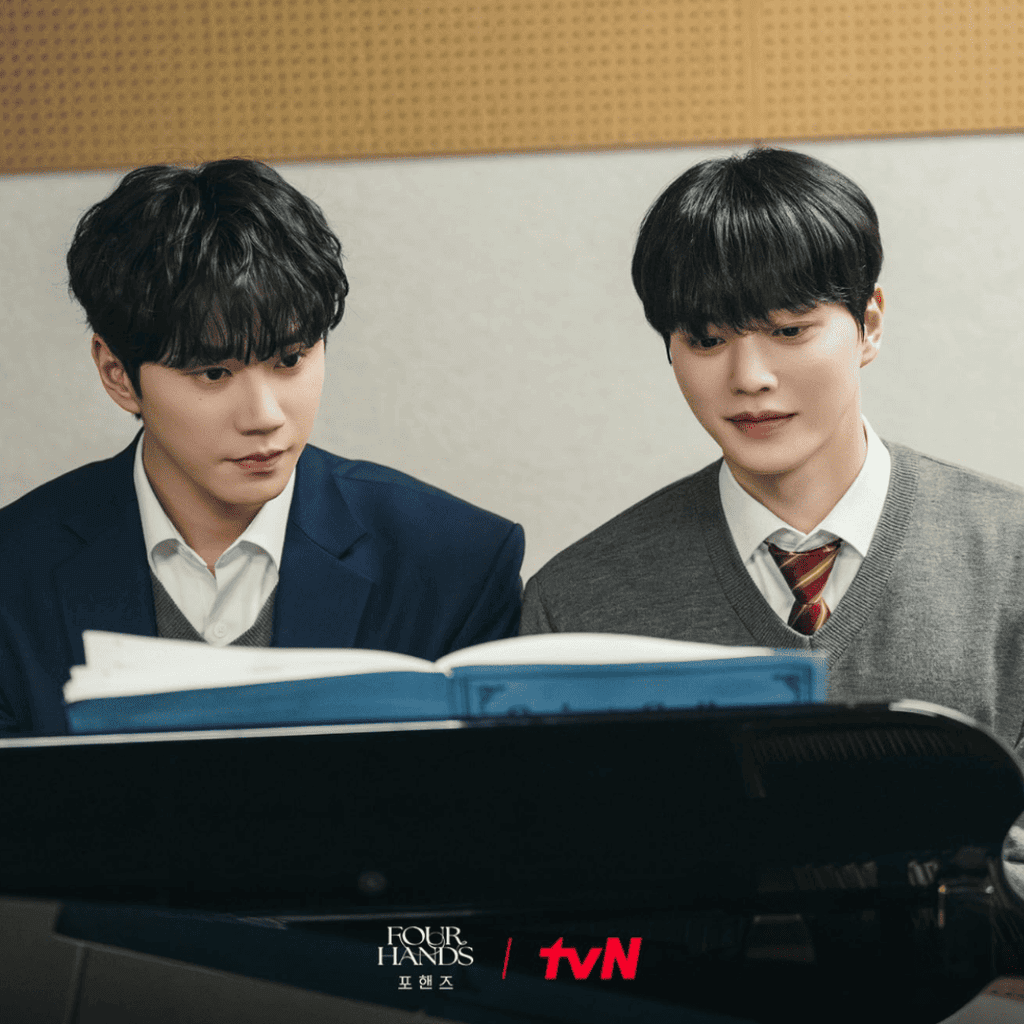
Four Hands Two Sonatas K-drama Review: Why the Music Actually Matters
Thankfully, the piano performances aren’t simply there to make the drama look expensive.
The music is central to the storytelling.
That matters because the contrast between Pi-o and Jeong-yo isn’t merely about personality. It’s expressed through the way they approach the piano.
Pi-o is controlled, precise, and disciplined.
Jeong-yo is instinctive, expressive, and unpredictable.
Even the actors approached the performances differently. Song Kang said he took piano lessons for several months before filming, while Lee Jun-young explained that he wasn’t an experienced pianist and focused on memorizing the movements and timing required for the scenes.
And I think that preparation shows.
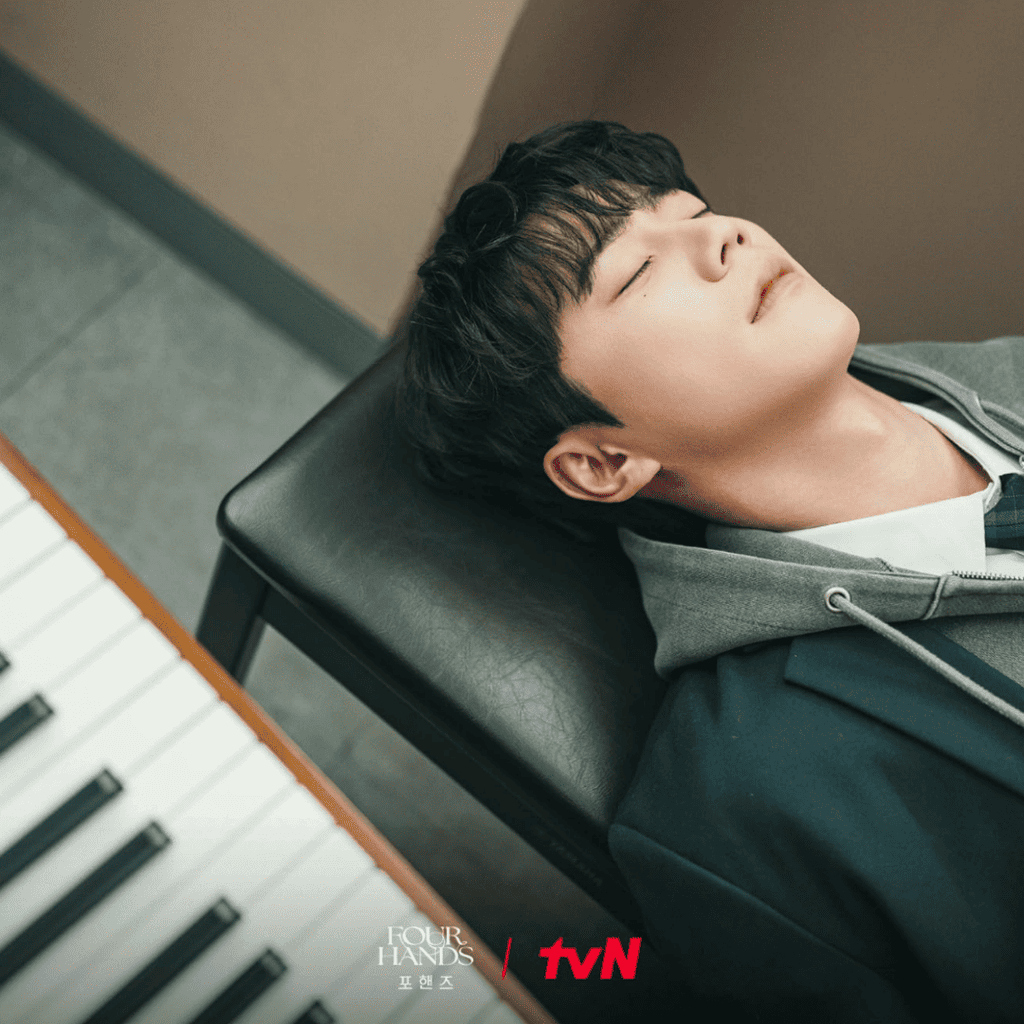
There is something inherently satisfying about watching two people with such different musical philosophies occupy the same piano bench.
The title itself is a clue. “Four hands” refers to two people playing one piano together. That requires more than individual skill. It requires coordination, listening, timing, and the ability to respond to another person.
In other words, the very thing Pi-o struggles with emotionally becomes essential to the music.
He cannot simply dominate the piano.
He has to listen.
And perhaps that’s the real lesson waiting underneath the rivalry.

The Growing Dread
Despite the beautiful music, Four Hands, Two Sonatas has an increasingly unsettling atmosphere.
There is a feeling that something is going to go badly wrong.
Pi-o’s jealousy is already becoming dangerous, and the more he encounters someone who seems to possess qualities he desperately wants, the more complicated their relationship becomes.
Is Jeong-yo simply his rival?
Could he become the person who teaches Pi-o to actually enjoy music?
Or will Pi-o become so obsessed with proving himself that he destroys the very thing he’s trying to achieve?
That’s what I’m watching for as the story moves forward.
Because I don’t think this rivalry is really about who can play the piano better.
I think it’s about whether Pi-o can learn to separate achievement from identity.
And whether Jeong-yo can discover what happens when raw talent finally meets the discipline he has never had.
Is Four Hands Two Sonatas Worth Watching?
Yes, especially if you enjoy music-driven dramas with intense family pressure, strong character rivalries, and a generous helping of makjang.
The first two episodes aren’t perfect, but they establish an appealing conflict between two very different ideas of artistic greatness.
Pi-o has technique without joy.
Jeong-yo has passion without the same elite training.
Put them together and you’ve got a pretty compelling recipe for disaster, growth, or possibly both.
Four episodes in, I’m still at 7.2/10, Four Hands, Two Sonatas has given me enough strong performances, beautiful musical sequences, psychological tension, and delicious family dysfunction to keep me coming back.
And yes, I will absolutely be watching Episode 5.
Mostly because I need to know what fresh nonsense these adults are about to unleash on these poor kids.
Four Hands Two Sonatas K-drama Review: Final Thoughts
What makes Four Hands, Two Sonatas work so far isn’t simply the fact that it is a drama about pianists.
It’s the question sitting underneath the music:
Can you become great at something without losing the part of yourself that made you love it in the first place?
Pi-o has spent his life chasing perfection.
Jeong-yo seems to possess something far less polished but much harder to teach: genuine emotional connection to music.
The obvious temptation is to choose a winner.
Technical brilliance versus raw passion.
Discipline versus instinct.
Perfection versus soul.
But I’m hoping the drama does something more interesting.
Maybe neither pianist has the complete answer.
Maybe what they need is each other.
And considering this is a Korean drama with makjang family secrets already flying around, I have absolutely no faith that figuring that out will be easy.
Frequently Asked Questions About Four Hands Two Sonatas
What is Four Hands Two Sonatas about?
Four Hands, Two Sonatas follows two young pianists, Kang Pi-o (Song Kang) and Choi Jeong-yo (Lee Jun-young), whose very different backgrounds and approaches to music bring them into a tense rivalry at an elite arts high school. The series explores friendship, competition, artistic ambition, family pressure, and the question of what it really means to become a great musician.
Who stars in Four Hands Two Sonatas?
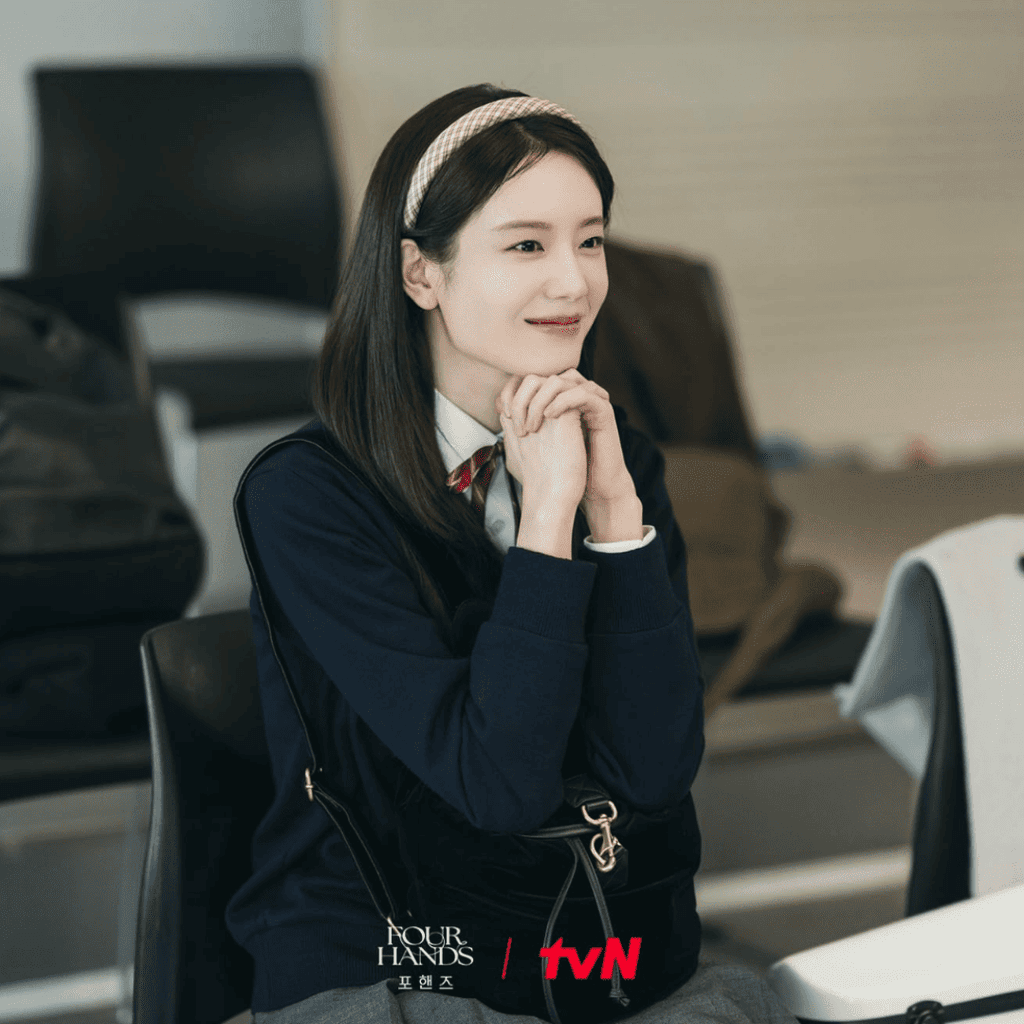
The drama stars Song Kang as Kang Pi-o, Lee Jun-young as Choi Jeong-yo, and Jang Gyu-ri as Hong Jae-in. Netflix lists the series as a Korean drama centered on music, rivalry, emotion, and the relationships formed between its young musicians.
Is Four Hands Two Sonatas a good K-drama for people who don’t know much about classical music?
Yes. The drama uses classical music as an important part of the story, but you don’t need a background in music theory to understand the central conflict. The important distinction is essentially between Pi-o’s precise, disciplined approach and Jeong-yo’s more instinctive and emotionally expressive style.
Are Song Kang and Lee Jun-young actually playing the piano?
Both actors prepared for their piano scenes, but their approaches were different. Song Kang said he took piano lessons for several months before filming, while Lee Jun-young said he memorized the required movements and timing because he was not an experienced pianist.
Where can I watch Four Hands Two Sonatas?

Four Hands, Two Sonatas is available internationally on Netflix and also airs on tvN in South Korea. Netflix lists the drama as a 2026 Korean series starring Song Kang, Lee Jun-young, and Jang Gyu-ri.
How many episodes does Four Hands Two Sonatas have?
The series has 12 episodes. It premiered on August 29, 2026, with episodes airing on Saturdays and Sundays, with the finale currently scheduled for October 4, 2026.
Continuing the Investigation
If you enjoy stories about ambition, pressure, creative obsession, and people being pushed far beyond their limits, there are a few other reviews on the blog worth checking out.
[No Other Choice Film Review: Park Chan-wook’s Savage Satire of the Modern Man] explores career desperation, professional obsession, and what happens when survival becomes an all-consuming goal.
[We Are All Trying Here Review: Park Hee-young’s 9.5/10 Masterpiece] looks at the passionate pursuit of creative dreams and the emotional toll that comes with trying to make something meaningful.
And for another look at the psychological pressure surrounding education, check out [Teach You a Lesson Review].
Over to You!
Now it’s your turn.
What did you think of the opening episodes of Four Hands, Two Sonatas?
Are you Team Pi-o or Team Jeong-yo on the keys?
And perhaps most importantly, how long do you think it will take before Pi-o’s mother drives everyone completely insane?
Drop your thoughts and your personal rating in the comments below. Let’s talk about it!
Disclaimer: This blog is for informational and entertainment purposes only. All copyrights and trademarks for the TV shows, films, and other media referenced are the property of their respective owners. This blog aims to provide original commentary and insights and claims no ownership over third-party content.