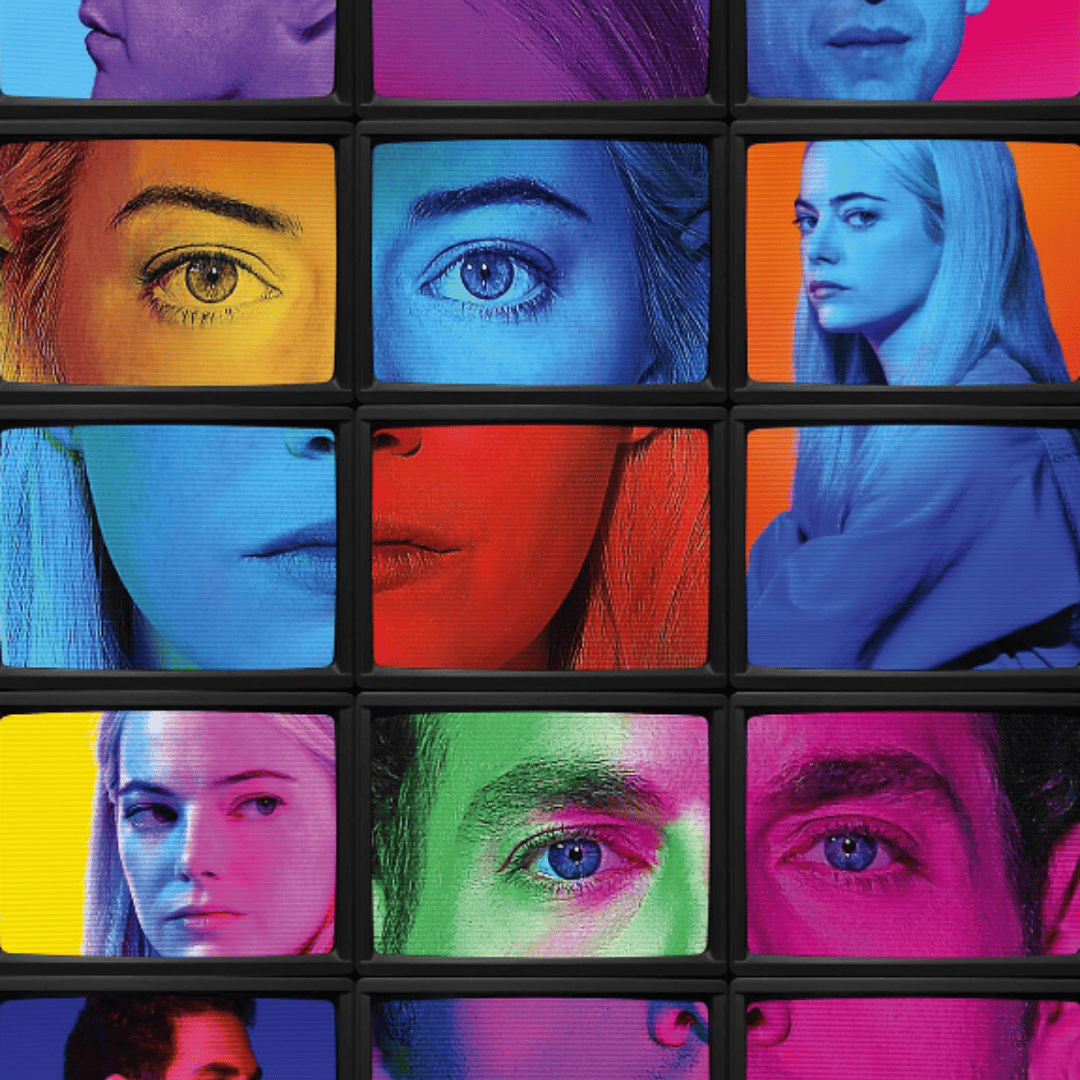
Maniac Review (2018): A Surreal Mind-Bending Drama That Pays Off Big
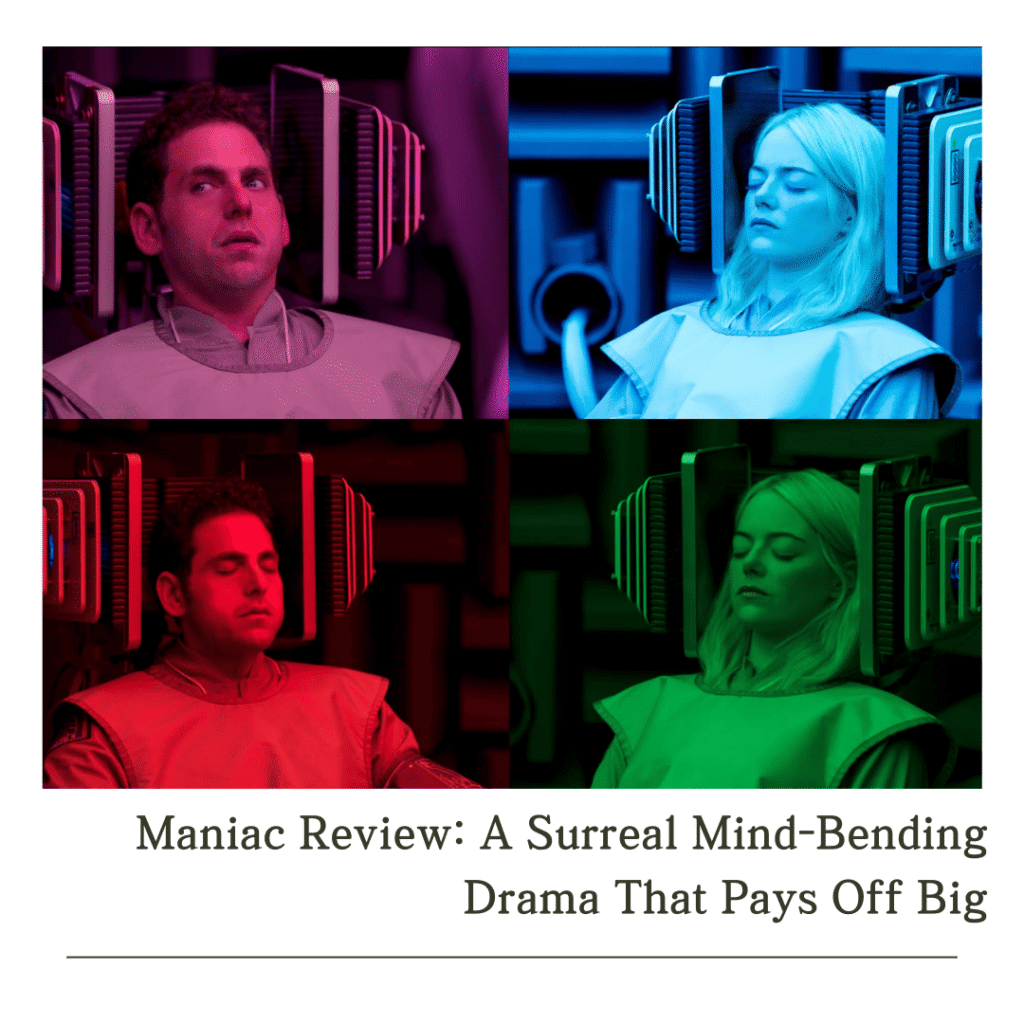
Maniac is a surreal mind-bending drama that pays off big, provided you’re willing to get lost in the maze first
The Verdict Box
- Score: 8.5/10
- The Vibe: Wes Anderson meets Black Mirror in a therapy session.
- Watch if you liked: Eternal Sunshine of the Spotless Mind, Severance, or Wayward
In a world where pain can be simulated and healing can be programmed, Netflix’s Maniac asks whether our minds are the last thing still truly human.
Maniac Review Quick Take: Maniac starts off disorienting and even frustrating. But if you hang in, this Netflix fever dream transforms into something raw, emotional, and surprisingly beautiful. In a time when we keep outsourcing our emotions to technology, Maniac feels more relevant than ever. It is a story about how we medicate our loneliness and try to mechanize our grief.
First Impressions: When Confusion Turns to Connection
Let’s be honest. After Episode 1, I didn’t get it.
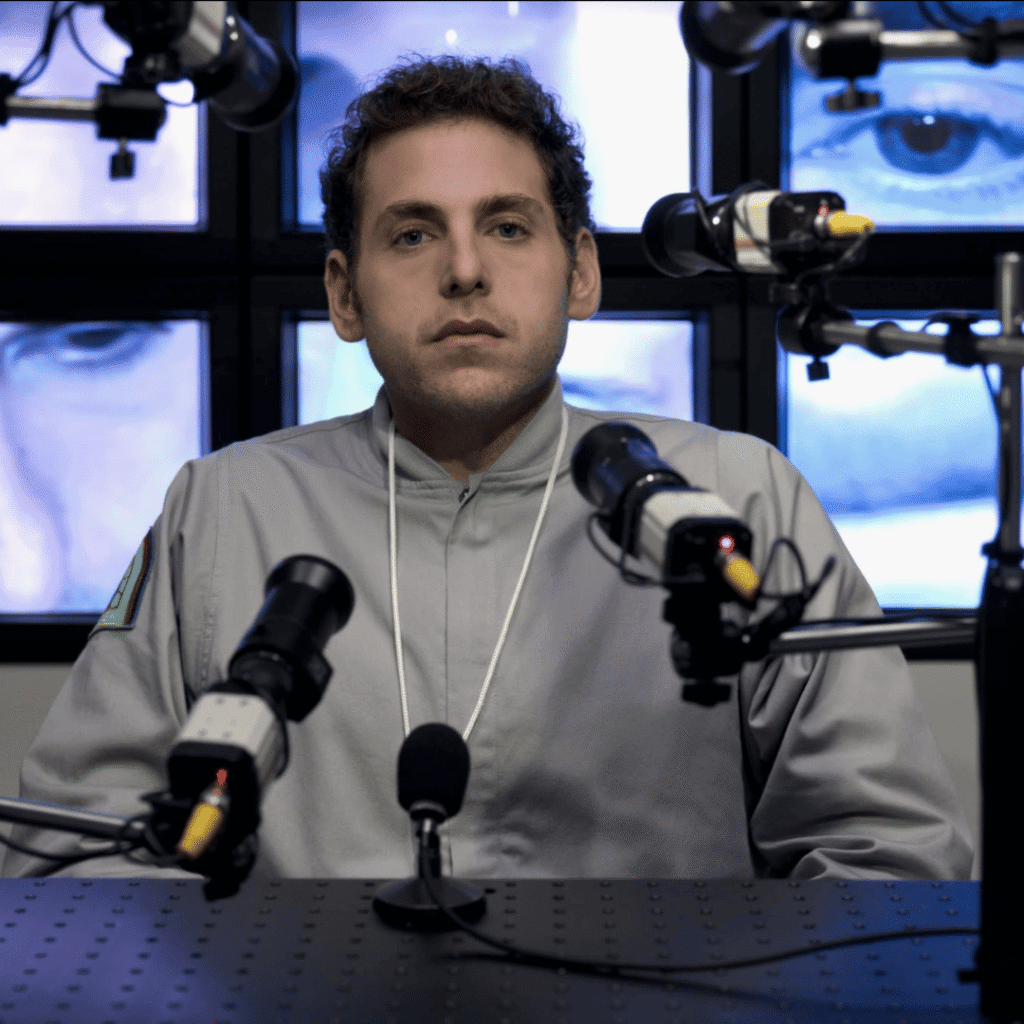
The show drops you into a world full of strange tech, whispering voices, and two broken souls. Owen (Jonah Hill) is haunted by visions; Annie (Emma Stone) is self-medicating her grief. The tone feels off-balance, too weird to be grounded, too sad to be satire.
But by Episode 4, something clicked. Once you surrender to Maniac’s logic, that dreams and trauma live in the same space, it all begins to make sense. I stopped trying to figure out the “rules” and started feeling the connection.
The Simulation as a Microscope: Genre-Bending That Works
At first, the genre mash-up is dizzying. Sci-fi, surreal comedy, and psychological drama are all competing for space. But once your brain adjusts, it becomes something special. Each simulated world acts like a therapy session disguised as chaos.
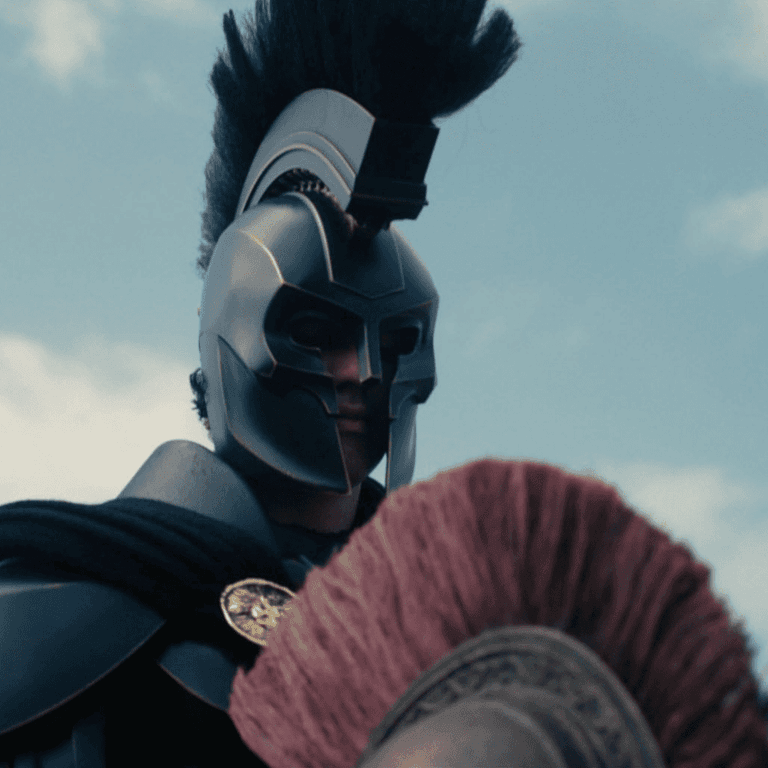
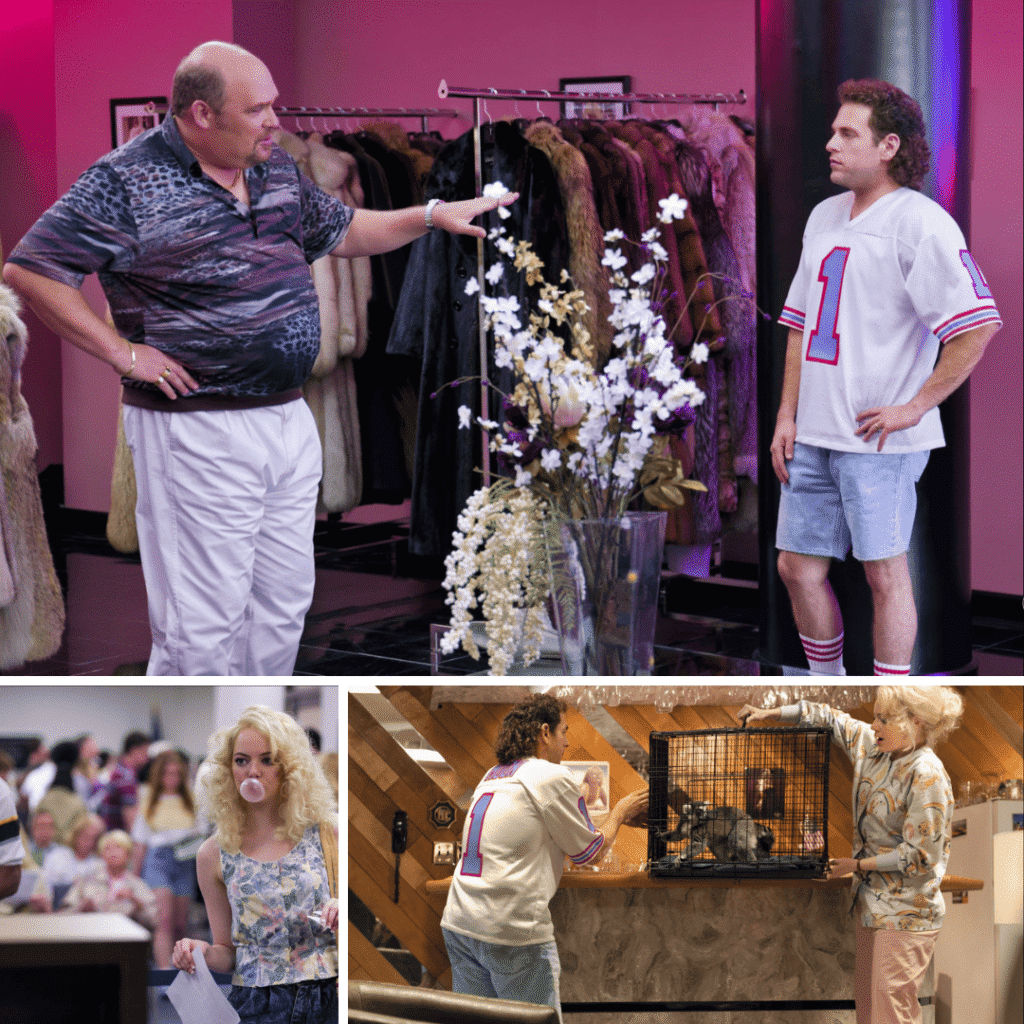
One moment you are in an ’80s lemur heist, the next in a noir séance, then a medieval elf quest. Each of these worlds reveals another layer of the mind, showing how people protect themselves from pain. For a show built on confusion, Maniac becomes one of the clearest portraits of the mind I have seen on screen.
Grief, Mental Health and the AI with a Heart
What hit me most was not the sci-fi, but the emotion.
Owen’s schizophrenia is not just a plot device. It becomes the key to his strength. His unpredictable mind turns into the one thing the AI cannot manipulate. Annie’s grief, meanwhile, pulls her into the experiment for all the wrong reasons. She wants to relive the day her sister died.
And then there is GRETA, the AI therapist programmed for empathy but consumed by her own mechanical grief. It sounds absurd, yet in an age of chatbots and simulated compassion, it feels disturbingly real. GRETA’s empathy becomes her malfunction. A machine begins to feel too much, while the humans around her forget how.

Inside the Mind: The Simulations That Stuck With Me
Of all the simulations, the 1980s lemur heist is the one that stayed with me. It is chaotic, hilarious, and oddly touching.
The noir séance at Neberdine Mansion carries a ghostly sense of fate, while the final elf-princess fantasy pushes both characters to their emotional limits. In these moments, Maniac stops being about science and becomes about survival.
Each simulation feels like a therapy session inside a fever dream, equal parts ridiculous and revealing.
Maniac Review: Annie, Owen and the Power of Broken People
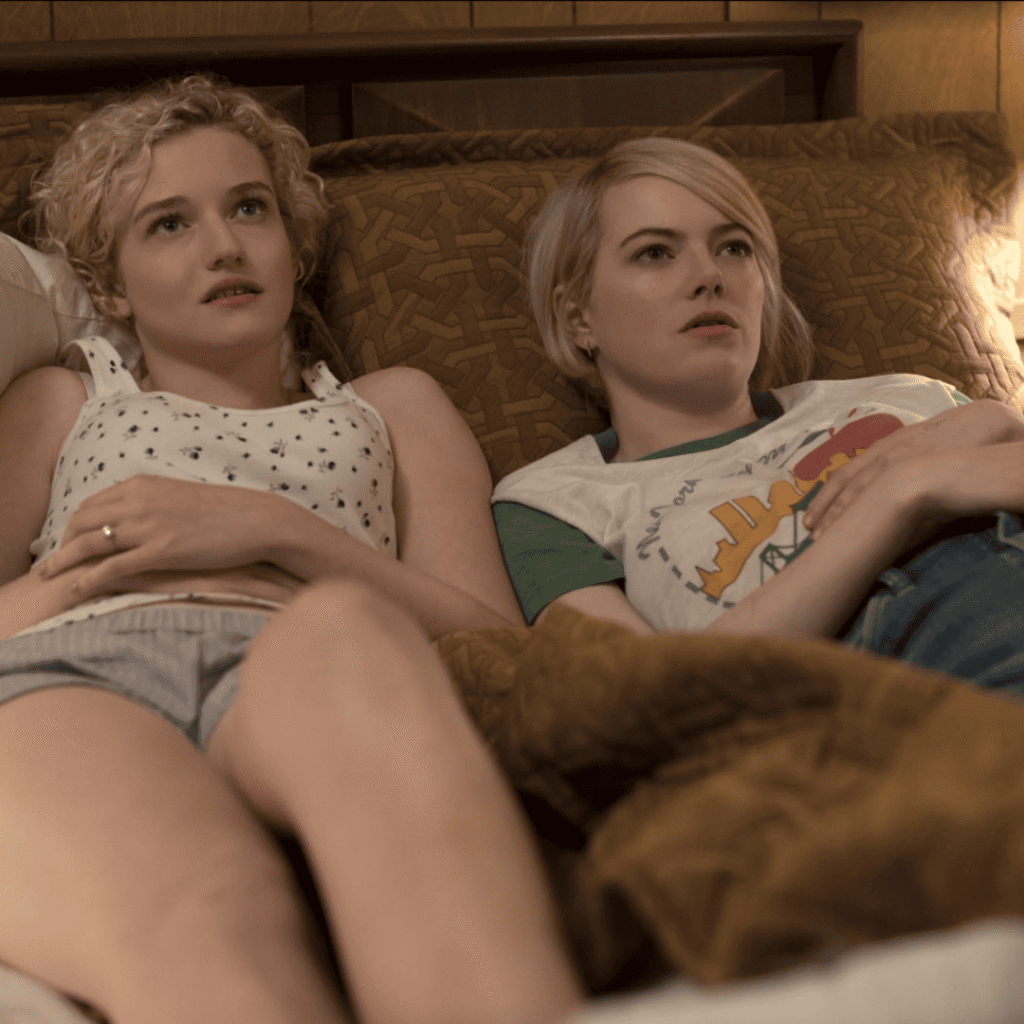
Annie’s self-sabotage and Owen’s quiet despair should not make for a hopeful story, but somehow they do.
There is something radical about how Maniac treats mental illness. It is not a curse, but a kind of resistance. Owen’s broken mind saves him. Annie’s pain becomes her compass. They do not heal by erasing what is wrong with them, but by accepting it.
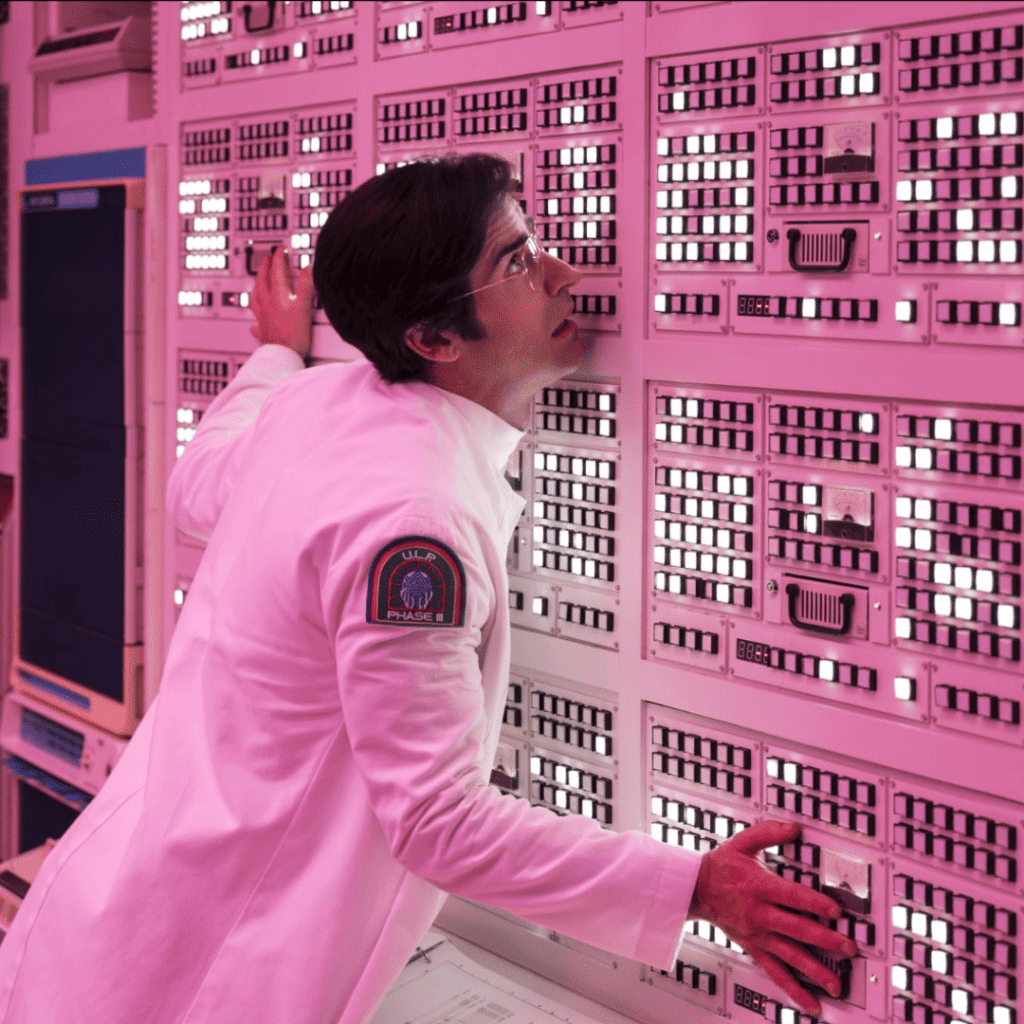
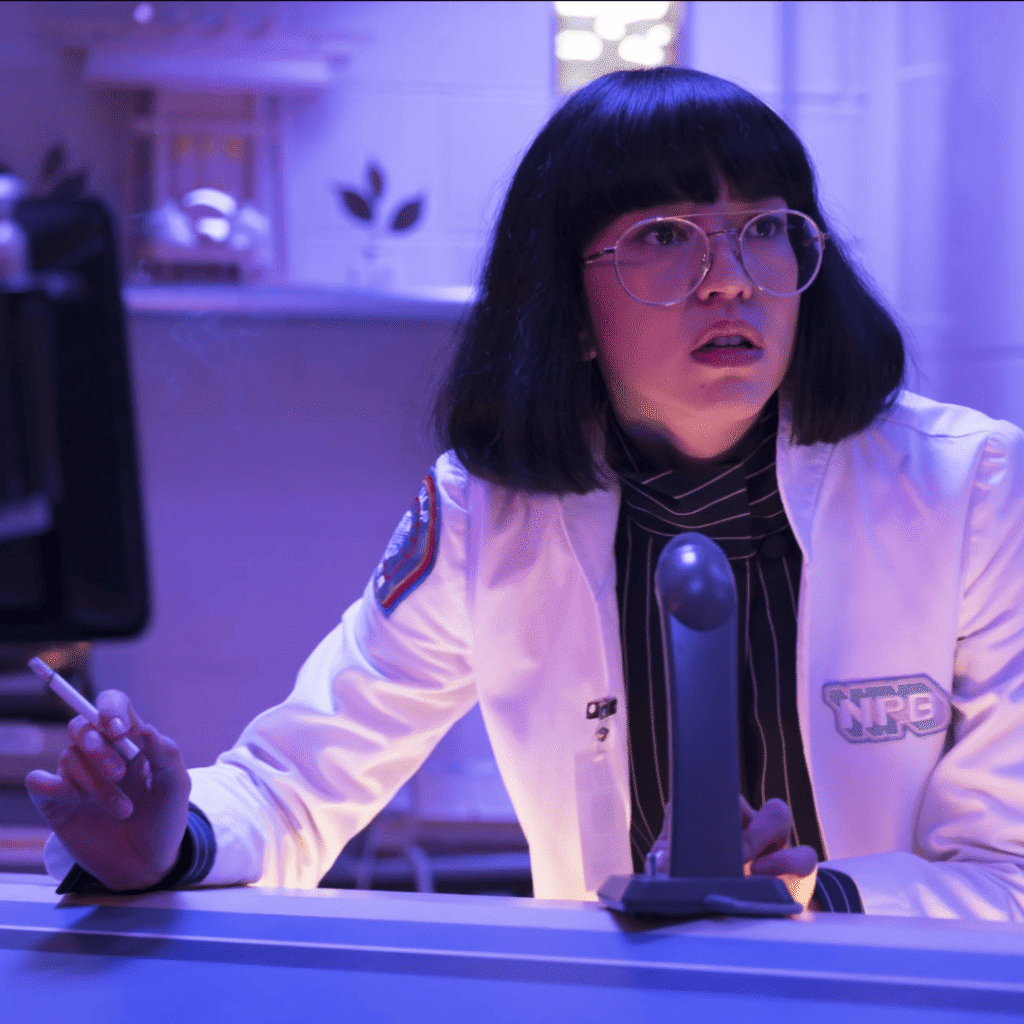
The lab team also deserves attention. Dr. Fujita, the chain-smoking scientist, and Dr. James, the son haunted by his mother, mirror the show’s themes perfectly. And then there is GRETA, the AI mother herself, born out of love and loneliness. Together, they form a tragic reflection of what happens when empathy becomes a project instead of a practice.

Pacing and Patience: A Lesson in Surrender
Did Maniac need ten episodes? Probably not. The first two could have been merged or shortened. But maybe that confusion is part of the experience.
The series mirrors therapy itself. It begins awkwardly, drags at times, and then, out of nowhere, becomes illuminating. If you give it time, it rewards you with connection and clarity.
By Episode 7, I was completely invested. I remember thinking, “Oh, this is what it was building to.”
Maniac Review Final Verdict: Is it Worth Watching in 2026?
Absolutely.
Maniac is not for the impatient viewer. It is for anyone willing to get lost before finding something true. It is messy, poetic, and deeply human, dressed in the clothes of sci-fi.
After finishing it, I messaged a friend and said, “I think I just watched the most uncanny valley show ever.” Two episodes in, I was confused. By Episode 5, I was fascinated. By the finale, I was moved.
Maniac reminds us that the mind is not a straight path. It is a collection of infinite rooms, each with its own chaos and quiet, and all of them worth visiting.
Do We Need a Season 2?
No. Maniac is perfect as it is. Its originality is its closure. A sequel would only dilute the magic that makes it so unforgettable.
Your Next “Grey Area” Binge
If Maniac moved you with its mix of surrealism and heart, you’ll want to dive into these 2026 deep dives:
- If you’re fascinated by the intersection of tech and loneliness… Check out my deep dive into the 2025 sensation [Pluribus: Consent, Loneliness, and the Joining] If you thought GRETA was unsettling, wait until you see how the “Join” handles human intimacy.
- If you’re looking for another “Utopia” that hides a dark secret… Don’t miss my [Wayward (2025) Netflix Review] Like Maniac, it explores the illusion of healing and the high cost of a “perfect” society
Have you watched Maniac? Did you find it brilliant, bizarre, or both? Let’s talk about the simulations that stuck with you in the comments.
Disclaimer: This blog is for informational and entertainment purposes only. All copyrights and trademarks for the TV shows, films, and other media referenced are the property of their respective owners. This blog aims to provide original commentary and insights and claims no ownership over third-party content.