No Other Choice Review: Park Chan-wook’s Savage Satire of the Modern Man
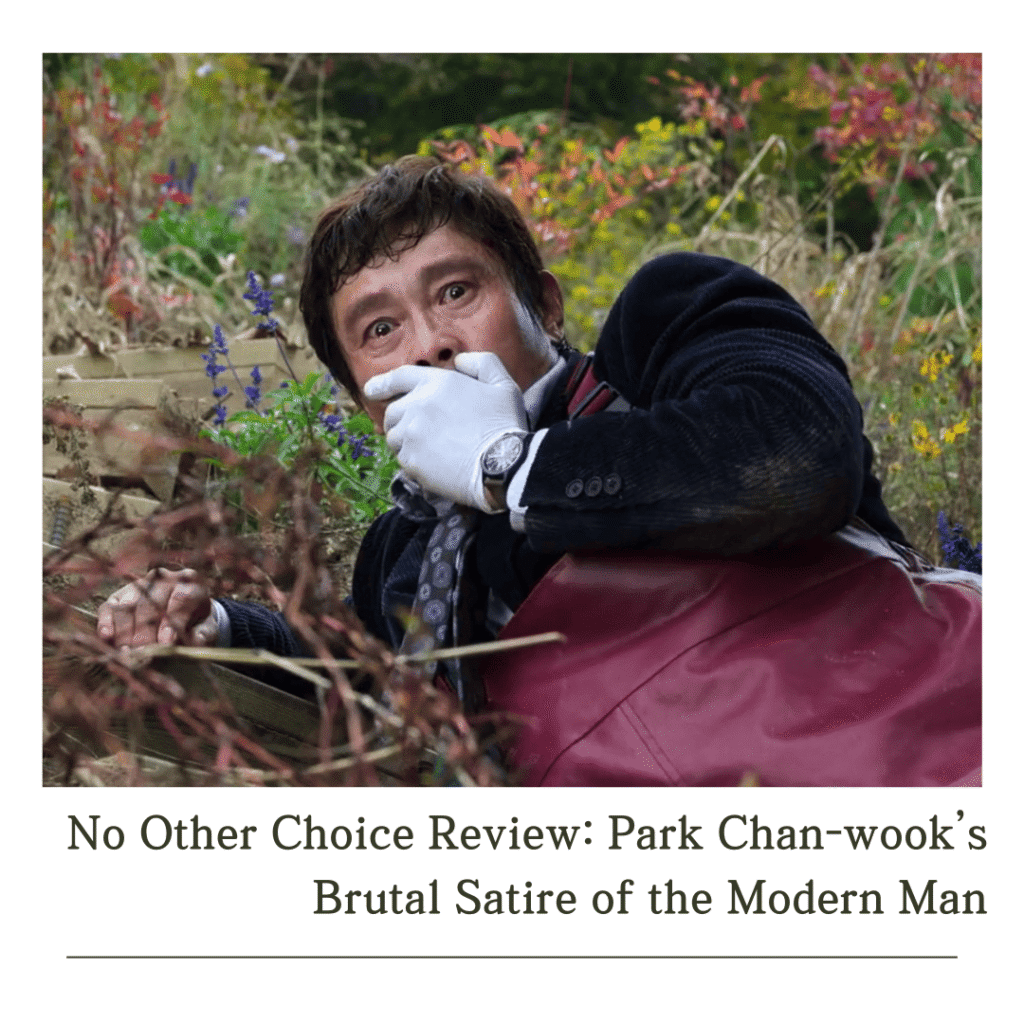
No Other Choice is what happens when Park Chan-wook decides that a resume is a more dangerous weapon than a hammer.
The Verdict Box
- Score: 9/10
- The Vibe: High-stakes economic horror with a side of pitch-black satire.
- Watch if you liked: Parasite, The Devil Judge, or The Ax.
No Other Choice is a slow-motion car crash of middle-class desperation, where the “American Dream” of a home and a stable family is held together by scotch tape and serial murder.
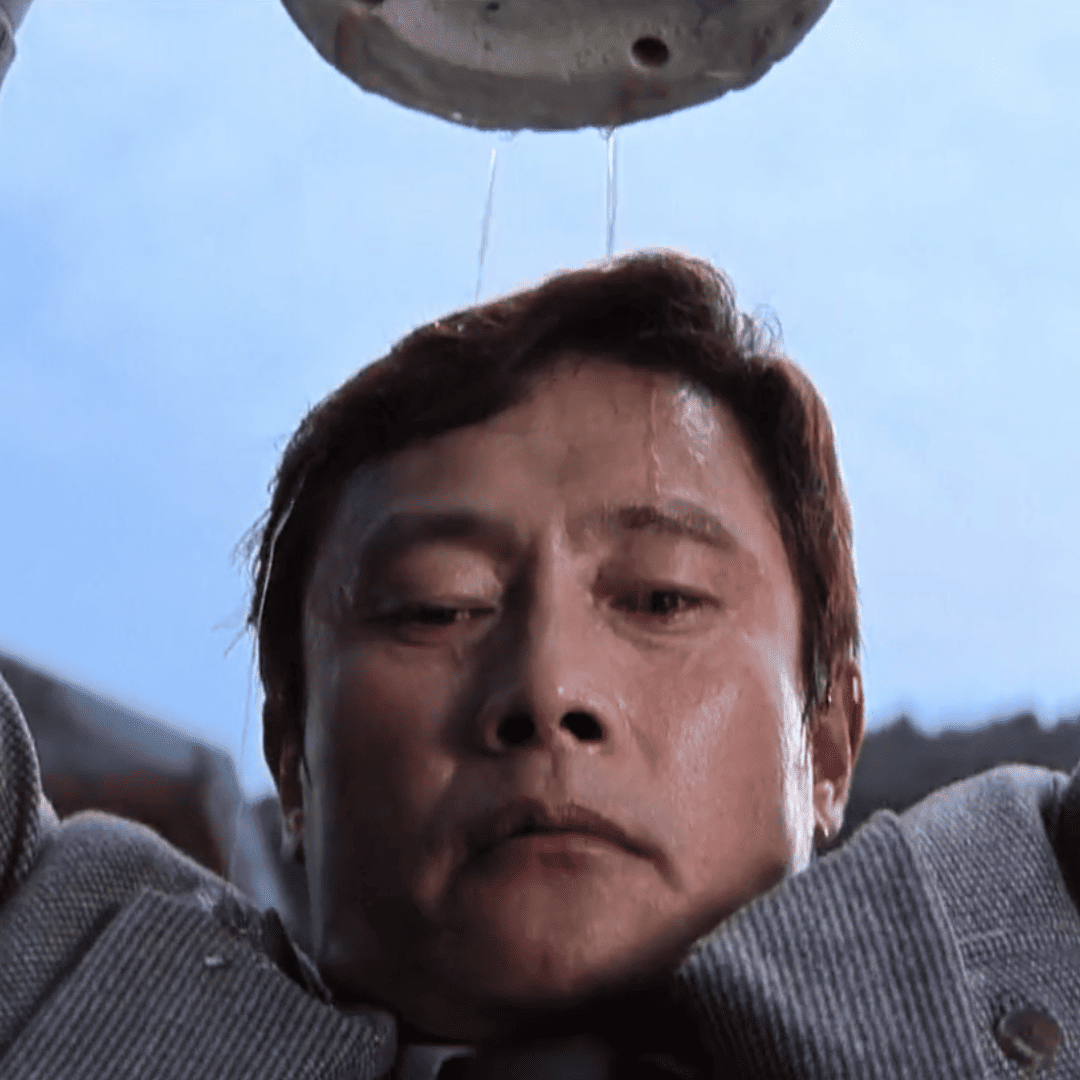
No Other Choice Review Quick Take: This isn't just a thriller; it’s a cinematic autopsy of the modern worker. Man-su (Lee Byung-hun) doesn't kill for bloodlust; he kills for a dental plan and cello lessons. It is a monumental work of art that captures the "foreboding inevitability" of the Park Chan-wook pantheon—the feeling that once the first choice is made, the rest are no longer choices at all.
Lee Byung-hun’s Man-su in 3 Words: Desperate, Unhinged, Determined.
The Architecture of a Middle-Class Meltdown
The film’s genius lies in how it frames Man-su’s descent not as a choice, but as a survival mechanism. He isn’t fighting to be rich; he’s fighting to stay “normal.” We see the deterioration of his world through the “stigmata” of job hunting: the desperate red-ink notes scribbled on his palm, and the gut-wrenching moment he gives away the family dogs because there are simply too many mouths to feed.
There is a profound relatability here. You don’t feel disgust toward Man-su’s refusal to sell his childhood home or stop his daughter’s music lessons. You feel the claustrophobia of a man whose “best” isn’t good enough because the competition is simply too strong.
The Greenhouse Nightmare: A Dollhouse of Horrors
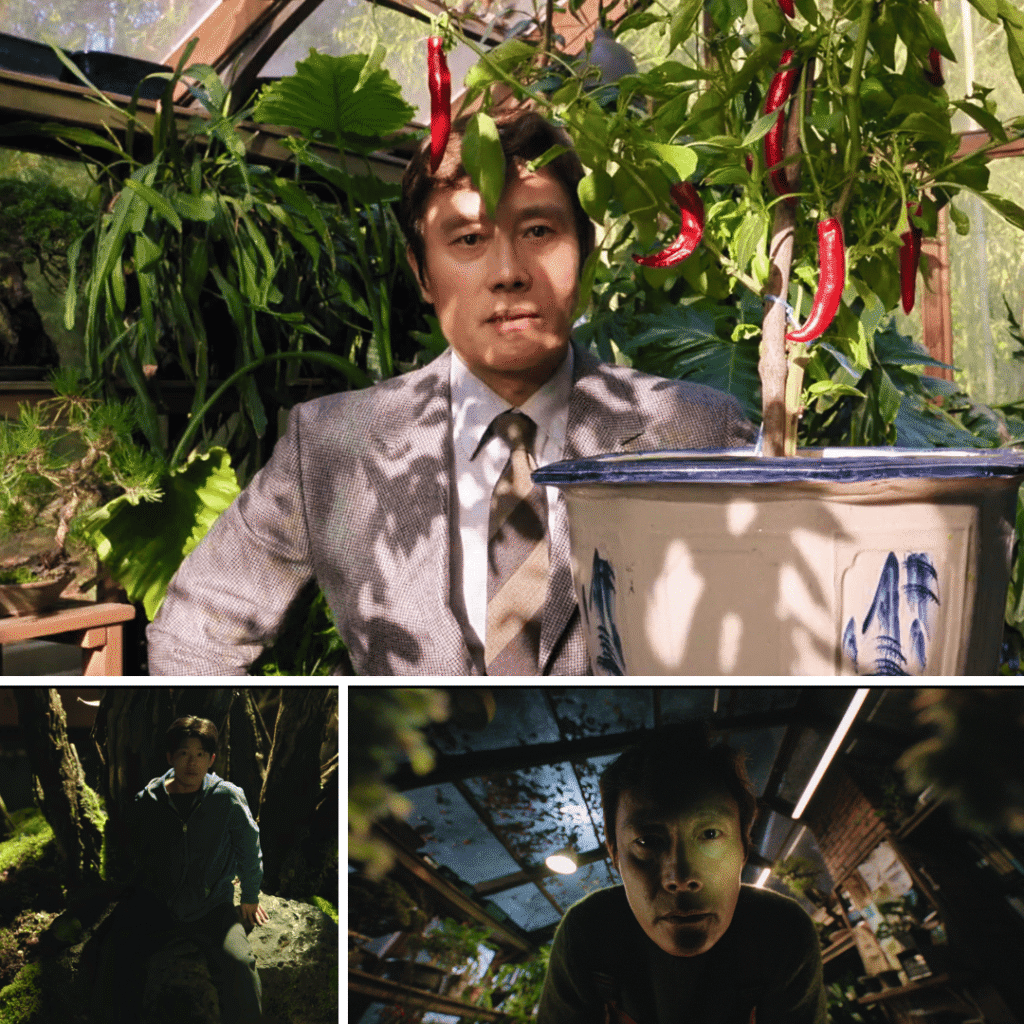
Park Chan-wook turns the domestic into the grotesque through visual hyperbole. The greenhouse Man-su built with his own hands becomes the site of a “sensational” dream sequence where the structure shrinks into a doll’s house, the son’s flashlight intruding like a god-complex gone wrong.
The imagery of Man-su tending to his bonsai, twisting and binding branches in a sadistic close-up, mirrors his own internal “pruning.” To survive the algorithm-driven world, he decides he must lean into the “choice” of downsizing his rivals. A searchlight is a terrifying metaphor for a family man who has become a predator in his own backyard. The domestic and the deadly are no longer separate; the apple tree in the yard grows on soil fertilized by his own competition.
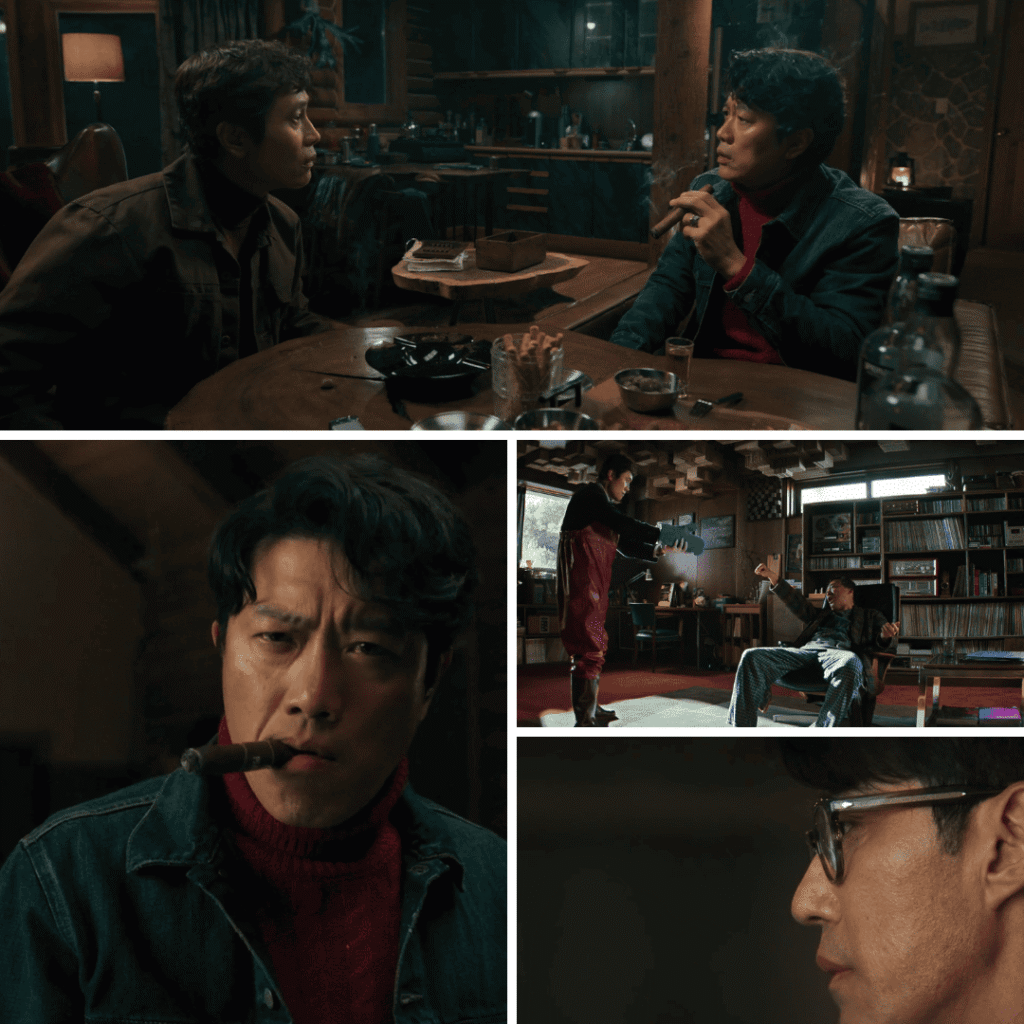
The Actor as an Archive: Park Hee-soon’s Two Faces of Power
In the “Grey Area,” identity is often just a tool for survival, and no one illustrates this better than Park Hee-soon. By comparing his current roles, we see a haunting study in how the same actor can play both the hammer and the nail:
Murder as Self-Correction: When Man-su targets Seon-chul, he isn’t just killing a rival; he’s killing his own reflection. Man-su sees his failed past in the drunkard and his lonely, isolated future in Seon-chul. By the time the chainsaw comes out, you realize he isn’t trying to win a job—he’s trying to delete the parts of his own soul that have already died.
The Strategic Powerhouse vs. The Voiceless Cog: In The Judge Returns, Park is Kang Shin-jin: a predator who uses the law to devour the weak. But in No Other Choice, he is Seon-chul: a man who has “made it,” yet lives in a forest of isolation where no one hears his shouts. He represents the “dream home” that has become a tomb of silence.
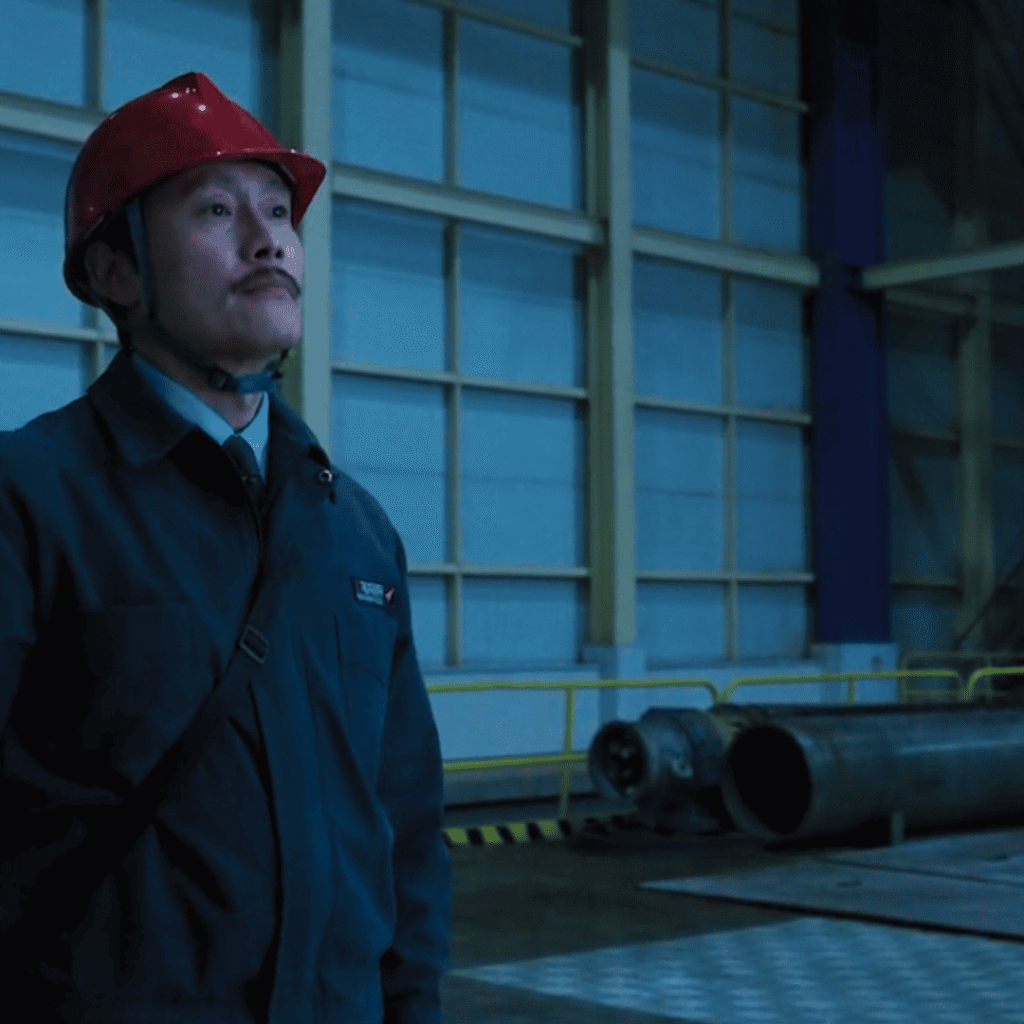
The Automated Silence of the “Happy” Ending
The final minutes are a masterclass in cynical irony. Man-su “wins.” He keeps the house. He keeps the family. But he does so by becoming the sole human operator in a fully automated factory, the “Pulp Man of the Year” reigning over a kingdom of machines.
The closing shot of trees being ripped apart by machines isn’t a “cleansing reset.” It is a visual scream. It represents the total victory of the machine over the organic soul. Man-su has successfully “adapted,” but in doing so, he has become as cold and automated as the factory lights that switch off one by one, threatening to swallow him in darkness.
No Other Choice Review: Final Thoughts
Is it better than Oldboy? No. But it is a monumental work of art. It carries that signature sense of inevitability that defines Park’s best work. It’s a tragedy played out through the prism of dark comedy, reeking of the absurdity of late-stage capitalism.
Is No Other Choice worth watching?
Yes. No Other Choice is a 9/10 brutal satire of middle-class desperation. Watch if you liked Parasite, The Devil Judge, or The Ax. Lee Byung-hun delivers a career-best performance as a father descending into moral collapse to maintain his middle-class life.
What is No Other Choice about?
Yoo Man-su (Lee Byung-hun), a former car company executive, becomes trapped in unemployment hell. When a dream job opens up at a paper mill, he systematically eliminates his competition through increasingly desperate acts of violence—all to keep his home and his daughter’s cello lessons.
Does No Other Choice have a happy ending?

No Other Choice has a cynical, ironic ending. Man-su “wins” the job but becomes the sole human operator in a fully automated factory. The final shot of trees being ripped apart by machines represents the total victory of automation over humanity—a dark commentary on modern labor.
Is No Other Choice based on a true story?

No, but it’s based on the 1997 novel The Ax by Donald E. Westlake. This is the second film adaptation after the 2005 French version. Park Chan-wook updated the setting to modern Korea, adding themes of AI and automation replacing human labor.
Who stars in No Other Choice?

Lee Byung-hun stars as Yoo Man-su, with Son Ye-jin as his wife Mi-ri. The supporting cast includes Park Hee-soon as rival Seon-chul, Lee Sung-min, Yeom Hye-ran, and Cha Seung-won. It’s a reunion for Lee Byung-hun and Park Chan-wook after Joint Security Area (2000).
Where can I watch No Other Choice?
No Other Choice is available in theaters and on streaming platforms. Check local listings for theatrical releases. The film was released in South Korea on September 24, 2025, with international distribution by Neon.
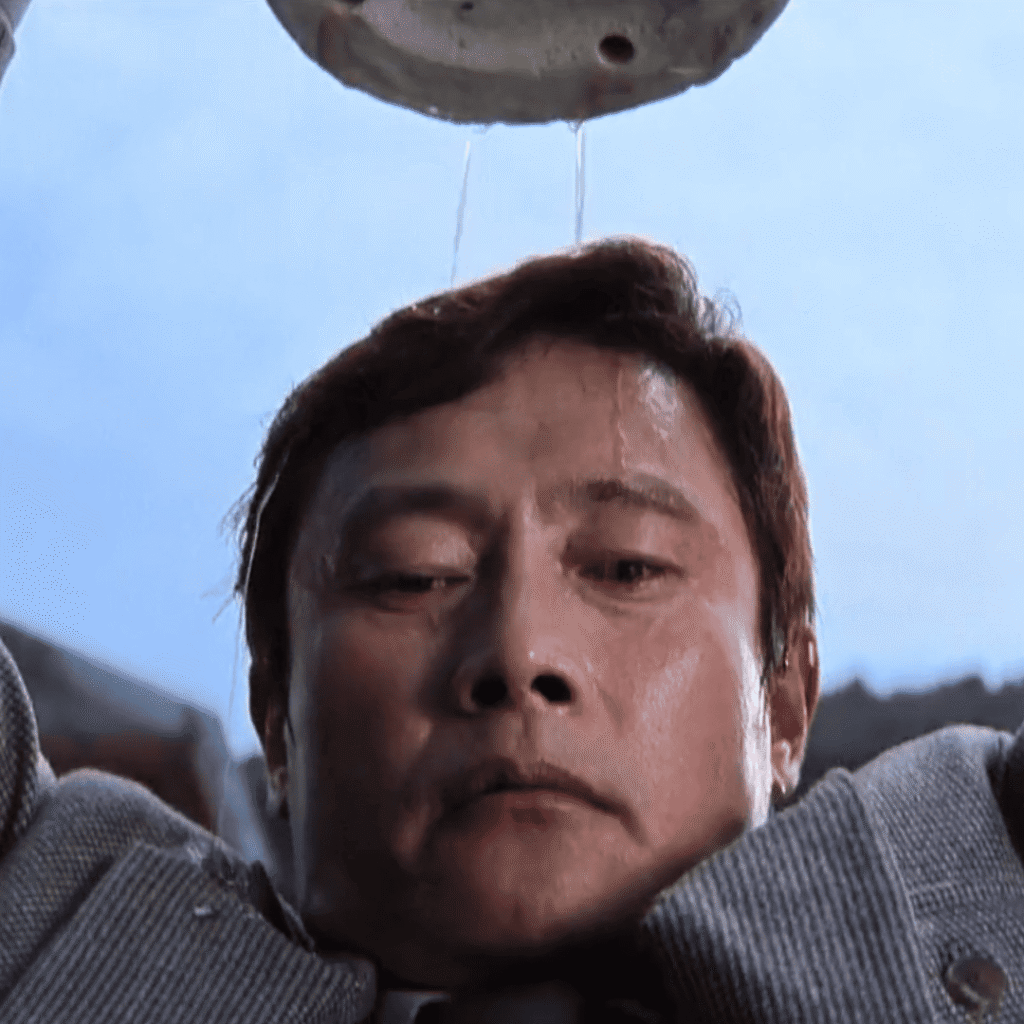
The Verdict: Where Does the Gavel Fall Next?
If the psychological erosion in No Other Choice left you breathless, you are already in the right place. We are currently dissecting two extremes of the “Grey Area” here at the blog. One is reaching its final verdict while the other is just beginning its masterpiece of lies.
The Current Case: The Judge’s Return Since we are tracking the fallout of the law, do not miss our deep dive into the 10 shows that mirror this specific brand of systemic chaos. If you are still processing the finale, these are the forensics you need to fill the void. Read the full list here: [10 Gritty Dramas Like The Judge’s Return: When the Law Fails]. Also, keep an eye out because my full forensic review of the finale drops tonight.
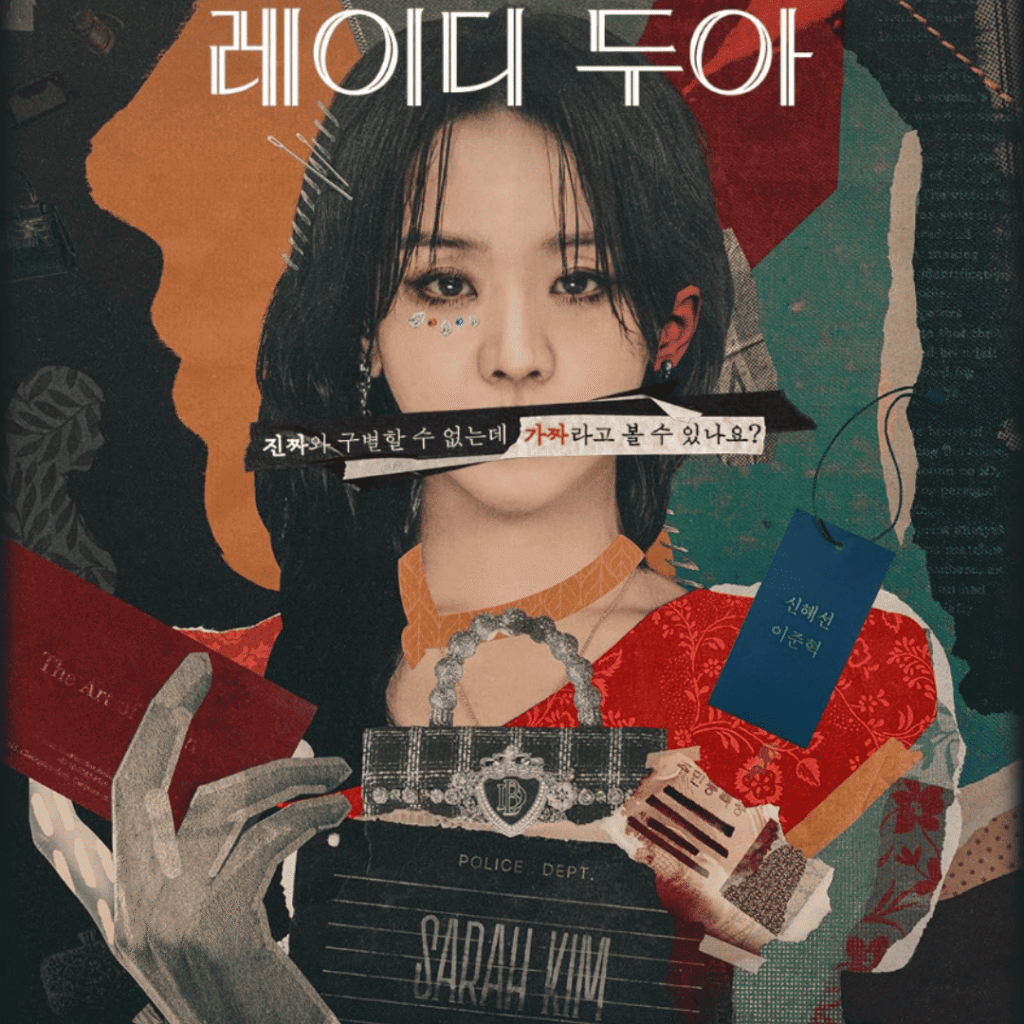
The Next Case: The Art of Sarah (Coming Soon) While the Judge deals in law, our next case deals in luxury. I am currently five episodes deep into The Art of Sarah. If you thought the “invisible” revenge inHis & Hers was cold, wait until you see the forensics of Sarah Kim’s fake identity. Is she a victim of the elite or a predator in a designer mask? The full review drops on Monday 23rd February. Keep your eyes on my social channels for the alert.
What was the one image you couldn’t shake? Was it the chainsaw in the garden, or the flashlight in the greenhouse? Let’s discuss in the comments.
Disclaimer: This blog is for informational and entertainment purposes only. All copyrights and trademarks for the TV shows, films, and other media referenced are the property of their respective owners. This blog aims to provide original commentary and insights and claims no ownership over third-party content.


3 Comments