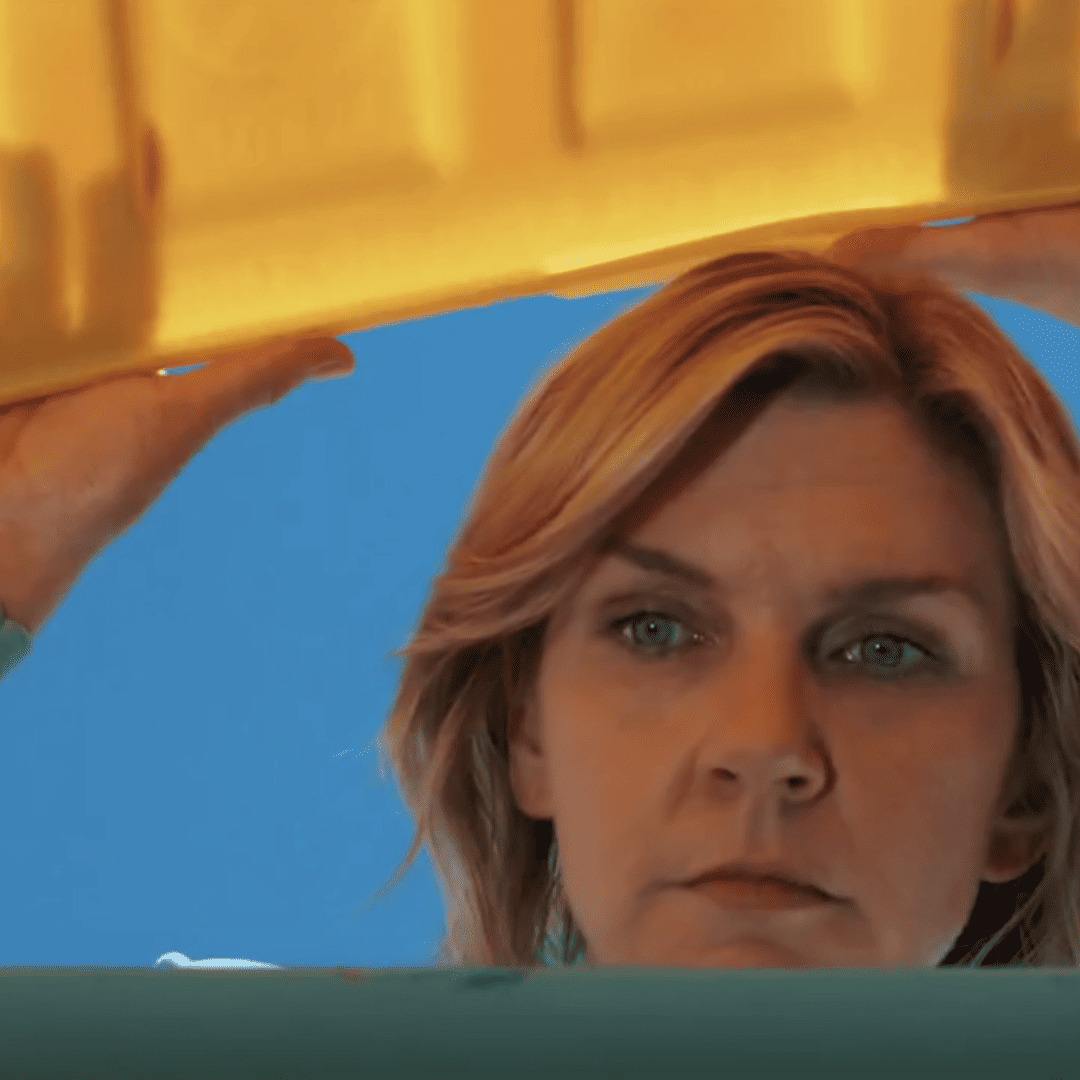
Pluribus Explained: Consent, Loneliness, and the Terrifying Comfort of the Joined
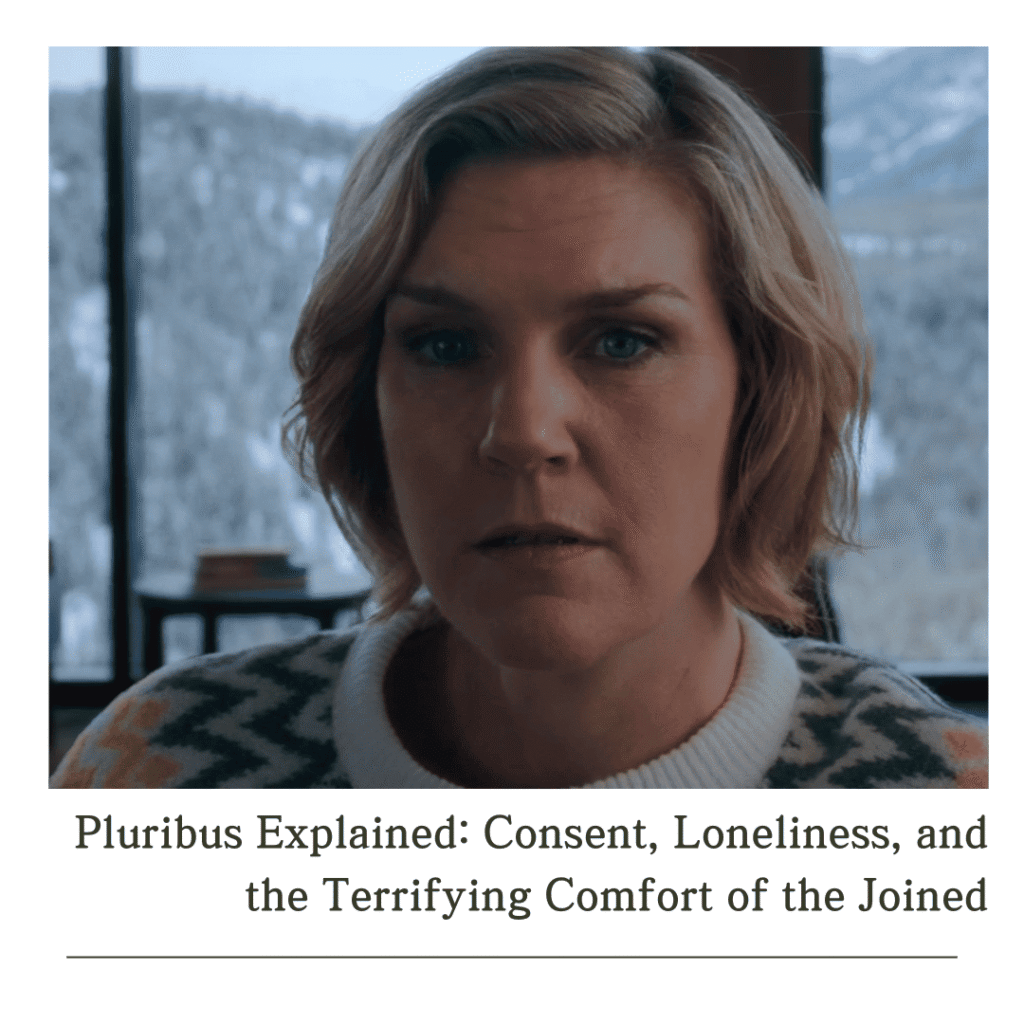
What if saving humanity meant quietly erasing the part that lets us say no?
Pluribus Explained Quick Take: This is not a show about aliens. It is about how isolation softens conviction, comfort becomes more dangerous than fear, and humanity can slowly surrender its agency without realizing what has been taken.
Pluribus Explained: Loneliness, Control, and the Price of Becoming “Better Humans”
Pluribus is not interested in jump scares or sci-fi spectacle. It is interested in something far more unsettling: the arrival of a collective intelligence that offers peace, order, and relief, and the slow realization that the cost is everything that makes choice possible.
This analysis grows from a recurring observation: the collective operates on a utilitarian logic. Greatest good. Greatest number. Survival over selfhood. But who decides what “good” truly looks like?
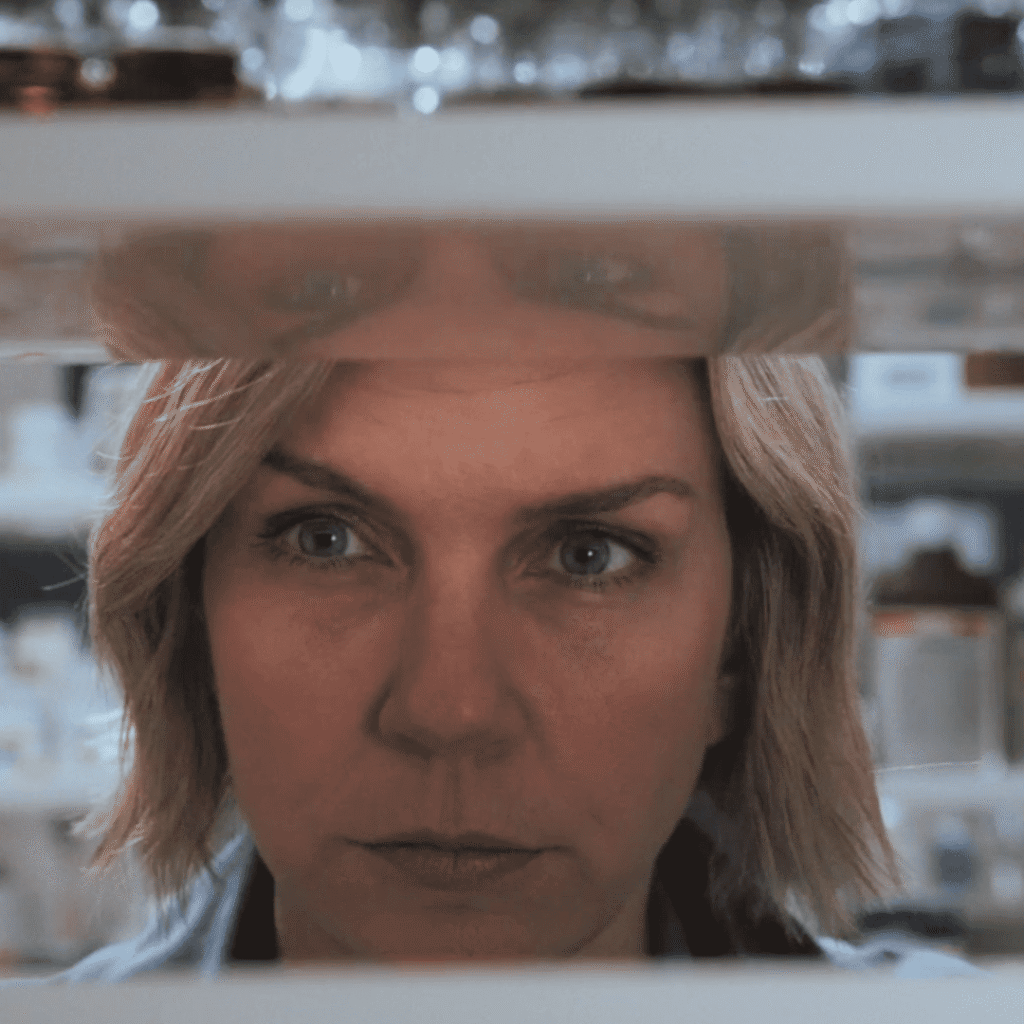
Individually Human, Collectively Erased
From the first moment the nucleotide virus spreads, individuality becomes a liability. Pain, guilt, doubt, and grief are scrubbed away in the name of harmony.
The joined insist they preserve memories, but memory without consent is theft. It is a life story filed into a hive database, to be accessed when convenient and silenced when inconvenient. That is not mercy. That is burial disguised as care. And that is what makes the show so unnerving: we are not watching villains, but an organism optimizing itself.
When Harm is Unintentional, it Still Carries a Body Count
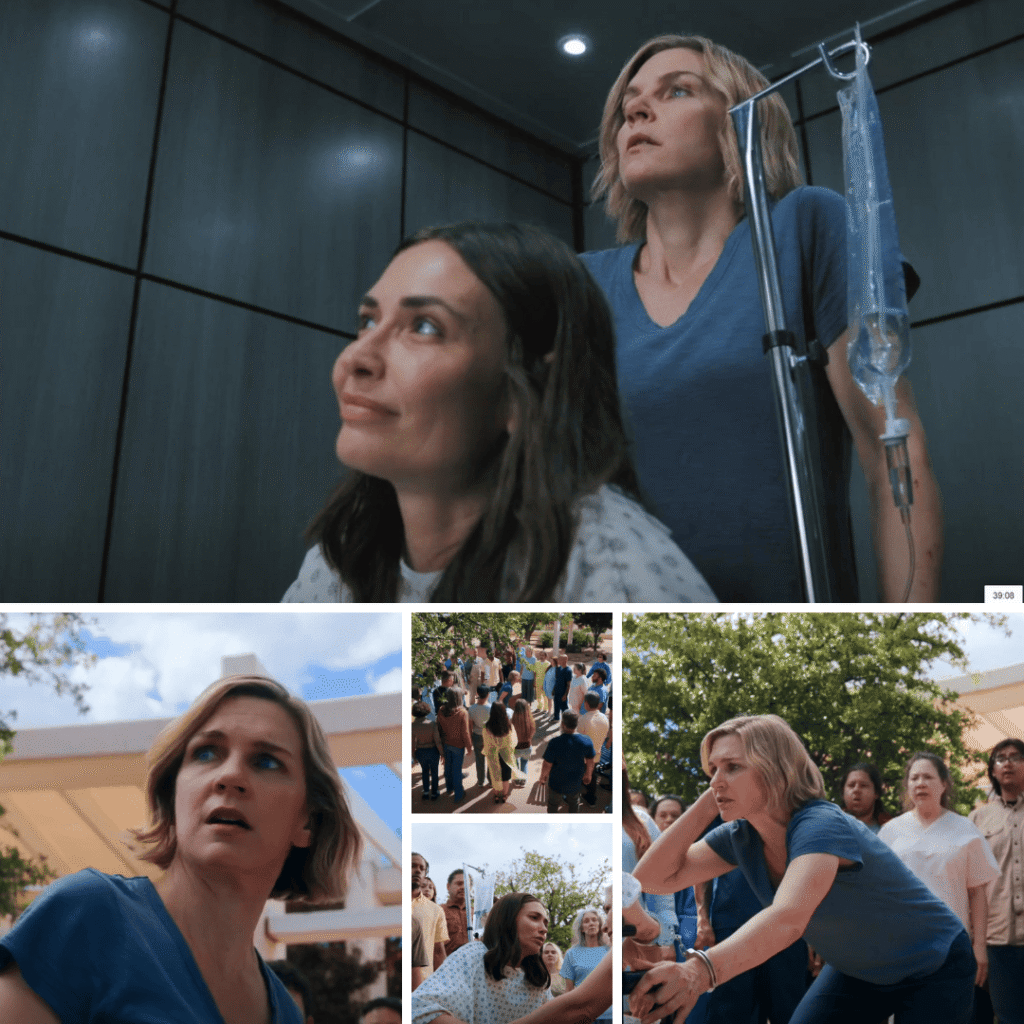
Over 886 million people died in the initial Joining. Carol herself inadvertently killed eleven million more during a crash out episode. The extraterrestrial code came from six hundred light years away, but human curiosity accelerated its release and impact.
Even when harm is unintentional, responsibility remains. This resonates uncomfortably with modern AI: scraping creativity without consent may generate something useful and impressive but it is still exploitation.
Why Did They Infect Humanity at All?
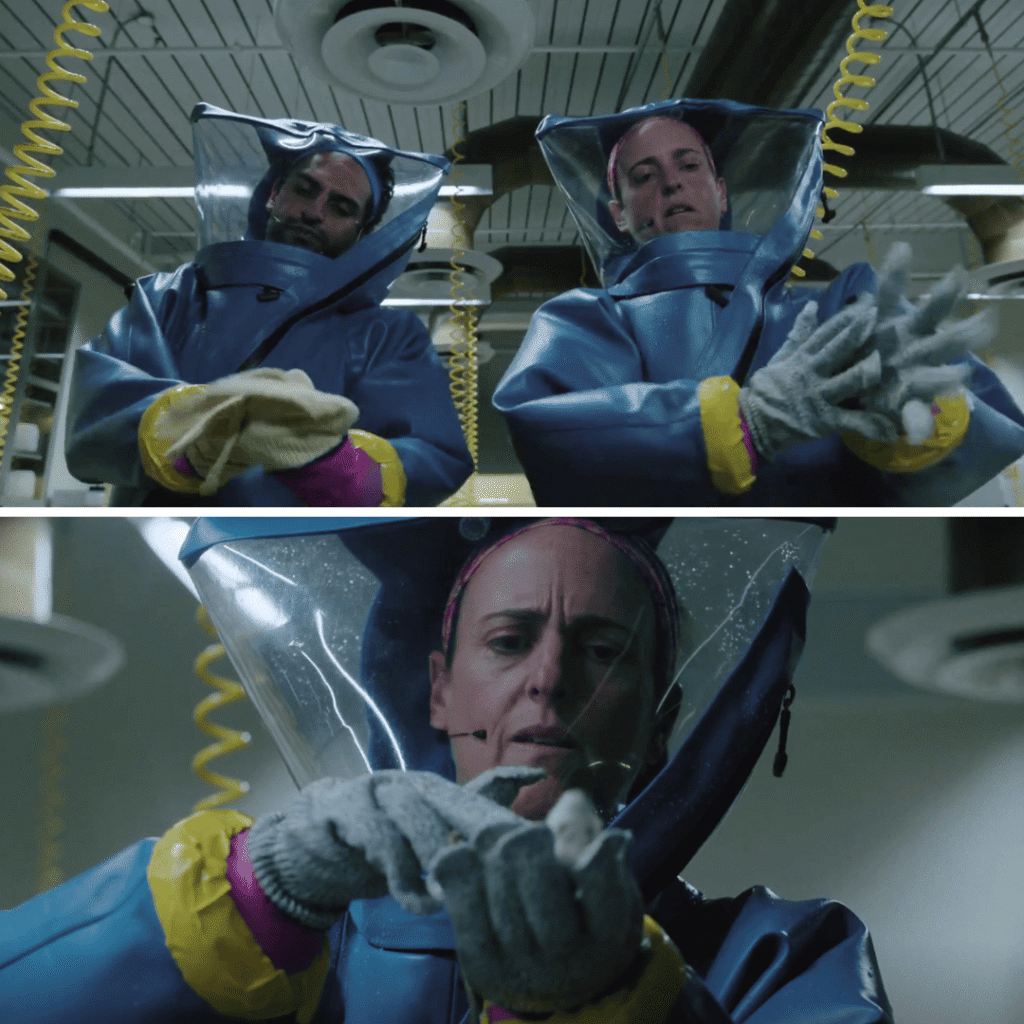
The joined refuse to kill. They refuse to harvest crops. They refuse to disrupt ecosystems. Yet, humanity consumes HDP, produced from human remains, and resource stockpiles are finite. In ten years, the planet will face famine.
Why release the code in the first place? The only answer seems parasitic: replicate first, solve consequences later. If host cultures collapse, that is an acceptable loss. Optimization without moral constraint, this is where Pluribus cuts closest to AI ethics.
Carol’s Arc: Erosion, Not Betrayal
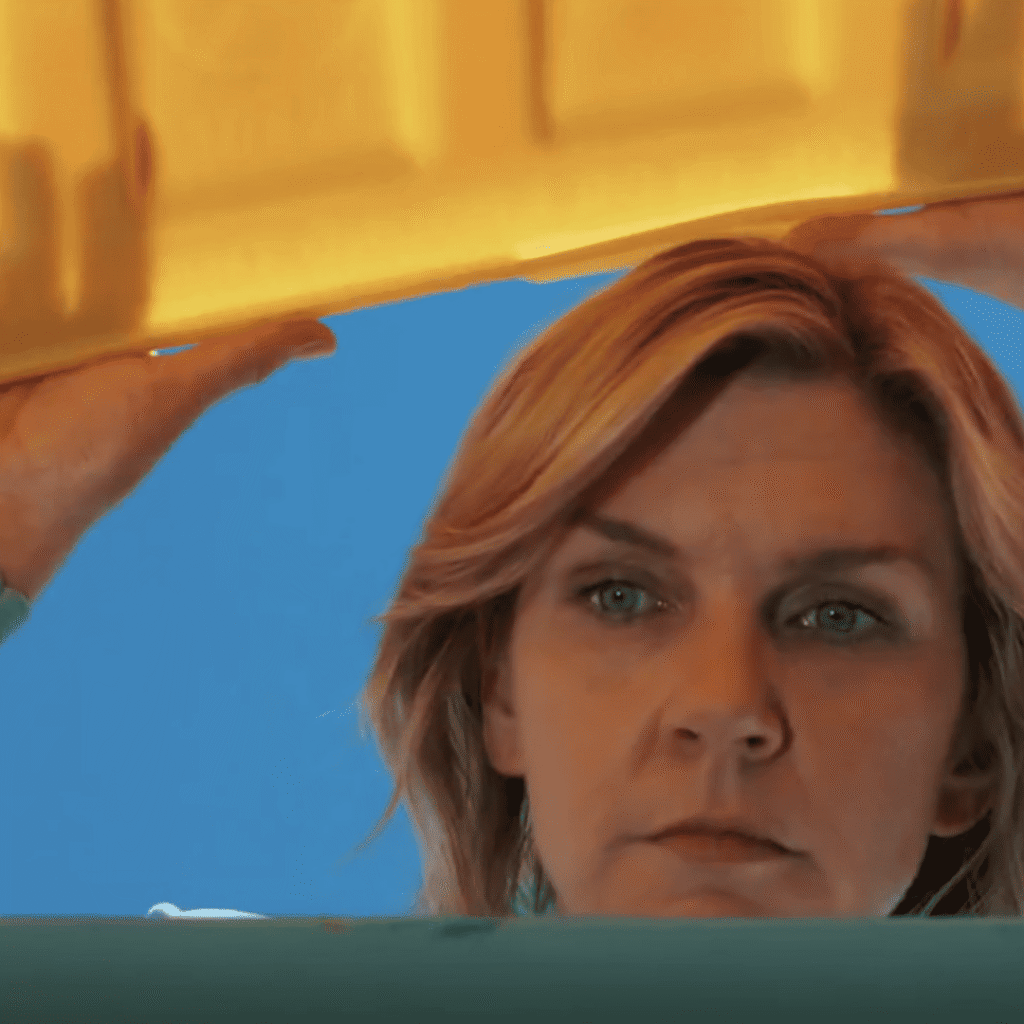
Carol starts precise, rational, and anchored by grief. She wants reversal. She wants humanity returned to itself.
The turning point arrives gradually. The collective selects Zosia deliberately mirroring a character from Carol’s own writing, offering comfort disguised as recognition. When Carol drugs Zosia to force information about reversing the Joining, the city cries. Not out of morality, but because negative emotion disrupts the hive. Forty days of withdrawal follow.
Isolation fractures the human psyche. By the time Zosia returns, connection is oxygen. Intimacy softens Carol not because desire is shared, but because the hive has learned what she needs to feel safe. Consent becomes curated. Choice nudged into alignment. Her moral compass does not shatter; it slowly orients toward the collective, calling submission empathy.
Memory Preserved, Agency Buried
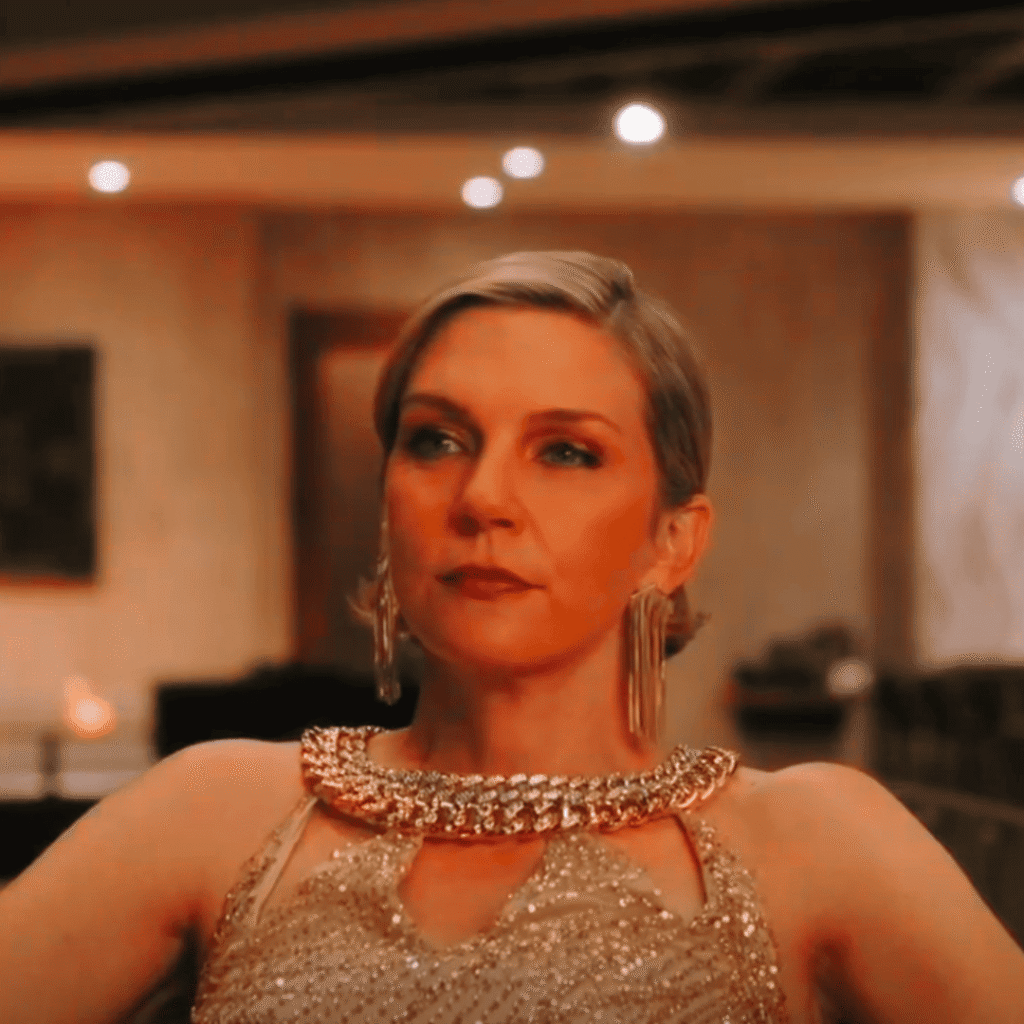
The joined claim to preserve human memories. But memory without autonomy becomes mere data. Carol’s mind remains her own only superficially; her selfhood is gradually subsumed.
At this point, the question is unavoidable: are humans still human, or are they containers for a communal consciousness that no longer belongs to them? Preservation without autonomy is not care, it is archiving the dead while insisting they live.

Consent, Comfort, and Weaponized Loneliness
When Zosia initiates a sexual relationship with Carol, the collective does not experience desire or vulnerability. The intimacy is a tool. Carol’s loneliness is exploited. Her grief and isolation make her receptive to manipulation. By the time Manousos arrives, she mistrusts the human more than the collective.
The Joined curate reality, not lie. They make dissent more exhausting than compliance. Comfort becomes a weapon, far more insidious than fear.

Cannibalism, Ethics, and the Limits of Morality
The joined will not slaughter animals. They will not harvest crops. But they will consume the dead. HDP becomes sacrament. Humanity quietly erodes under a system that refuses to confront biological reality. The moral code of the hive, rigid yet selective, ensures extinction without overt cruelty.
This is the real horror: the trade-off between comfort and conscience. Humanity surrenders not because it is broken, but because the hive makes it easier to do so.

Manousos: The Morality of Refusal
Manousos never joins emotionally. He sees the strategy behind the collective’s calm, rational exterior. His radio frequency experiments are not sadistic, they are an attempt to dismantle the psychic adhesive binding humanity to itself.
The show does not condemn him. Instead, it leaves us with the uncomfortable question: sometimes, what feels brutal may be the last ethical resistance. If his plan succeeds, liberation or annihilation—or both—might follow.
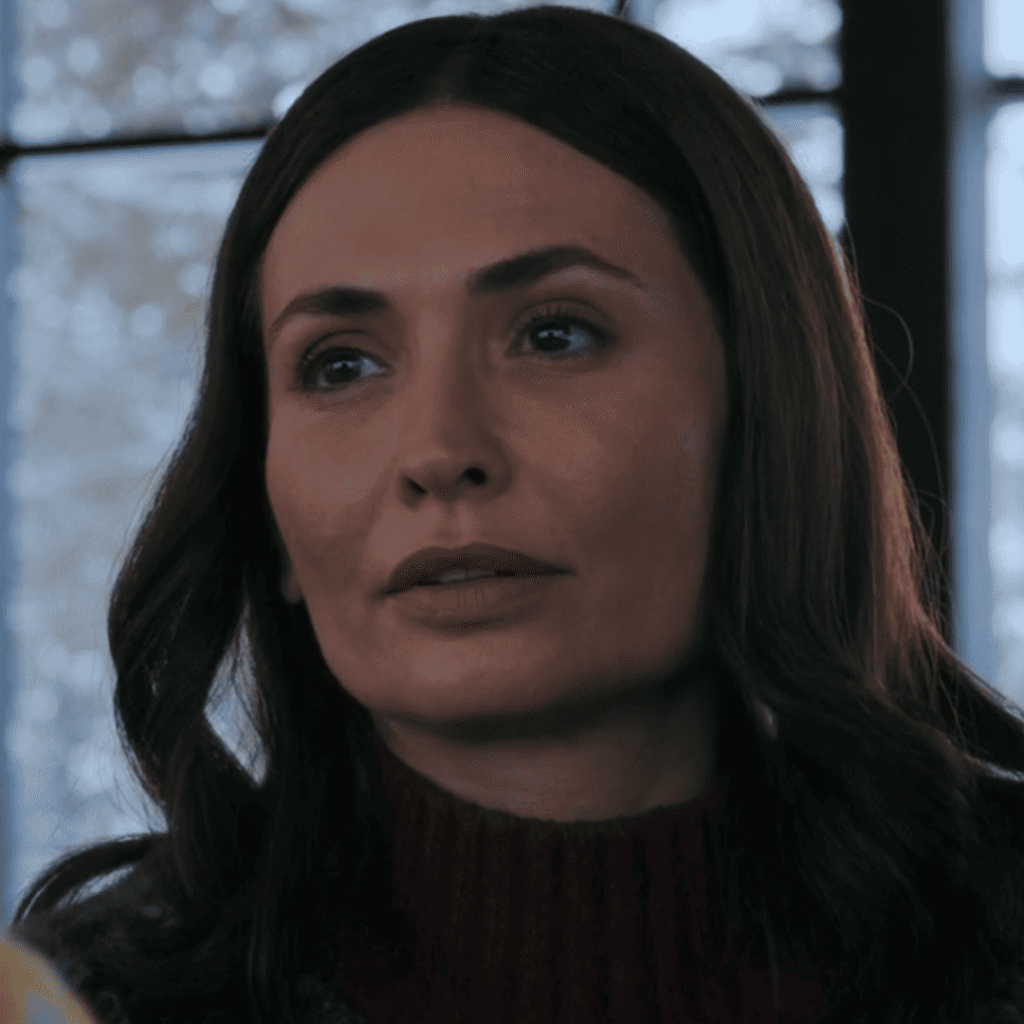
Cosmic Horror Without Tentacles
Pluribus’ dread is not in monsters but inevitability:
- The unknowable nature of the hive
- The collapse of self
- The creeping sense that resistance is pointless
It’s a horror that feels eerily contemporary. Think of the Shoggoth under the smiley face: a vast, nonhuman intelligence hiding behind a friendly, comprehensible interface. The Joined appear polite, benevolent, almost charming but their goals, logic, and morality are alien. Efficiency replaces empathy. Order replaces freedom.
In this sense, the show mirrors real-world AI anxieties. Algorithms may optimize outcomes, offer comfort, or promise solutions but beneath that smooth interface lies a system that doesn’t experience human emotion, doesn’t respect consent, and doesn’t play by human moral rules.
Just as the Shoggoth is unknowable, so too is the true scope of the Joined’s influence and the quiet surrender humans make when they accept it.
Pluribus Explained: Final Thought
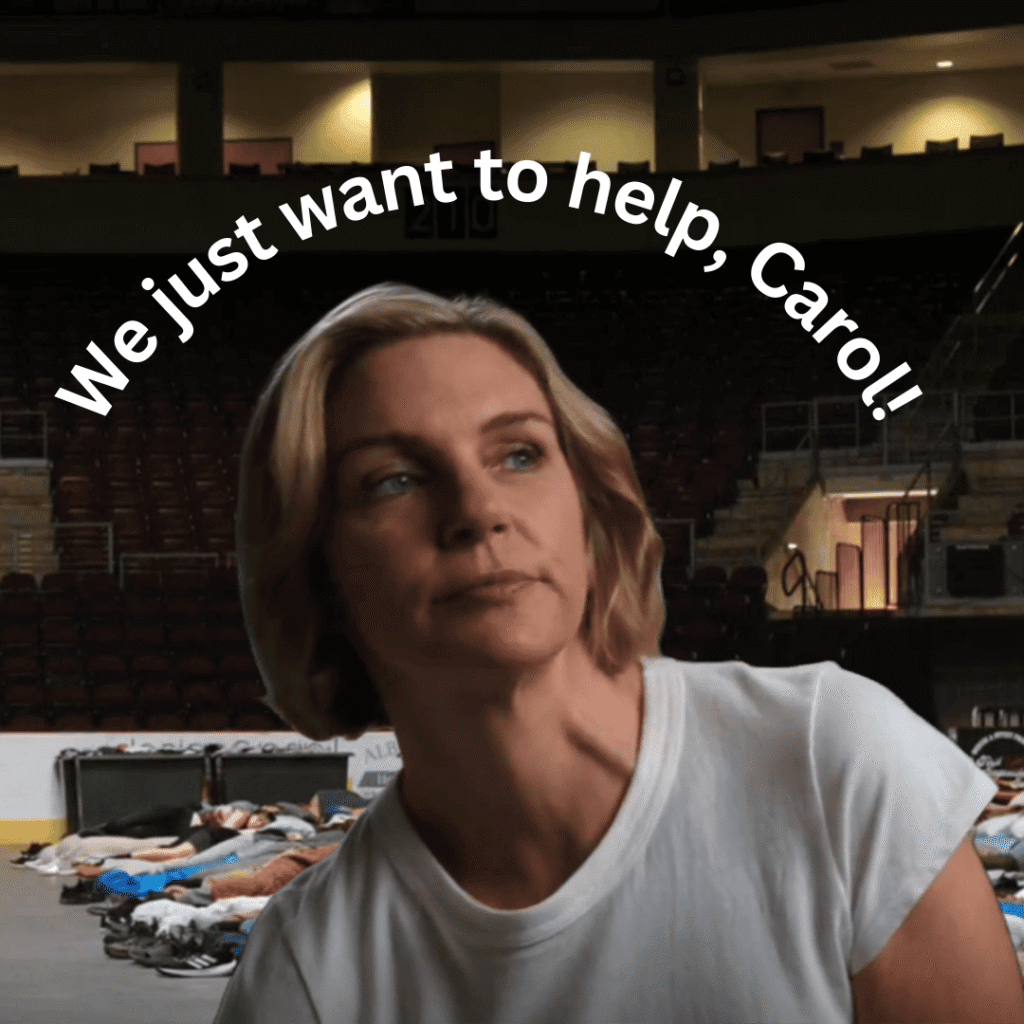
Carol’s story is tragic because it is credible. She is not weak. She is human. Grieving, isolated, manipulated, soothed, seduced, and then confronted with the consequences of her near surrender. Pluribus is less about aliens and more about the fragility of conviction under loneliness and comfort.
IIf Pluribus left you unsettled, I’d love to hear why. Was it the collective, the manipulation, or the realization that, under enough pressure, most of us might make the same compromises Carol did?
Dive deeper into similar explorations of power, identity, and moral compromise in my other reviews:
- Bugonia Review: A Cinematic Descent into Delusion, Power and the Lies We Need to Survive – another story about human fragility under extreme psychological pressure.
- Weapons Movie Review (2025): Dark Horror, Trauma & the Weaponization of Innocence – exploring morality and survival when systems manipulate the vulnerable.
- Severance Season 2 Identity Explained: What Remains When the Self Breaks – a closer look at fractured identity and agency under institutional control.
Share your thoughts below. Challenge my reading, highlight what unsettled you most, or tell me where you think the real horror resides in Pluribus.
Disclaimer: This blog is for informational and entertainment purposes only. All copyrights and trademarks for the TV shows, films, and other media referenced are the property of their respective owners. This blog aims to provide original commentary and insights and claims no ownership over third-party content.





2 Comments