
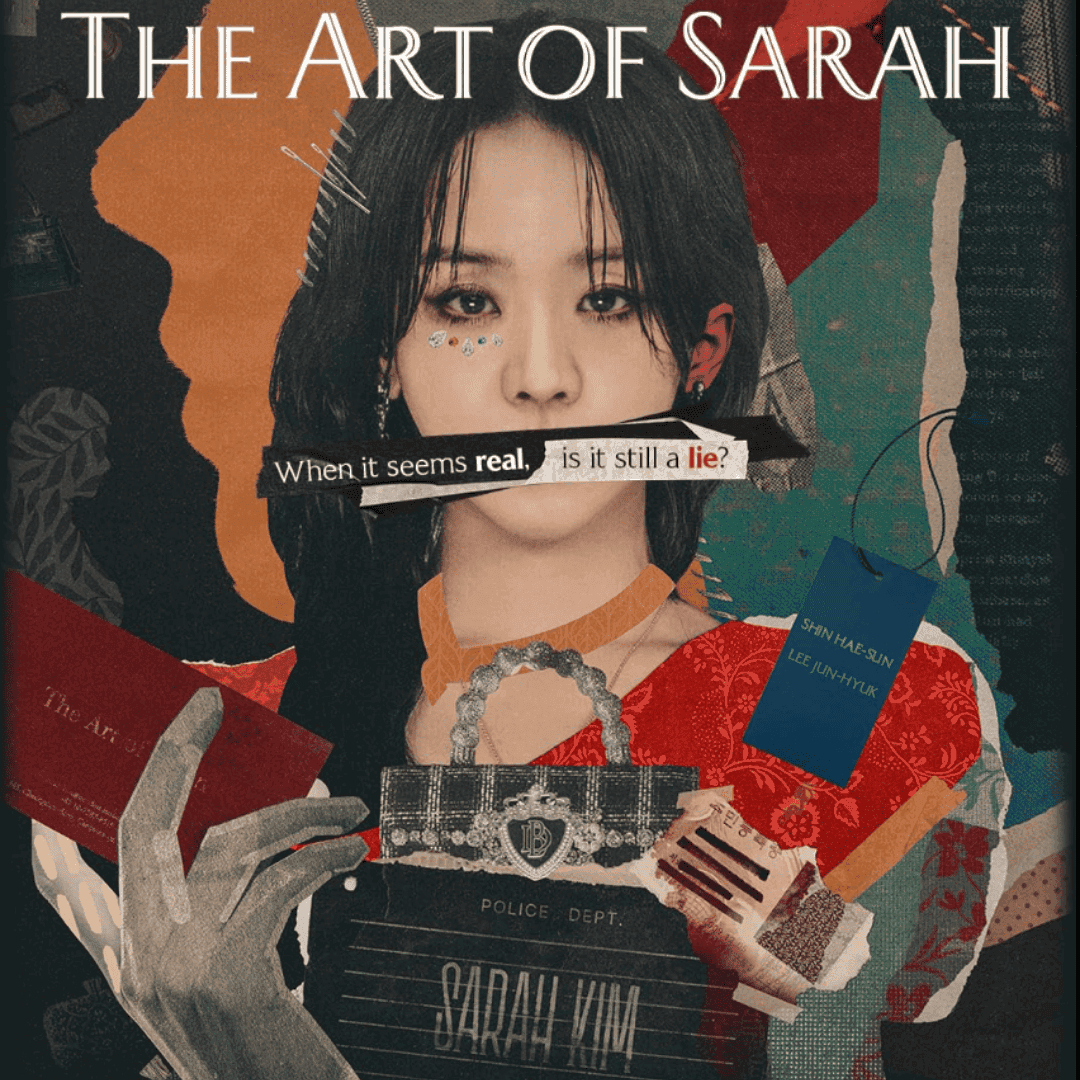
The Art of Sarah Review: Ending & Themes Explained (2026)
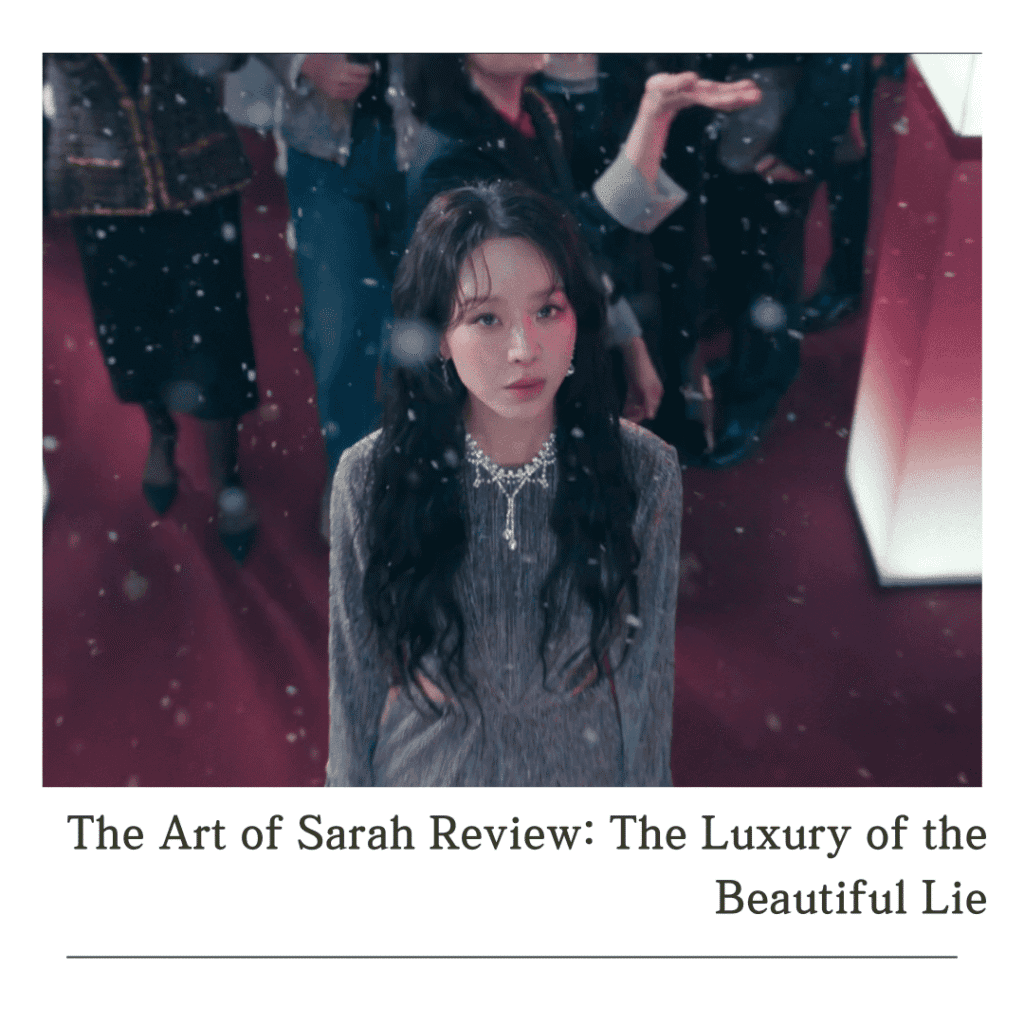
Is The Art of Sarah Worth Watching?
Yes. The Art of Sarah is an 8/10 cynical thriller about identity fraud in Seoul’s luxury fashion world. Shin Hye-sun plays three different women in one body: Mok Ga-hui, Kim Eun-jae, and Sarah Kim and the ending will wreck you. Watch if you liked Inventing Anna, The White Lotus, or morally grey protagonists who weaponize class anxiety. Skip if you need likable characters or clean justice.
The show opens with a line that defines everything: “Truth is like light and it blinds us. Conversely, lies are just like a beautiful sunset that makes everything look incredible.” By the end of eight episodes, you’ll understand why Sarah Kim chose the sunset.
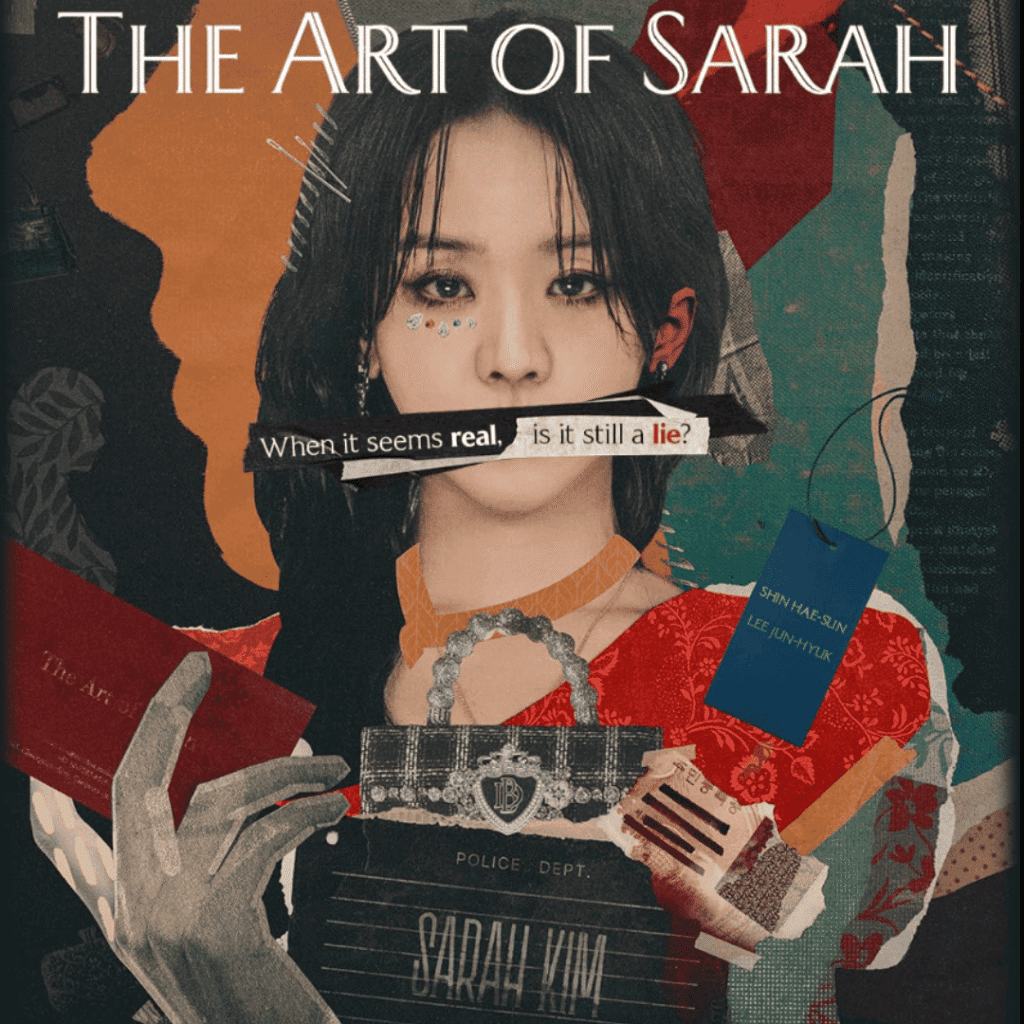
What Is The Art of Sarah About?
Sarah Kim doesn’t exist. She’s a fabrication, a working-class woman named Mok Ga-hui who stole a dead woman’s identity, married a power broker, and built a luxury handbag brand called Boudoir on stolen credibility and exploited labor. Much like the desperate protagonist in my No Other Choice Review, Sarah is a character driven to the brink by a system that demands a “middle-class” performance she cannot afford.
When a body turns up in a reservoir and detective Park Mu-gyeong starts investigating, Sarah’s carefully constructed life unravels. But here’s the twist: the murder victim isn’t Sarah. She’s alive, hiding in plain sight, and the dead woman is someone else entirely, someone who believed in Sarah’s lie so completely that she tried to become her.

The show signals early that this isn’t a standard murder mystery. By episode 3, we learn Mok Ga-hui’s origin story: a department store employee who lost her job over a toilet break, became a reseller of discounted designer bags, took loans from unscrupulous money brokers, and hit rock bottom. She jumped off a bridge with a stolen bag and emerged with a new name—Boudoir—and a new identity: Sarah Kim.
By episode 4, detective Mu-gyeong uncovers her aliases. Sarah Kim walks into the police station, very much alive. The question becomes: who is the dead woman? And how many people has Sarah Kim manufactured?
The Verdict Box
- Score: 8/10
- The Vibe: Glossy, cynical, and morally queasy like scrolling a luxury Instagram feed while knowing it’s all fake
- Watch if you liked: Inventing Anna, The White Lotus, Anna (2022)
- Skip if: You need likable characters, clean justice, or happy endings
The Art of Sarah Ending Explained
The ending is brutal in its cynicism. Sarah doesn’t get redeemed. She gets contained.
Rather than let Boudoir collapse in scandal, Sarah accepts a prison sentence under a false name, Mi-jeong ensuring the brand survives untainted. She becomes a ghost, imprisoned for a murder she committed, but buried under an identity that isn’t even hers. The brand outlives the woman. The label is more immortal than the soul.
The bags were real. The craftsmanship was real. The customers were real. By isolating Sarah as a “bad apple” and burying her under a false name, the system protects itself. The brand survives. The investors keep their returns. The customers keep their status symbols. Only the woman disappears.
Themes & Analysis: Why This Show Hurts
The Sunset Philosophy: We Prefer the Lie
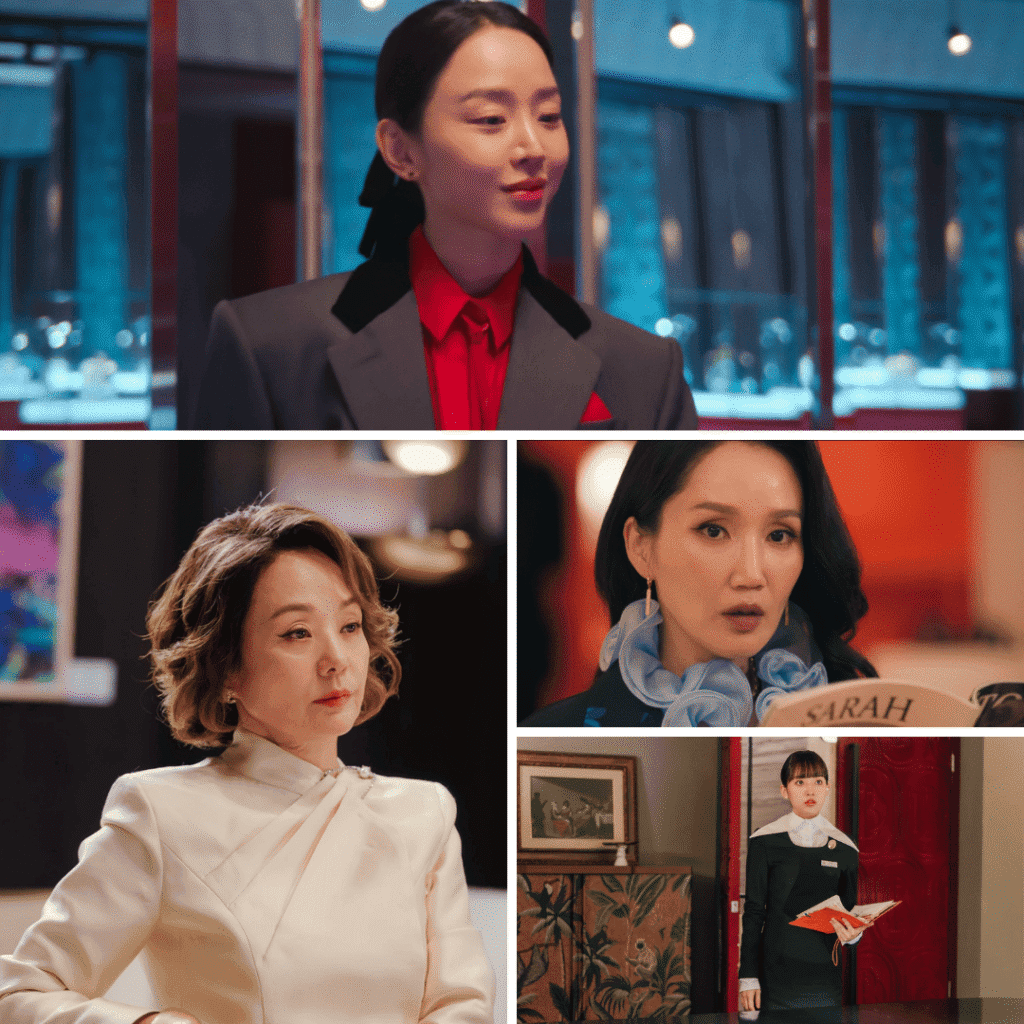
Sarah succeeds because everyone around her wants to believe. Yeo-jin sees in Sarah the unapologetic confidence she lacks for her own brand, Knox. Hyo-eun feels empowered by Sarah’s belief in her, even as Sarah treats her as disposable. Choi Chae-u, the department store CEO, ignores the warning signs because Sarah’s “sunset”—her manufactured success—blinds him to the truth.
Yeo-jin admits it herself: she couldn’t look closely because the light of Sarah’s success shone too brightly. Only when she gets a bag authenticated does she discover the fraud. By then, she’s already invested embezzled funds and her reputation.
The show argues that authenticity is a liability in modern capitalism. We only call out scams when they’re right in front of our face, when there’s a body in the sewer. Until then, we prefer the comfort of the beautiful lie.
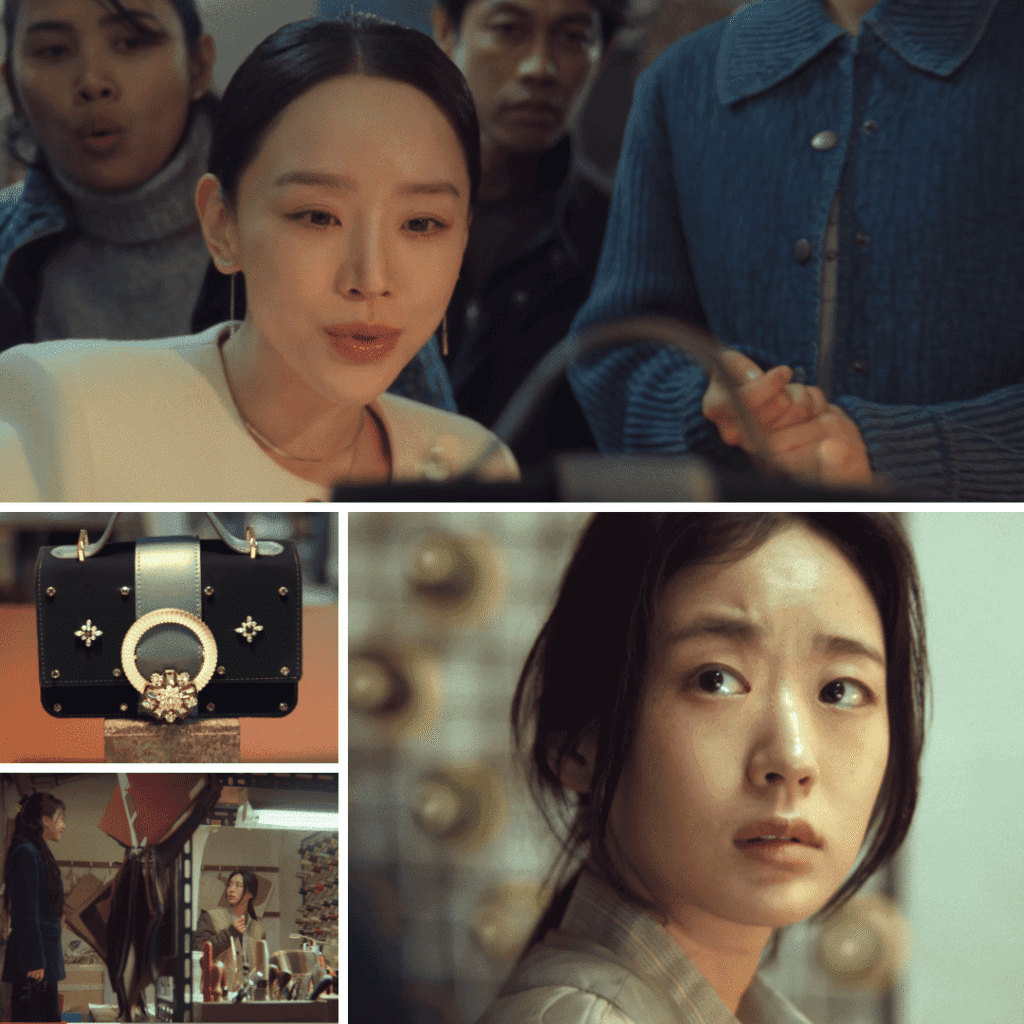
The “Made in” Myth: Exploitation as Industry Standard
Sarah’s defense of her scam is the show’s most savage reveal: she’s not operating outside the system. She’s its most diligent student.
By manufacturing bags in Seoul and attaching handles in England, she fulfills legal requirements for “Made in the UK” labeling. This is standard practice. Many luxury houses produce the bulk of items in China, add small fixtures in Italy, and claim “Made in Italy” status.
The cobalt in our phone batteries comes from dangerous mines in Congo. The jasmine in our perfumes is harvested by underpaid workers in Egypt. The “Made in Italy” bag had its body stitched in China, its handle attached in Milan. Sarah’s business model isn’t an outlier, it’s standard practice dressed in better lighting.
The justice here is merely procedural, it removes Sarah but leaves the predatory system intact.

Class Anxiety as Weapon and Weakness
Sarah’s power comes from confidence—the con artist’s greatest tool. But she amplifies it by exploiting others’ class anxiety:
- Hyo-eun: A former department store employee who feels disposable. Sarah headhunts her, empowers her, then steals her client list and blacklists her when she becomes threatening. Hyo-eun saw herself as disposable, so Sarah treated her as such.
- Yeo-jin: Her brand Knox isn’t “luxury enough” for the elite table. Choi Chae-u looks down on her cheaper products. She sees Sarah as freedom from that anxiety—and invests embezzled funds to buy access. Her desire for acceptance makes her susceptible.
- The elites themselves: They don’t verify Sarah’s credentials because they want her success to rub off on them. They need the sunset too.
Sarah doesn’t ask permission. She performs class confidence so completely that others project their desires onto her. She’s a mirror showing what institutional power could make you, if you were willing to erase who you are.

Legacy Over Liberty: The Brand Eats the Woman
Sarah’s final choice, imprisonment as “Mi-jeong” is the ultimate corporate sacrifice. She realizes her human life is secondary to the Sarah Kim brand.
By accepting this sentence, she ensures Boudoir survives. The show suggests that in 2025, relationships within capitalism only shape and break us. Love grows and heals, but the brand is the only thing that survives.
The product itself was sellable. By removing Sarah, they’re able to stabilize the market and sustain the system.

Character Analysis: Who Is Sarah Really?
Sarah is all of her identities and none of them. She’s Mok Ga-hui’s desperation, Kim Eun-jae’s calculated marriage, and Sarah Kim’s ruthless ambition. She’s the woman Yeo-jin admired, Hyo-eun feared, and Chae-u enabled.
Is she a con artist, a survivor, or a product of systemic cruelty? She’s all three. She started as a survivor, Mok Ga-hui hit rock bottom and rebuilt herself. She became a con artist by necessity, then by choice. And she’s absolutely a product of a system that rewards exploitation if the packaging is high-end enough.
Even her “sincerity” is calculated. She returns the favor to Hong Seong-shin by giving him a kidney, something his own children refused because he allowed her to live. She changes Mi-jeong’s life trajectory by offering her more than she had, even if she doesn’t pay her fairly. These acts aren’t kindness. They’re investments in the brand of Sarah Kim.

Detective Park Mu-gyeong: The Man Who Couldn’t Win
Mu-gyeong starts as the righteous investigator determined to expose Sarah’s fraud. He ends as a man who merely managed the truth.
He discovers that Boudoir isn’t a clear-cut scam, it became real. The products sold. The brand had value. Sarah’s “crime” was largely operating in legal grey zones that every luxury house exploits. He can arrest her for murder, but not for the systemic exploitation that made her possible.
His victory is hollow because the system he serves was never designed to punish people like Sarah for their unethical business practices, only for the murders that become impossible to hide. He operates in black and white. Sarah operates in grey. The grey usually wins.

The Art of Sarah Review Final Thoughts: Are We the Problem?
The Art of Sarah refuses to let us feel clean at the end because we are the ones buying the bags.
If you knew your favorite luxury item was built on Sarah Kim-level exploitation, underpaid labor, manufactured scarcity, false “Made in” labels—would you stop wearing it? Or would you keep the secret to protect your own class status?
The show suggests we’re only willing to call out the scam when it’s right in front of our face. Until then, we prefer the sunset.
8/10. A masterclass in thematic cynicism that will make you side-eye every designer bag you see.
Is The Art of Sarah worth watching?

Yes. It’s an 8/10 cynical thriller with a stunning central performance by Shin Hye-sun. Watch if you enjoy morally complex protagonists and social satire; skip if you need likable characters or happy endings.
What is The Art of Sarah about?

A working-class woman creates a fake identity as luxury brand executive Sarah Kim and builds a handbag empire called Boudoir. When a murder investigation exposes her lies, she must choose between the life she built and the person she used to be.
Who is Sarah Kim really?
[SPOILER] Sarah Kim is actually three people: Mok Ga-hui (her real identity), Kim Eun-jae (a stolen identity from a deceased woman), and Sarah Kim (the manufactured brand). By the end, she becomes a fourth identity, Mi-jeong to protect the brand while serving prison time.
Does The Art of Sarah have a happy ending?

No. The ending is cynical—Sarah “wins” by becoming a ghost, imprisoned under a false name while the Boudoir brand survives untainted. It’s a commentary on how corporations outlive individuals in modern capitalism.
Is The Art of Sarah based on a true story?
No, but it’s inspired by real luxury fashion scandals. The “Made in UK” manufacturing loophole Sarah exploits is legally accurate and commonly used by high-end brands.
Where can I watch The Art of Sarah?
The Art of Sarah is available on Netflix. All 8 episodes were released on February 13, 2026.
Are we all just waiting for the sunset? If you knew your favorite luxury item was built on a Sarah Kim-level bluff, would you stop wearing it, or would you keep the secret to protect your own “class” status? Let’s get real in the comments.
Disclaimer: This blog is for informational and entertainment purposes only. All copyrights and trademarks for the TV shows, films, and other media referenced are the property of their respective owners. This blog aims to provide original commentary and insights and claims no ownership over third-party content.




One Comment