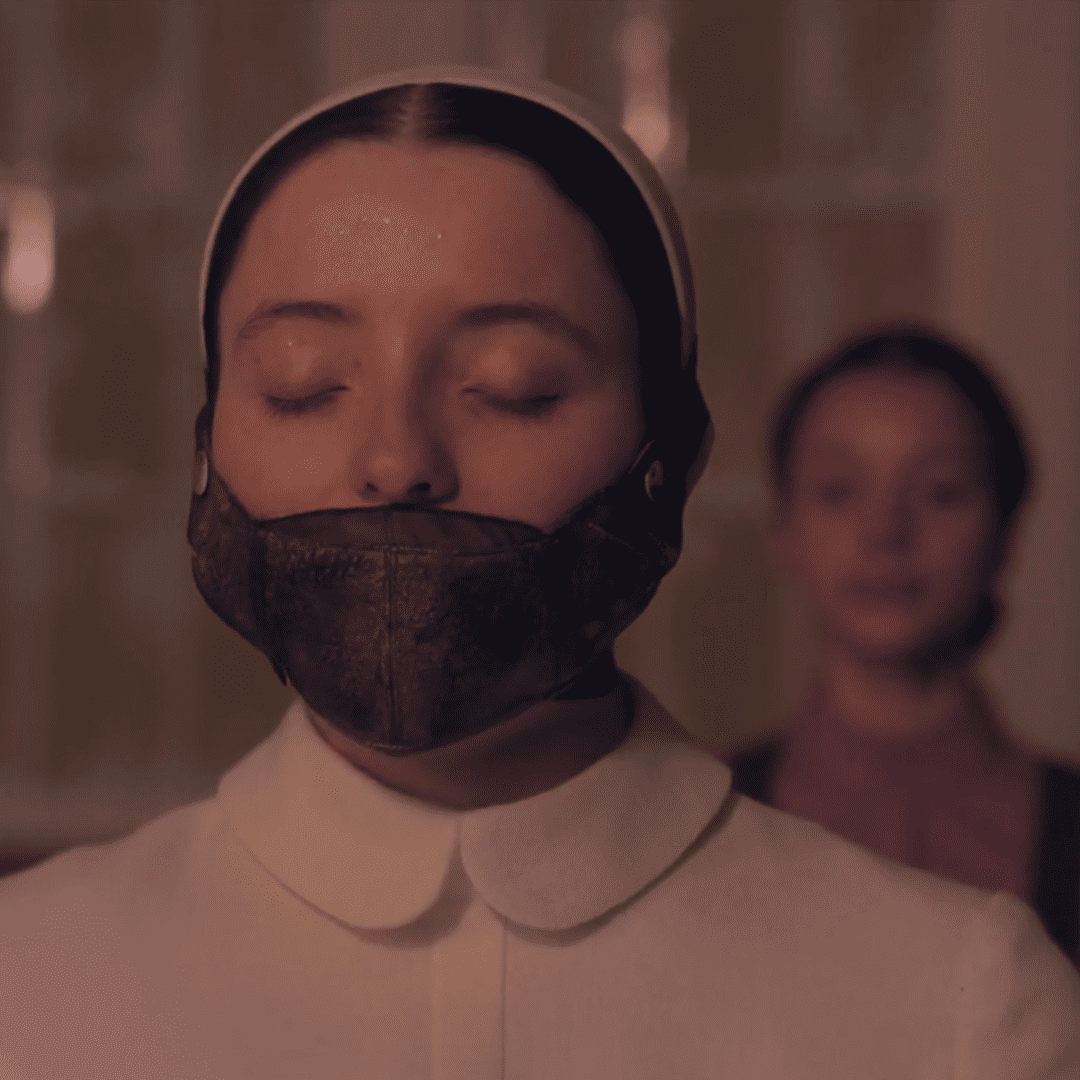
The Testaments Season 1 Review: The Brutal Inheritance of Gilead (2026)
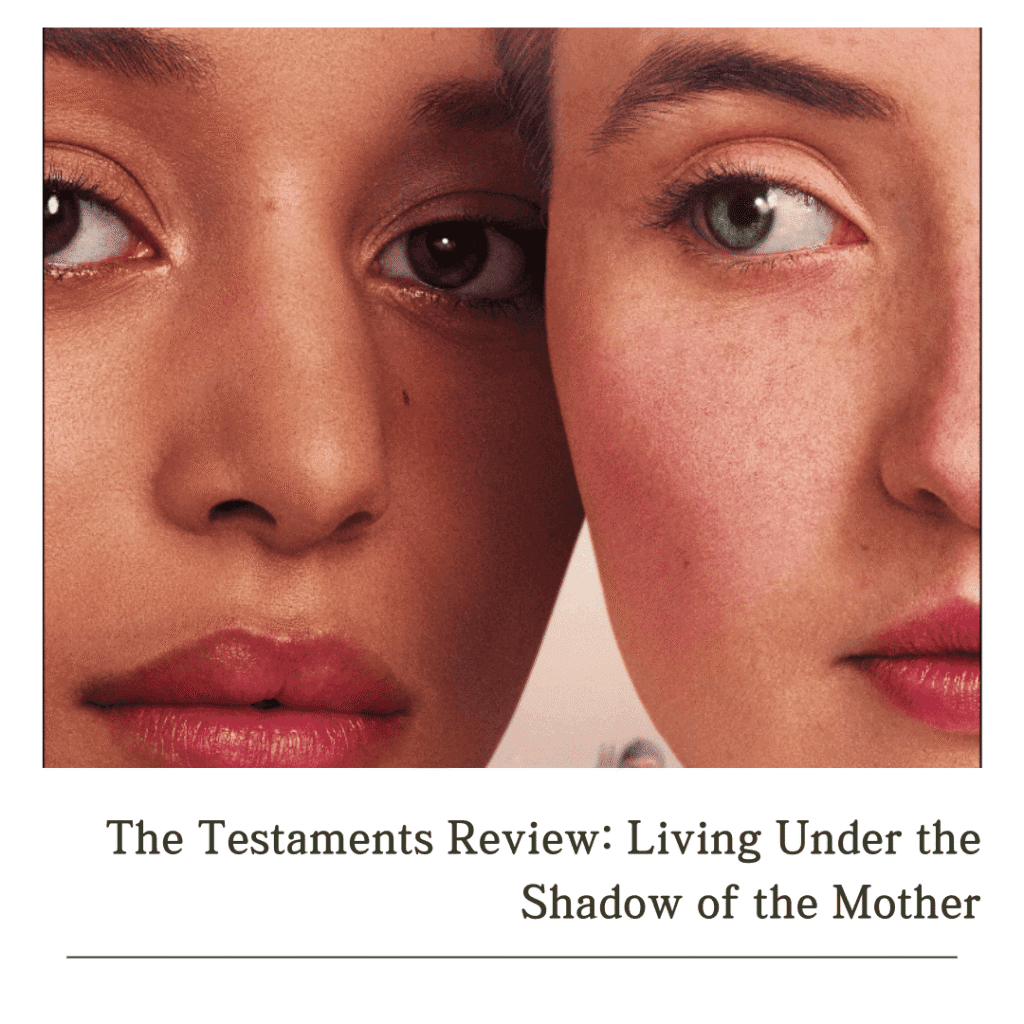
No one can replace June Osborne, which is exactly why The Testaments doesn’t even try.
The Verdict Box
Score: 8.0/10
The Vibe: A tense, highly atmospheric, and deeply emotional return to Gilead that trades the immediate bloody rebellion of the original series for a generational look at indoctrination, survival, and quiet observation.
Watch if you liked: The Handmaid's Tale, or fellow high-stakes dystopian style dramas like Paradise (Seasons 1 & 2) and Pluribus.
Skip if: You expect June Osborne to kick down the doors of Ardua Hall in episode one and wage an explosive, front-and-center one-woman war.
The Core Question: When a hidden name is stitched into the very fabric of your past, how much power does that knowledge give you to tear down a despicable system?
The Testaments Review: Living Under the Shadow of the Mother
She is the Sarah Connor of dystopian television, a force of nature whose singular drive tore through the structural framework of an entire regime. We’ve watched her for years, living by the ultimate creed: nolite te bastardes carborundorum (don’t let the bastards grind us down). But in Hulu’s highly anticipated sequel series, we don’t look at the revolution through the eyes of the warrior. We look at it through the eyes of her inheritance.
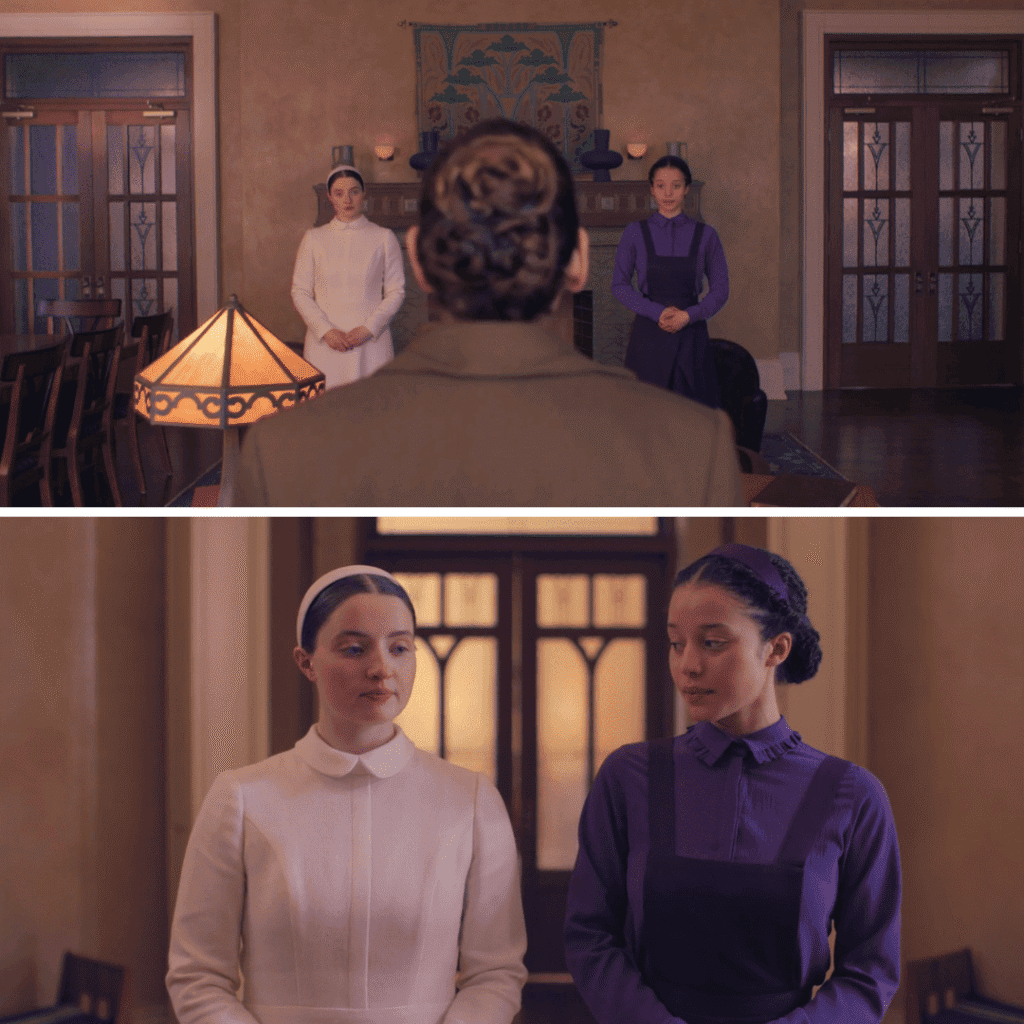
The Brainwashed Parallel: Toronto Freedom vs. Gilead Fabric
A central thesis of this The Testaments review is the brilliant, equalizing parallel drawn between Agnes (Chase Infiniti) and Daisy (Lucy Halliday). The decision to make these two protagonists the exact same age is a masterstroke for television pacing, giving us a clean look at how separate environments condition youth.
To assume Daisy is entirely enlightened while Agnes is simply a victim is unfair. Both are brainwashed by their respective worlds. Daisy lives an independent life in Toronto, yet she is completely blind to her own parents’ deep, dangerous involvement in the Mayday underground network. Meanwhile, Agnes is curated inside the strict, high-stakes fabric of Gilead’s elite.
As a wise old Martha warns Daisy when she infiltrates Gilead as a “Pearl Girl,” you must never underestimate the young women of Gilead. They have been indoctrinated from birth, yes, but when your only allowed pastimes are crocheting, textile work, and waiting to ring a bell to signal your coming-of-age, you have nothing but time on your hands. These girls are highly disciplined observers. They see every look, every systemic cruelty, and it is impossible to pull the wool over their eyes forever.
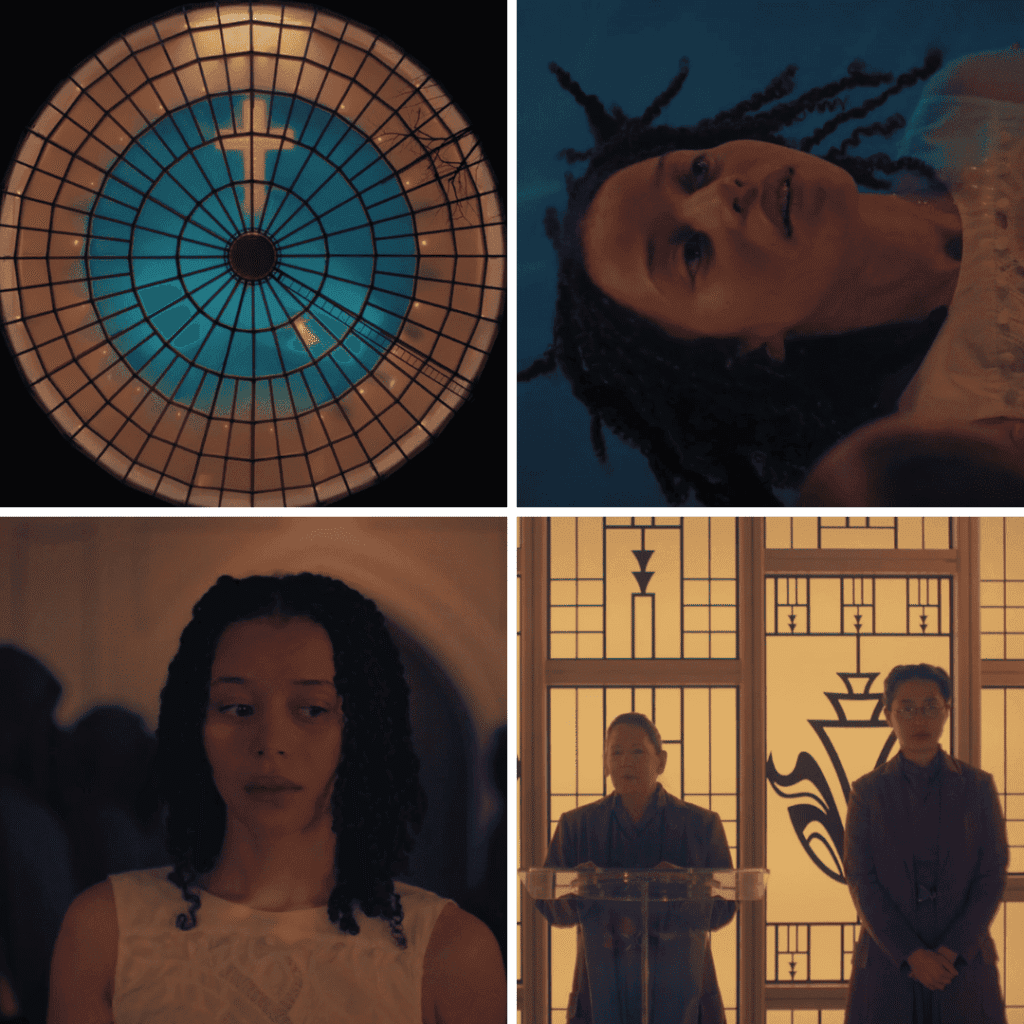
Righteous Judgment: The Dentist and the Sacrifice
The Testaments takes its darkest turn when Daisy uses her Toronto street-smarts to navigate the horrific, hidden abuse taking place inside the community. Upon discovering that a powerful Gilead dentist has been molesting young patients while they are under anesthesia, Daisy steps onto the political chessboard. She fakes being a victim herself, manipulating the system to ensure the predator faces immediate, unyielding consequences.
This triggers a chain reaction that breaks off Agnes’s arranged marriage to the notoriously abusive Commander West. In Gilead, a tainted girl is a discarded asset; Agnes drops from a “Green” (a future Wife) to a “Plum” (training to become an Aunt in Ardua Hall).
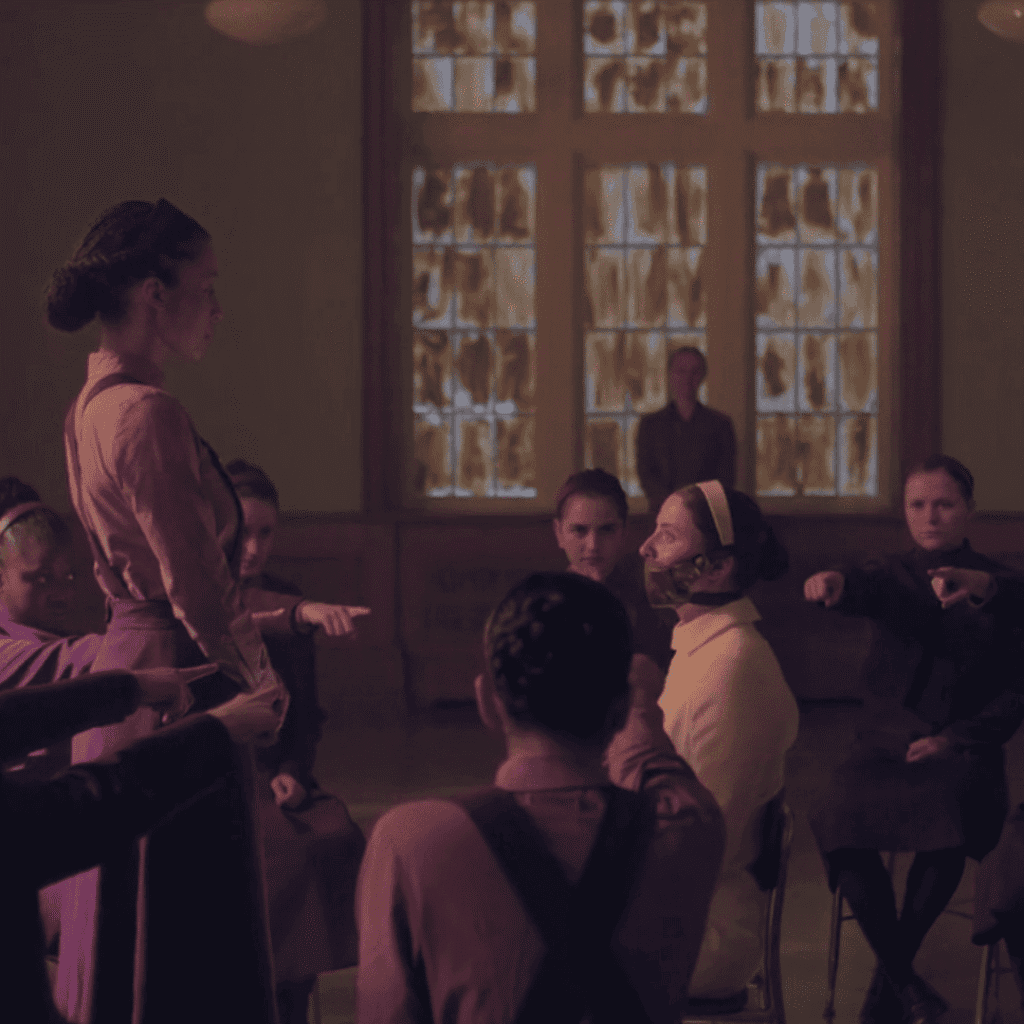
But the true emotional climax belonging to this arc lies with Becka. Driven by a deep, fierce, and protective love for Agnes, Becka channels the eye-for-an-eye logic of the Old Testament. She takes justice into her own hands, stabbing her own abusive father to death while he is in the bathtub.
To save Becka from execution, Aunt Lydia deploys a devastating strategy: forcing Becka’s mother to take the blame and face the sacrifice. It is Agnes who cuts through the hypocrisy, throwing a hard truth in her face: a real mother will sacrifice herself for her children. The mother yields to unconditional love, highlighting the complex lengths families must go to protect their own within a system where women hold zero institutional power.
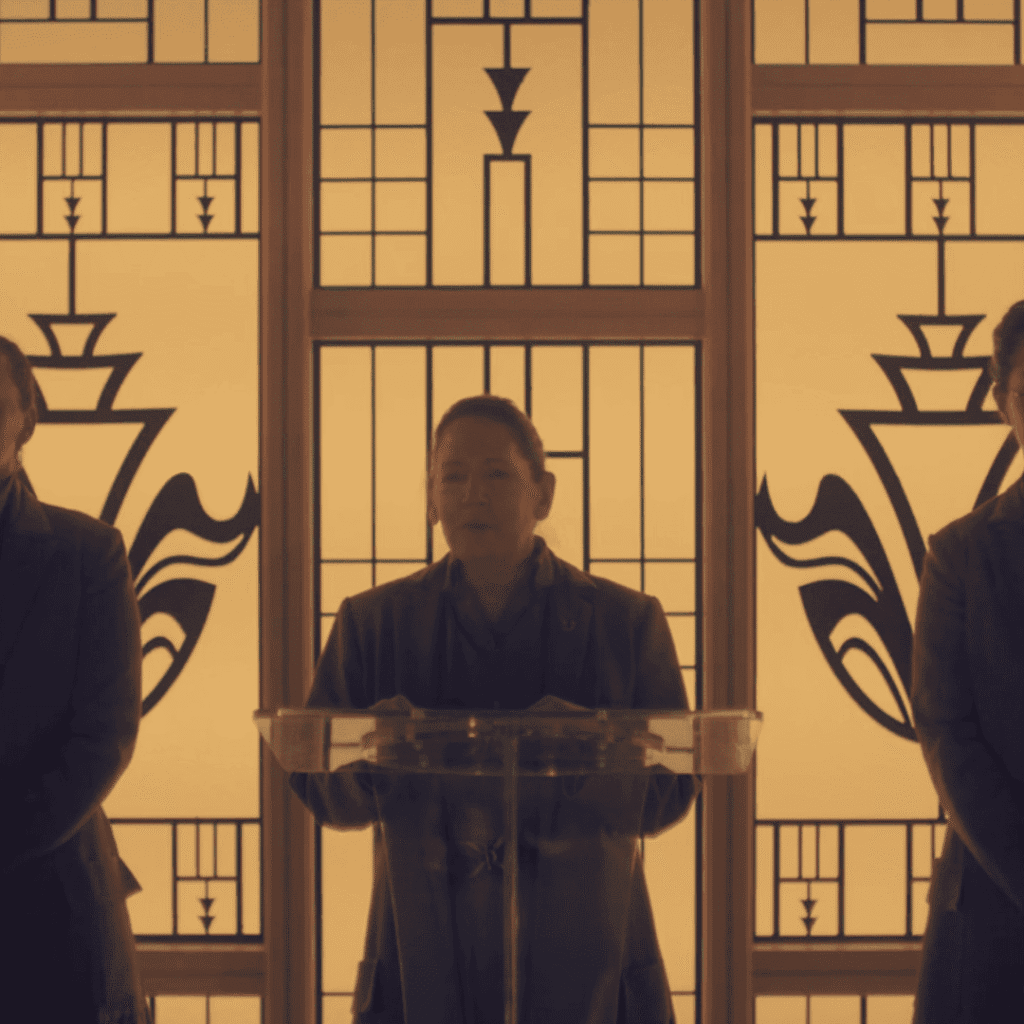
The Return of Aunt Lydia: Protecting the Heart
Seeing Ann Dowd step back into the heavy robes of Aunt Lydia is an absolute joy, especially given the historical context of her character. The series beautifully weaves in flashbacks showing her original recruitment during the initial, chaotic Civil War that birthed Gilead. We see clearly that Lydia herself is a traumatized victim of the very monster she helped build.
In The Handmaid’s Tale, Janine was Aunt Lydia’s heart, and the scars of breaking her have clearly fundamentally changed how she operates. She is no longer trying to break these girls to fit Gilead’s mold; she is actively trying to build a wall around them. She works tirelessly behind the scenes to arrange strategic marriages and steer them away from the horrific fate of becoming Handmaids. She is doing her absolute best to protect her new crop of girls from the systemic teeth of the regime, proving that even inside the darkest corners of Ardua Hall, maternal protection can still carve out a safe harbor.

The June Osborne Effect: Stitched Names and True Roots
While June Osborne only appears in what feels like a high-stakes cameo role, her presence anchors the entire psychological weight of the season. For long-time fans who have backed June for years, her shadow hanging over the narrative is incredibly satisfying.
The ultimate payoff lands during the massive finale cliffhanger when Agnes finally discovers that June is her biological mother. This revelation isn’t just a twist, it is a narrative necessity. Up until this point, Agnes has endured cold, unprompted hatred from her stepmother, an outright b***h who was actively trying to pawn her off to a despicable old man as old as her own father. No matter how brainwashed a young girl is by a regime, the natural human spirit will always find a forced marriage to an old commander unnatural and disgusting.

Learning her true origins gives Agnes an immediate, profound sense of relief. Everything suddenly falls into place. When Daisy describes the fierce woman their mother is, and when Aunt Lydia speaks so positively of June’s legendary resilience, it injects Agnes with a sudden surge of pride and confidence.
We can see the grit of June Osborne hiding inside Agnes. In a beautiful moment of clarity, she remembers her real name—Hannah—recalling that she had hidden it away on a piece of childhood embroidery stashed deep in a drawer. Knowledge is the ultimate power in Gilead, and by reclaiming her name and her bloodline, Hannah is no longer just a True Believer trying to survive; she is a warrior’s daughter ready to fight.
FAQ: The Testaments Season 1
Is June Osborne in The Testaments series?

Yes, June Osborne (Elisabeth Moss) appears in a powerful cameo capacity. Her revolutionary legacy acts as the emotional catalyst for the main characters, culminating in a major finale sequence where her daughter learns the truth.
What is Agnes’s real name in The Testaments review?

Agnes discovers that her biological mother is June Osborne and her true birth name is Hannah, a piece of knowledge she preserves through a hidden childhood embroidery project.
Why does Aunt Lydia protect the girls in The Testaments?

Having historically broken Janine in The Handmaid’s Tale, Aunt Lydia shifts to a protective maternal role in The Testaments. Traumatized by her own conscription during the Gilead Civil War, she uses her power within Ardua Hall to shield her current students from abusive marriages and the Handmaid system.
Continue the Investigation
If the eerie, dark architecture of this review kept you reading, check out these other dystopian dramas on the blog:
- Paradise Mid-Season 2 Review – An alternate look at high-stakes survival where the rules of the world are just as brutal and the tension is just as suffocating.
- Pluribus: The Final Verdict – For a deeper dive into complex political systems, resistance movements, and characters trying to maintain their humanity under an impenetrable regime.
Let’s talk in the comments: When a sci-fi series reveals that a character’s true power comes from a piece of hidden childhood knowledge rather than a weapon, does it feel like a satisfying payoff, or were you hoping for a more explosive June Osborne style rebellion? Drop your verdict below!
Disclaimer: This blog is for informational and entertainment purposes only. All copyrights and trademarks for the TV shows, films, and other media referenced are the property of their respective owners. This blog aims to provide original commentary and insights and claims no ownership over third-party content.