We Are All Trying Here Review: Park Hae-young’s 9.5/10 Masterpiece (2026)
We Are All Trying Here Review: Balancing on the Edge of the Ledger
Unless you have stood in a dark bathroom, cutting your own brother down from a ceiling while reading his own forgotten poetry to keep him anchored to this earth, you cannot begin to understand the crushing weight of simply trying to exist.
The Verdict Box
Score: 9.5/10
The Vibe: A breathtaking, deeply atmospheric, and quiet slice-of-life masterpiece that acts as a profound audit of human isolation, creative imposter syndrome, and the silent battles we hide from the world.
Watch if you liked: My Liberation Notes, My Mister, My Unwritten Seoul
Skip if: You need a high-octane, perfectly packaged romance where structural traumas are magically cured in twelve episodes.
The Core Question: When our internal worlds are driven entirely by anxiety and self-destruction, how do we find the emotional equilibrium required to take the next step forward?
The Internal Village: Trauma, Nosebleeds, and Safe Harbors
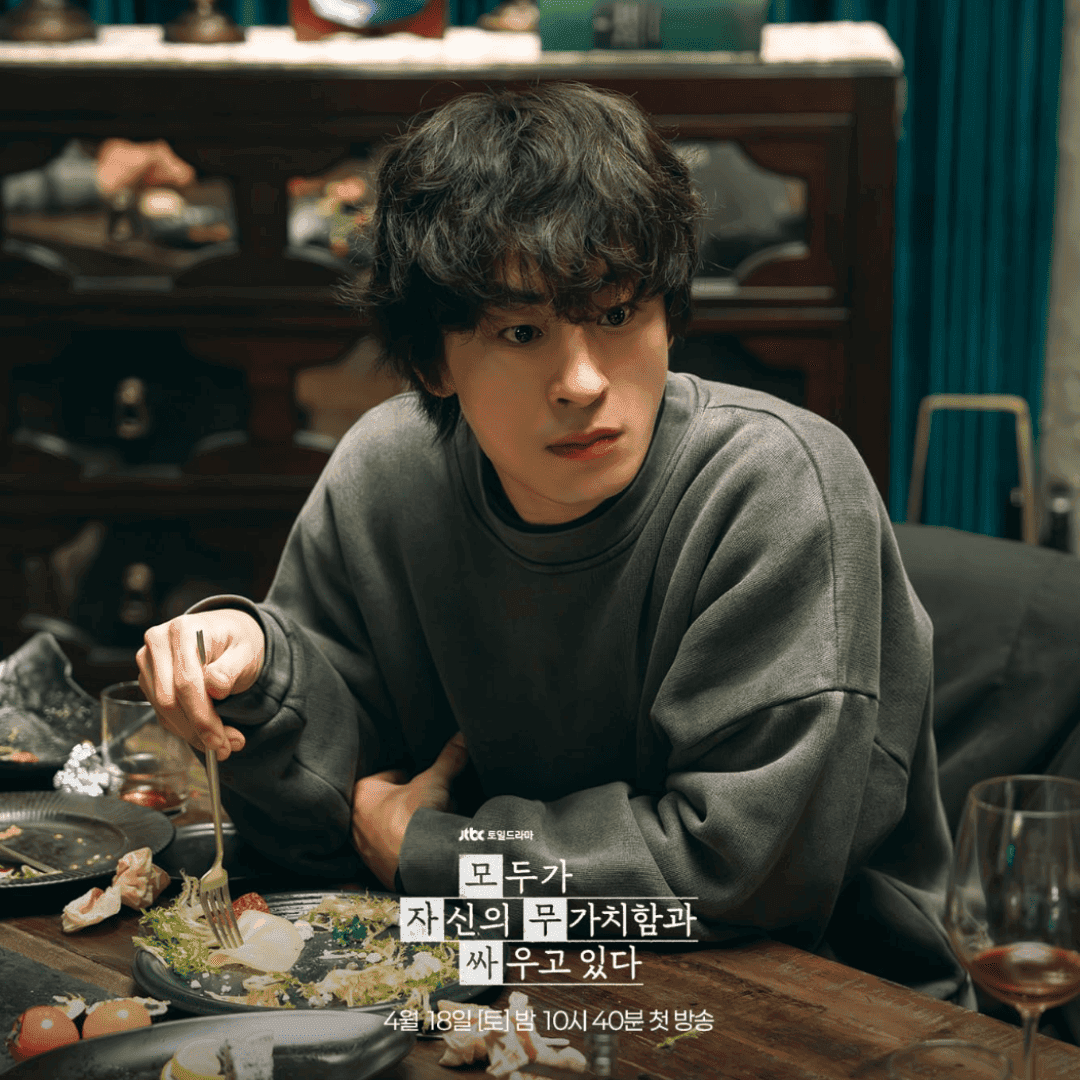
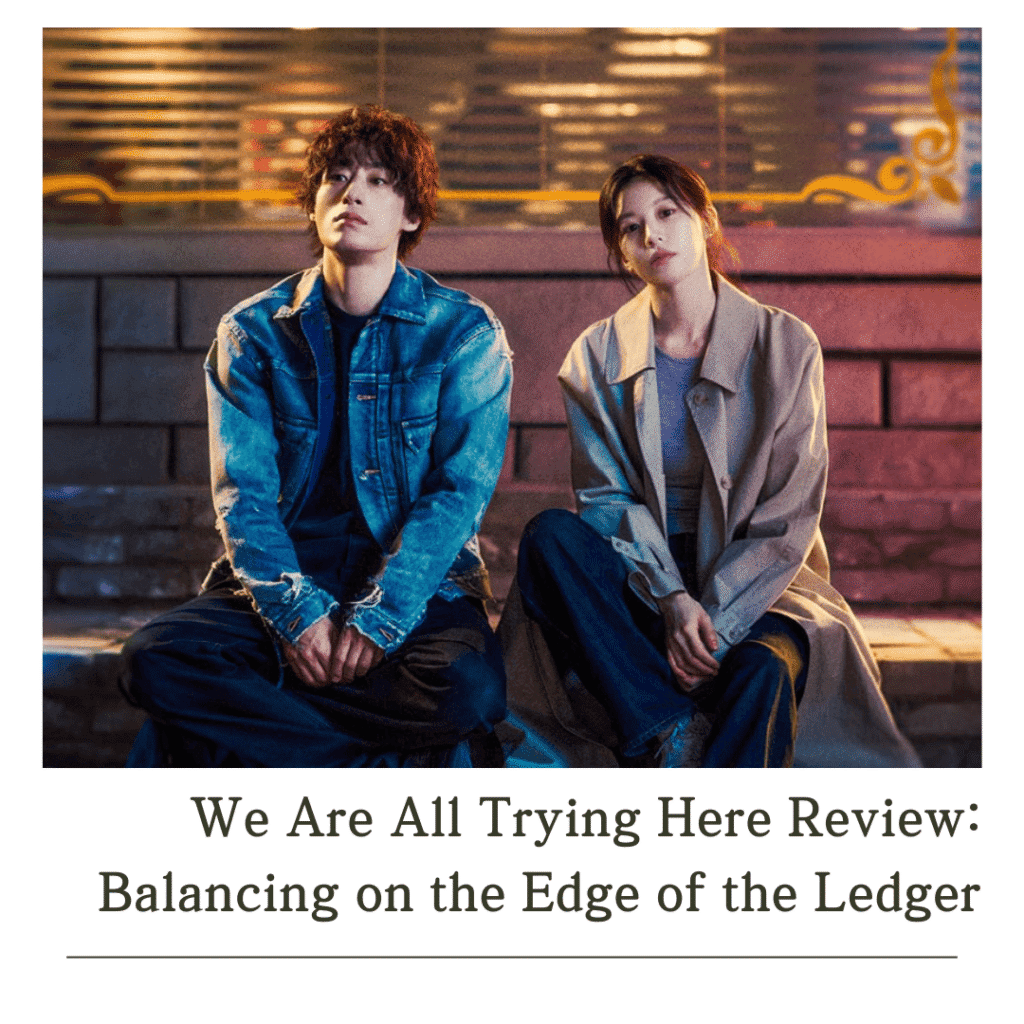
At the center of this We Are All Trying Here review is the extraordinary, unconventional connection between Hwang Dong-man (Koo Kyo-hwan) and Byeon Eun-ah (Go Youn-jung).
Bound together by a clinical trial involving an emotion-reading device, these two isolated individuals are forced into a state of raw, unfiltered exposure. Eun-ah’s internal architecture is trapped in her nine-year-old self, at the point where her parents abandoned her for 28 days.
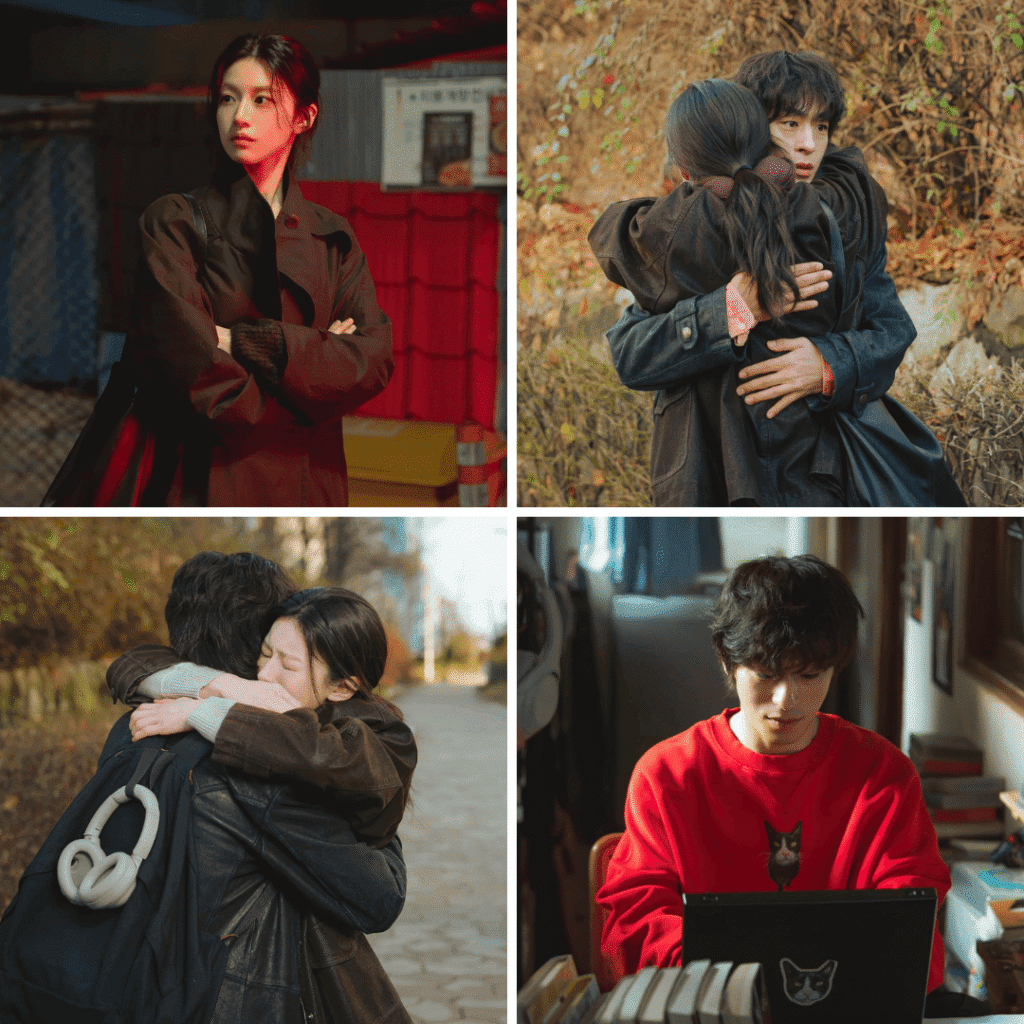
Her psychological trauma manifests physically; so whenever her condescending boss verbally attacks her or she feels entirely unheard, she suffers severe nosebleeds. She internalizes her pain until her feelings literally overflow.
Dong-man, with his eccentric demeanor and rattling anxiety, becomes her safe harbor. His unvarnished frankness gives her space to breathe, while her presence grounds his decades of creative bitterness. They do not fix each other. Instead, they help each other reach a delicate emotional equilibrium. This hard-won stability becomes the exact fuel Dong-man needs to rewrite his 20-year script into a cinematic masterpiece, while Eun-ah finally overcomes her abandonment trauma after her biological mother’s stepdaughter delivers the quiet validation she has spent her entire life running after.
The Creative Mirror: A Duel of Muses in We Are All Trying Here Review
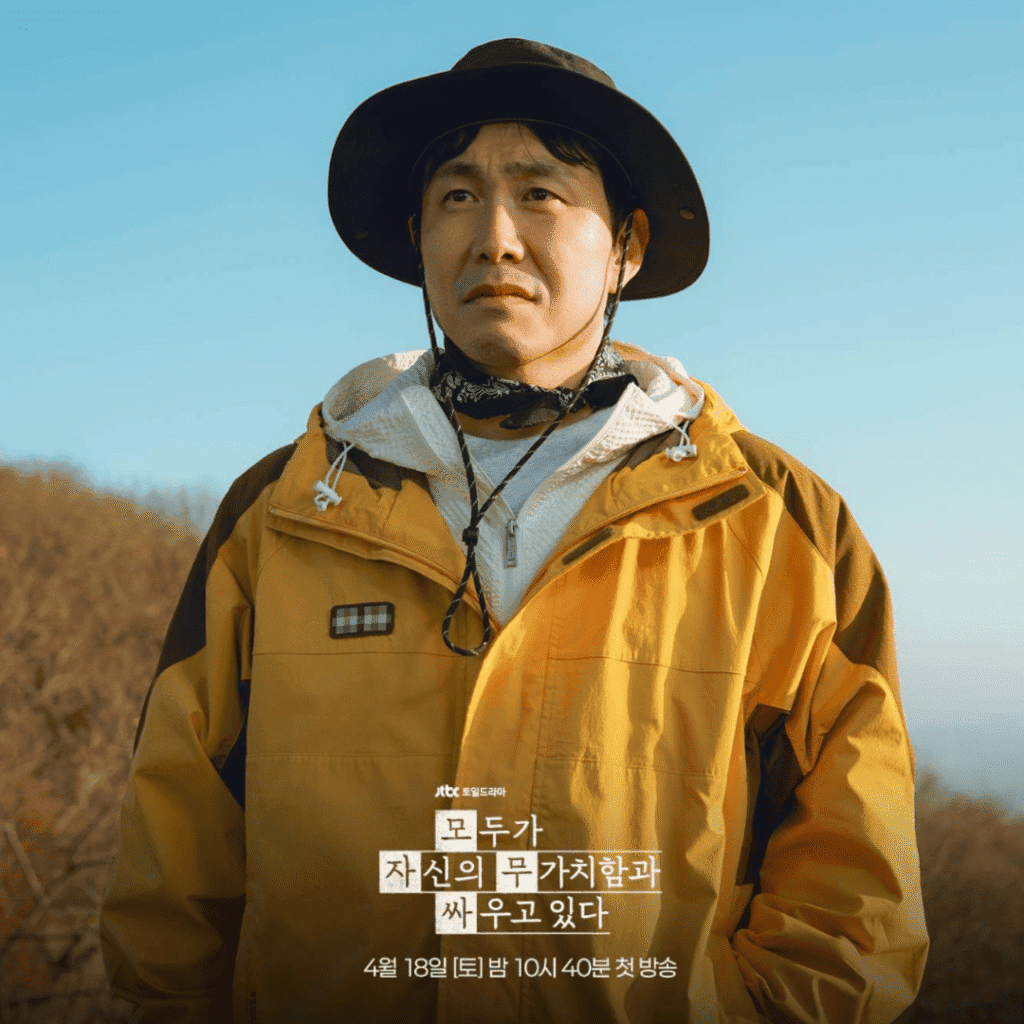
One of the most complex layers of the narrative is the toxic, deeply sentimental rivalry between Dong-man and Park Gyeong-se (Oh Jung-se). Though Gyeong-se achieved his directorial debut and treats Dong-man with public condescension, the drama brilliantly reveals that his arrogance is merely a shield for profound creative imposter syndrome.
Gyeong-se’s finest, most celebrated work was built entirely from a story Dong-man shared with him in their youth. He stole his best friend’s creative soul to build his platform, making Dong-man a living, breathing indictment of his guilt.
Yet, the complexity of their bond is unmatched: they both wrote each other into their art. Gyeong-se used Dong-man’s essence for his debut, and Dong-man anchored the lead character of his magnum opus, Weathermaker, on Gyeong-se.
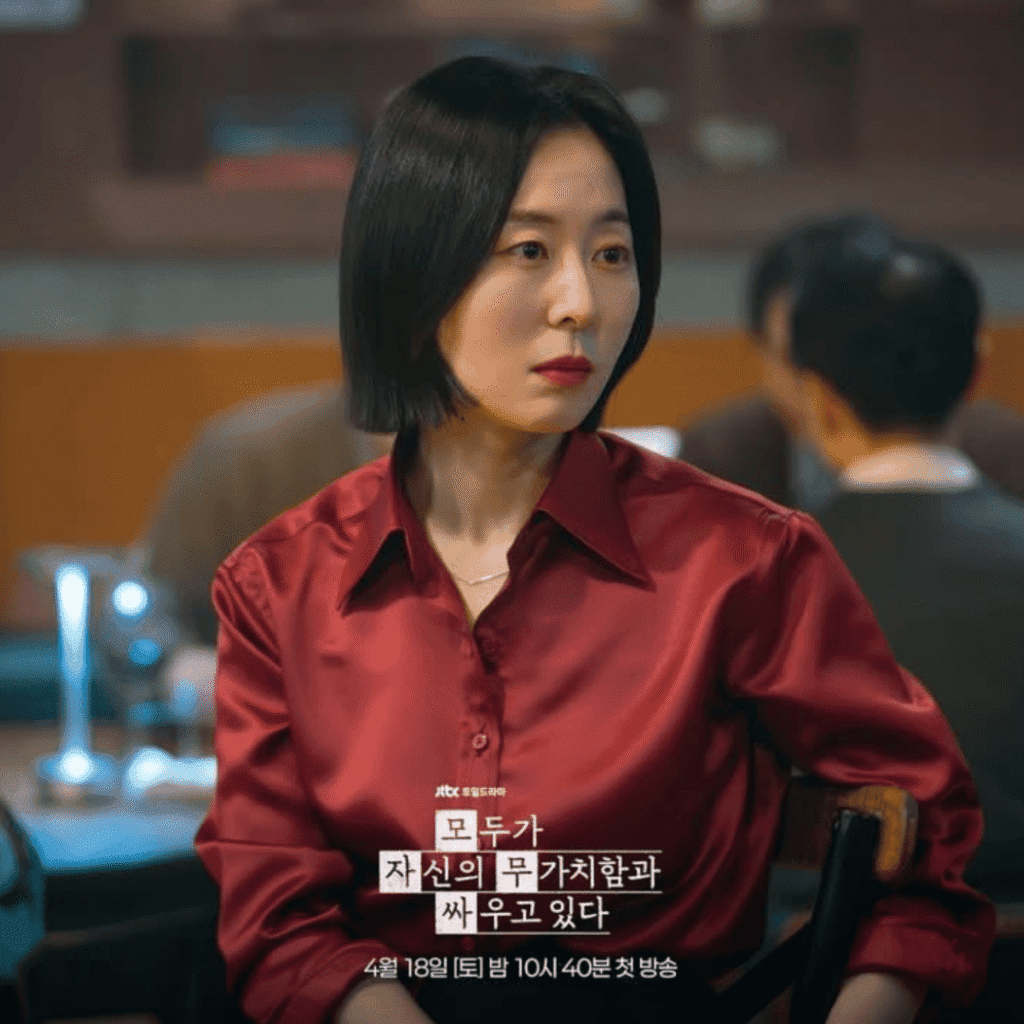
This fragile artist dynamic extends to Gyeong-se’s marriage with Ko Hye-jin (Kang Mal-geum). As a pragmatic producer, Hye-jin sees through her husband’s bravado. In a heartbreaking moment of clarity, she notices his writing suddenly filling with a vibrant, love-fueled energy brought on by a bubbly young co-writer. Recognizing the cold reality that some artists require a passing muse to fuel their fire, she is ready to let him go for the sake of his art. But Gyeong-se holds fast; he fires the writer and corrects his trajectory, proving his loyalty to the foundation he built with Hye-jin.
The Silent Weight: Poetry, Addiction, and the Nameless Emotion
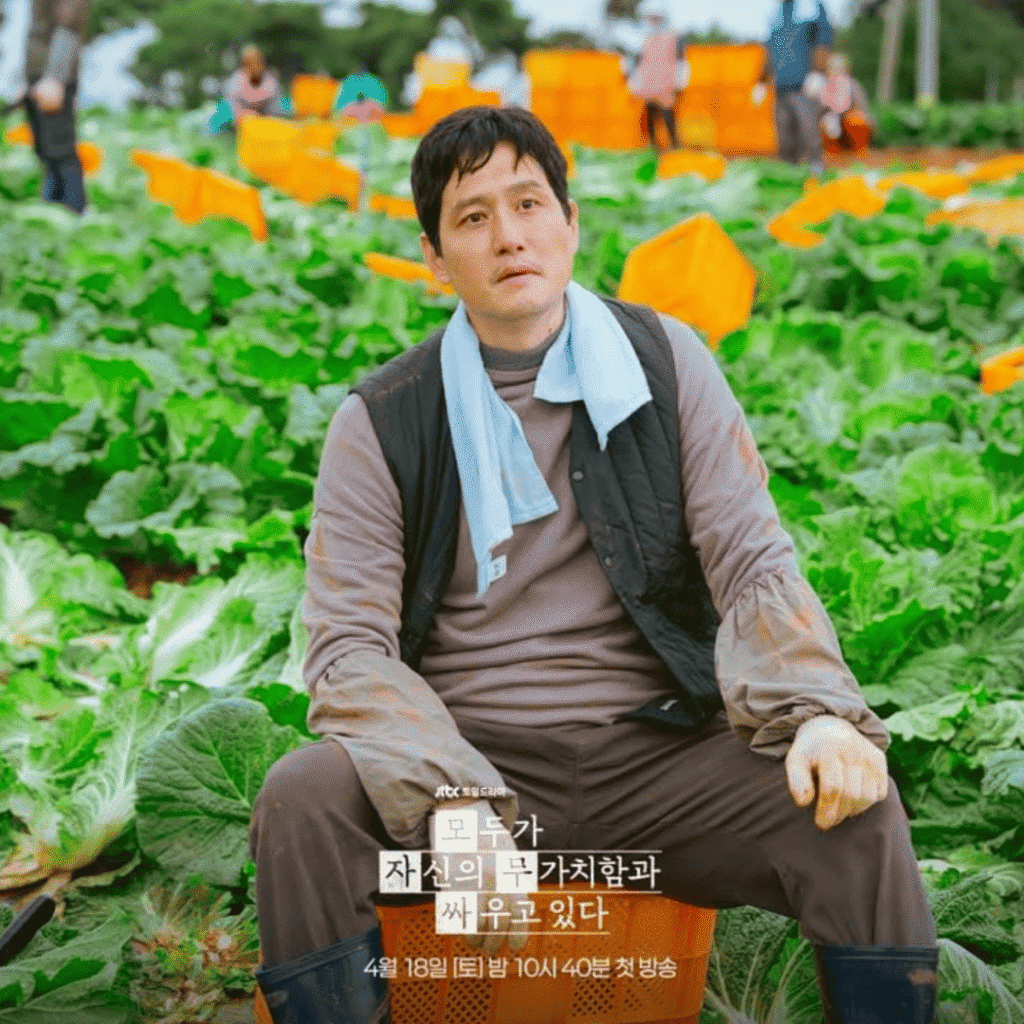
What elevates this narrative to a 9.5/10 masterpiece is the heartbreaking, secret ledger Dong-man carries alone: the severe depression of his older brother, Hwang Jin-man (Park Hae-joon).
Jin-man was once a brilliant, successful poet who completely severed his connection to his art due to an agonizing psychological dichotomy. He felt disgusted with himself for experiencing the euphoric, narcissistic high of writing a perfect line of poetry while his daughter was actively being stripped out of his life. Feeling that his entire emotional capacity should belong exclusively to his missing child, he locked his poetry away and found solace in the bottle.
The Social Commentary Lens: Writer Park Hae-young uses Jin-man’s alcoholism as a cutting critique of South Korea’s cultural reliance on self-medication. Alcohol becomes the silent framework used to numb battles that society expects individuals to fight in total isolation.
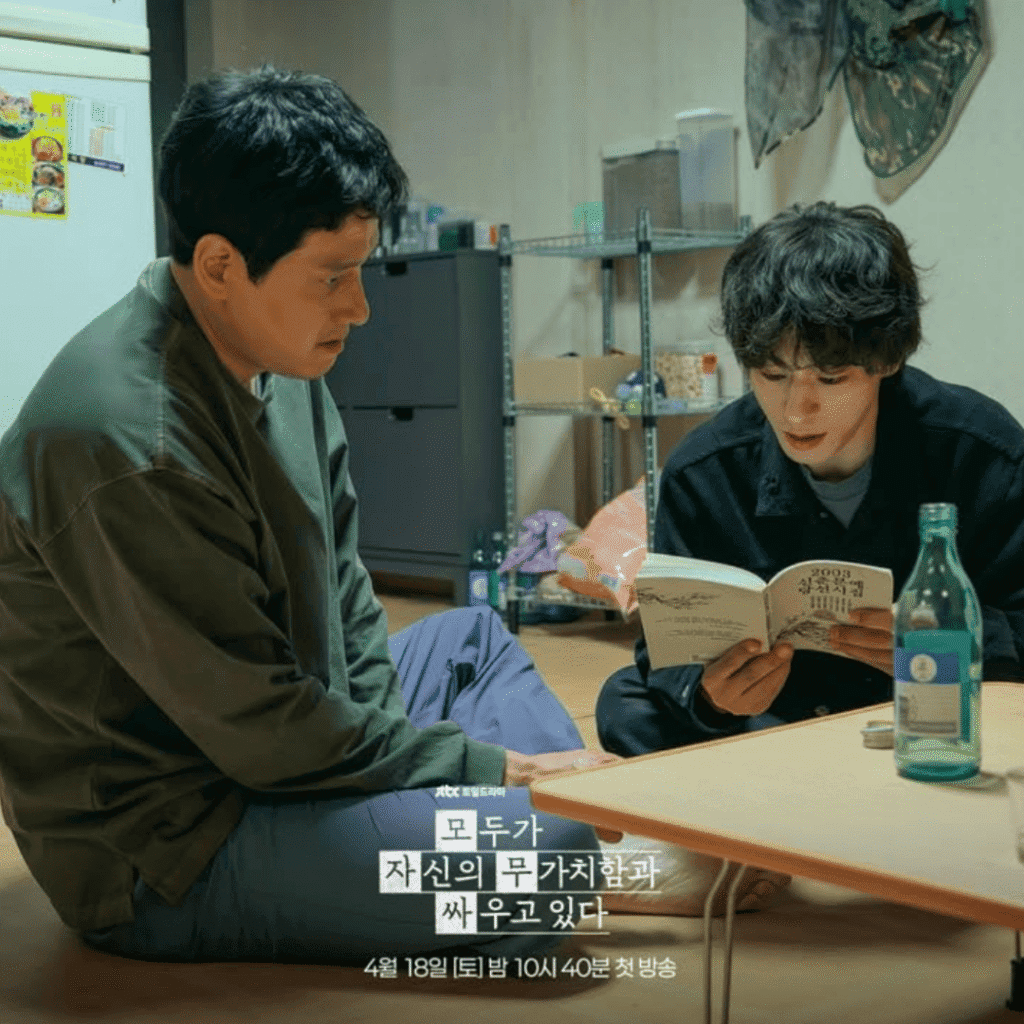
Dong-man manages this family crisis without ever weaponizing his brother’s agony for casual gossip or social sympathy. He protects Jin-man’s dignity fiercely. The true trauma of this burden is laid bare during a clinical data review, where the emotion watch replays a moment where Jin-man attempted suicide. The device logs a nameless, terrifying metric—an emotion Eun-ah explicitly identifies as pure self-destruction.
Ultimately, Jin-man’s salvation doesn’t come from his family alone, but through an incredible intersection of art. Jang Mi-ran reads a line of his old poetry, feels profoundly seen by his words, and takes it upon herself to track down his daughter’s information. The moment Jin-man breaks down holding that paper proves an essential truth of this We Are All Trying Here review: sometimes our own systems are too broken to heal from within. We need outside forces to reach into our personal prisons and help us pull down the walls.
Who wrote the screenplay for We Are All Trying Here?

The series was written by the critically acclaimed screenwriter Park Hae-young, widely recognized for her masterful, deeply human scripts for My Mister (2018) and My Liberation Notes (2022).
What is the significance of the emotion watch in We Are All Trying Here?
The emotion-reading clinical device serves as a narrative mirror, forcing characters like Hwang Dong-man and Byeon Eun-ah to confront deeply buried psychological traumas, such as severe anxiety, abandonment issues, and self-destructive tendencies that they fail to voice aloud.
What is the meaning behind Hwang Jin-man stopping his poetry?
Hwang Jin-man stopped writing poetry because he felt deep guilt and self-disgust for feeling creative artistic fulfillment while simultaneously suffering from the painful, long-term separation from his daughter.
Continue the Investigation
If the quiet, unvarnished human metrics of this We Are All Trying Here review resonated with your internal village, audit these files in the archive:
- My Unwritten Seoul Review – For an alternate, deeply moving look at characters navigating complex psychological anxiety and finding their footing inside the crushing pace of the capital city.
- Straight to Hell: The Final Audit – To compare Dong-man’s anxious, protective loyalty with Kazuko Hosoki’s ruthless, post-war survival hustle.
The Jury is Out: When carrying a family member’s secret battle, is keeping it entirely to yourself an act of profound protection, or does it isolate your own system to the point of breaking? Let’s map out the weight of loyalty in the comments.
Disclaimer: This blog is for informational and entertainment purposes only. All copyrights and trademarks for the TV shows, films, and other media referenced are the property of their respective owners. This blog aims to provide original commentary and insights and claims no ownership over third-party content.